

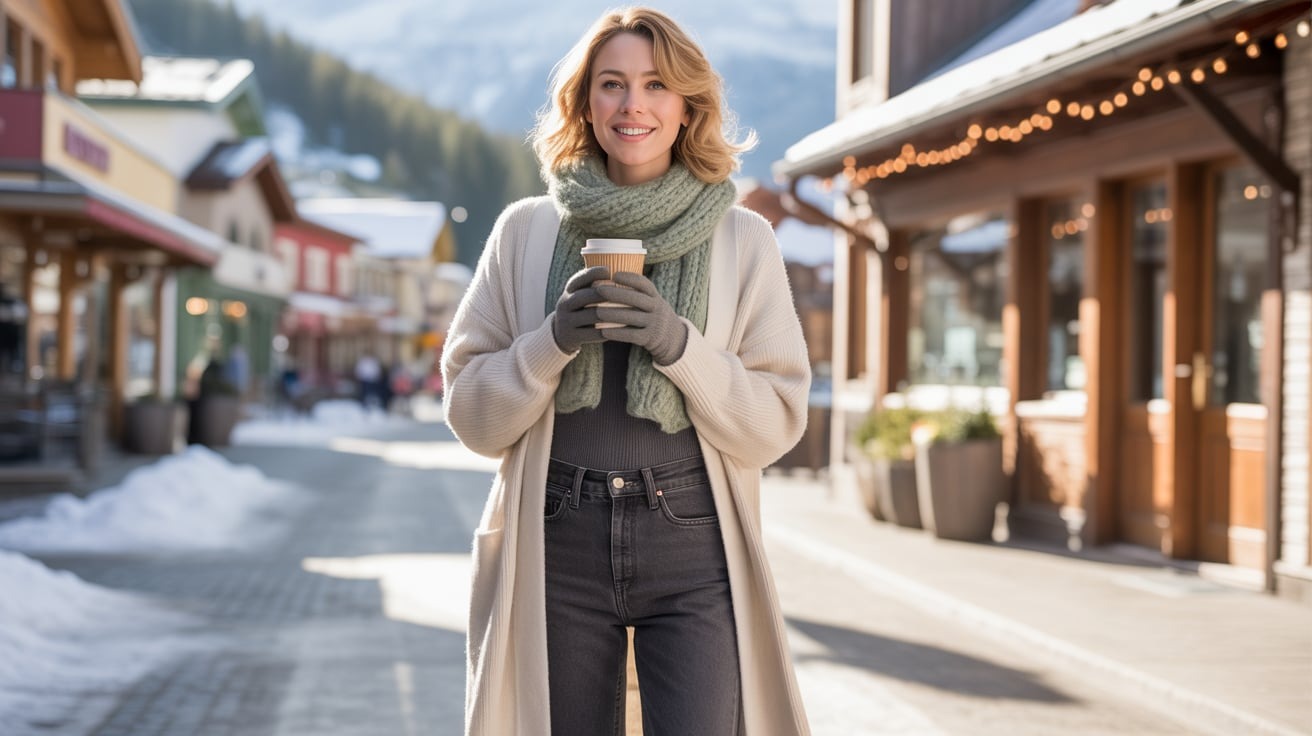
Heading out for a day on the trails? Staying comfortable and protected from the elements is key. This Patagonia outfit guide covers 23 essential looks for wind, rain, and all your trail adventures. Whether you’re hiking in unpredictable weather, running errands in a drizzle, or enjoying a weekend outdoors, these outfit ideas combine style, performance, and practicality. From waterproof jackets and breathable layers to versatile pants and accessories, this guide ensures you’ll be ready for any adventure, keeping you both cozy and stylish no matter what Mother Nature throws your way.
1) Windproof Core Layers for Classic Trail Days
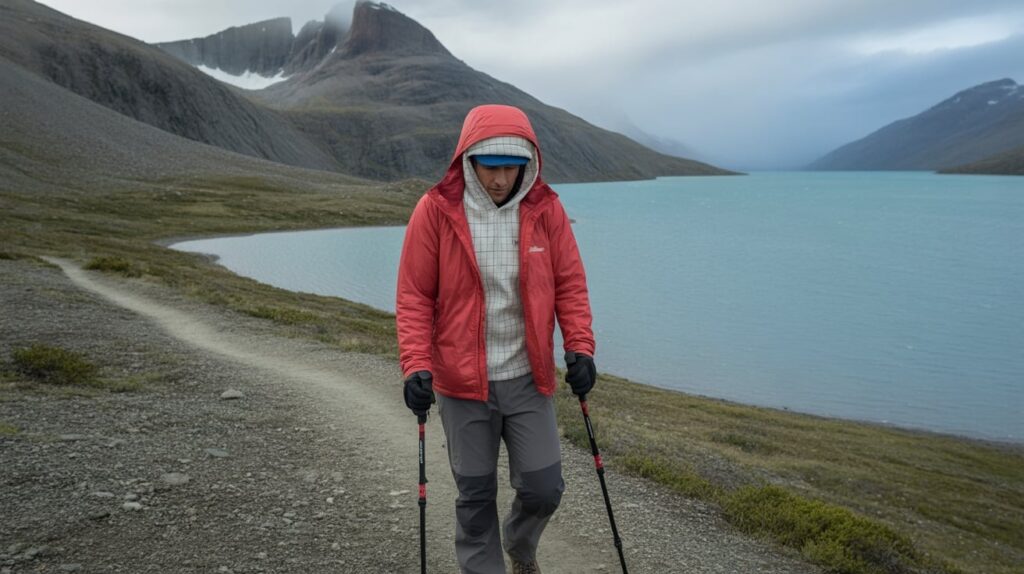
Start with a lightweight merino base layer to keep your skin comfortable when the wind turns sharp. Add a grid-fleece hoodie for breathable warmth during steady climbing, then top it with a waterproof shell that blocks gusts and sudden squalls. Pair the top half with softshell hiking pants that resist drizzle and dry quickly after river spray. This setup stays flexible: unzip for uphill heat, seal cuffs and hood when clouds roll in, and keep the fleece hood under the shell for extra neck warmth.
For trail details, choose a shell with a structured hood, pit zips, and a longer hem that covers your hips in rain. Carry thin liner gloves and a buff in a pocket so you can protect hands and face without changing layers. Finish with wool socks and mid-height waterproof boots for muddy viewpoints and wet boardwalks. Add microspikes in your daypack for icy mornings near glaciers. In photos, neutral bases with one bright jacket color stand out against gray skies and turquoise lakes.
2) Rain-Ready Puffy System for Cold, Wet Lookouts
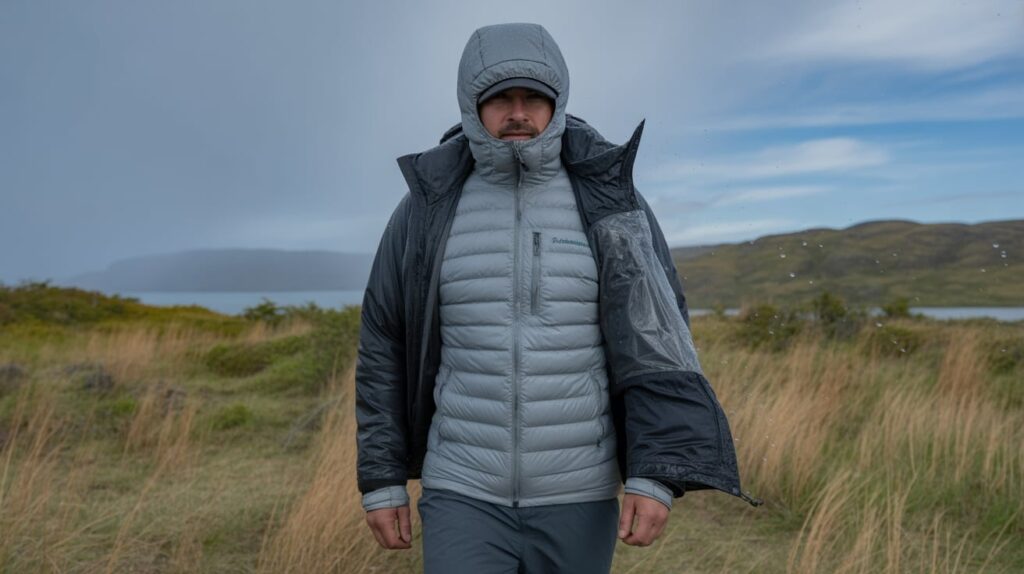
Use a moisture-tolerant synthetic puffy as your warm layer when drizzle and wind arrive together. Wear it over a thin thermal base, then cover everything with a waterproof hardshell that seals out sideways rain. Add lightweight rain pants over hiking tights or trail pants so your legs stay warm at exposed lookouts. This combo works well for boat crossings and waterfall trails where spray keeps the air damp and cold. Aim for flat seams and a close fit so the base layer stays comfortable under straps.
Keep insulation dry by storing the puffy in a roll-top bag until you stop moving, then layer it on for breaks. Choose a shell with a high collar and adjustable hood brim to protect your face in gusts. Pack waterproof mitt shells to slide over liner gloves, plus a spare beanie for backup warmth. A small towel in your daypack helps wipe lenses and phone screens before photos at misty viewpoints. Pack a microfiber cloth for lenses, since mist and rain spots show quickly in wide shots.
3) Sun Hoodie + Windbreaker for Fast, Windy Hikes
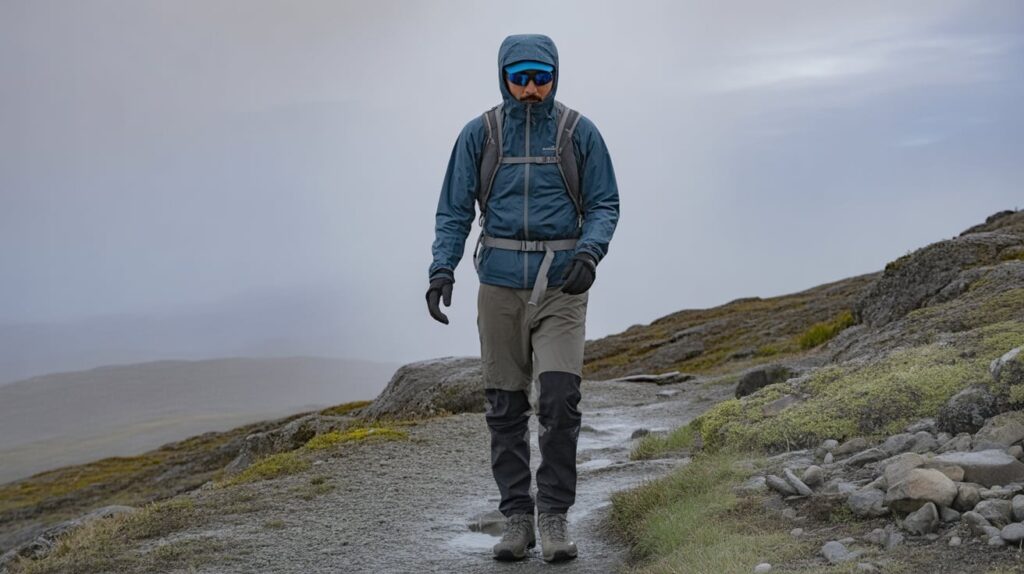
On bright days with nonstop wind, a UPF sun hoodie keeps skin covered while staying breathable on climbs. Layer a featherweight windbreaker on top to cut gusts without trapping heat. For the lower half, pair trail shorts with running tights or thin leggings to protect legs from cold wind and brush. This outfit feels light, moves easily, and still photographs clean against big open landscapes. Aim for flat seams and a close fit so the base layer stays comfortable under straps.
Choose a windbreaker that packs into its own pocket so it stays close when the weather flips mid-trail. Add a brimmed cap plus a neck gaiter to shield ears and cheeks at exposed passes. Trail runners suit dry routes, while waterproof low hikers handle wet grass and shallow stream hops. Keep colors simple: one bright top, one dark bottom, and a neutral hat makes your pins look organized and sharp. A small dry bag for gloves and electronics keeps essentials protected from spray.
4) Deep-Cold Ridgeline Set for Snowy Shoulder Seasons
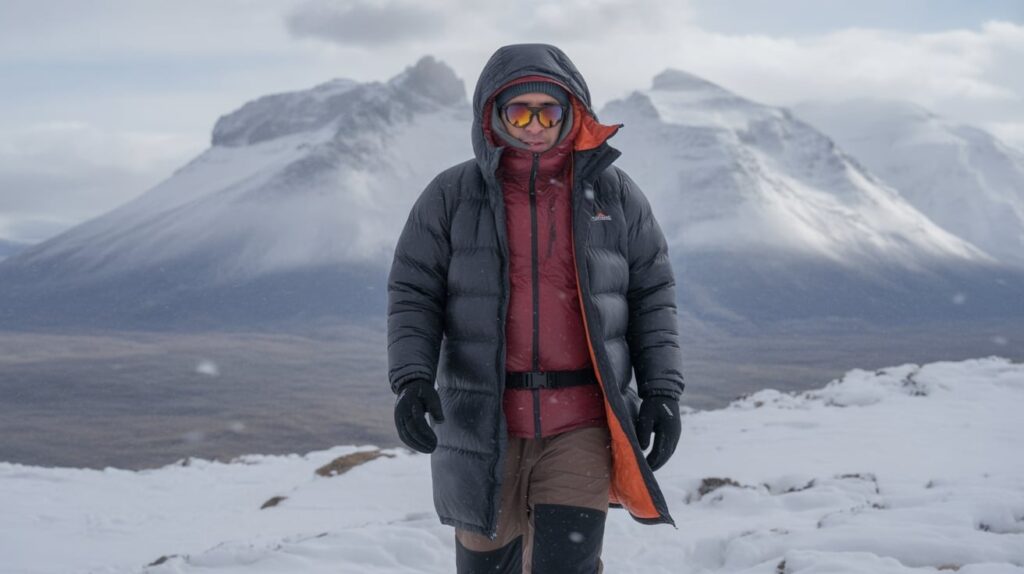
For freezing ridgelines and early snow, start with a midweight thermal base that covers wrists and ankles. Add a thick fleece or high-loft midlayer for steady warmth while moving. Top it with a long insulated parka that blocks wind and keeps thighs warm during photo stops. Pair with insulated pants or lined softshell bottoms to reduce chill when you stand still in strong gusts. Keep colors simple so layering stays easy across multiple days. Choose pieces that dry fast on a hanger inside a lodge room.
Use a two-piece glove system: thin liners for zippers and a warm mitten layer for rest breaks. Add a windproof beanie and a buff to seal gaps around your face, especially near glacial valleys. Choose waterproof boots with room for thick socks so circulation stays comfortable. For a clean look in photos, match parka and pants tones, then add one bright accessory like a hat for contrast. A small dry bag for gloves and electronics keeps essentials protected from spray. Keep snacks accessible, since cold air makes breaks feel shorter.
5) Softshell Jacket Look for Mixed Wind and Drizzle
A softshell jacket shines on days that feel windy and damp but not fully stormy. Wear it over a long-sleeve base for warmth and airflow, then pair with stretch hiking pants that move well on steep steps. Softshell fabric blocks a lot of wind and handles light drizzle, making it great for long walks where a hard shell feels clammy. Add ankle gaiters to keep mud and wet grit off your socks. Aim for flat seams and a close fit so the base layer stays comfortable under straps.
Carry a compact rain shell in your pack as insurance for heavier bursts, then rely on the softshell for most of the day. Choose pants with a simple cuff that fits over boots without bunching. Add a thin beanie and sunglasses, since Patagonia can switch between rain and bright glare fast. For pins, the softshell silhouette looks sleek and athletic, especially in dark neutrals against pale mountain backdrops. Pack a microfiber cloth for lenses, since mist and rain spots show quickly in wide shots. Keep snacks accessible, since cold air makes breaks feel shorter.
6) Waterfront + Ferry Day Outfit for Spray and Wind
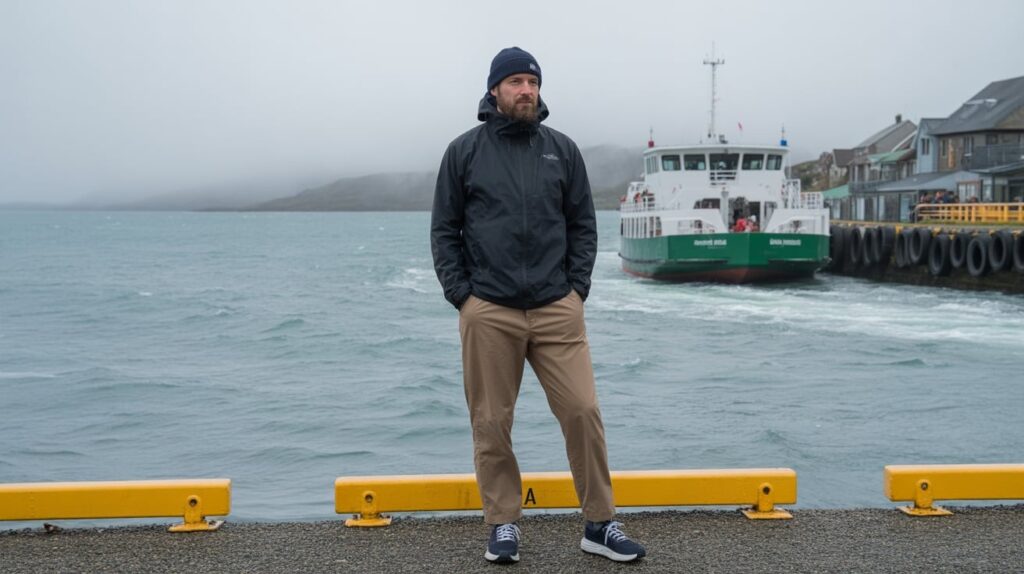
For ferry rides and waterfront walks, focus on wind protection and splash resistance. Wear a waterproof shell over a breathable base tee, then choose quick-dry chinos or nylon travel pants that shed spray. A light fleece layer in your bag helps when the deck turns cold. This outfit works from port to café without looking like full trail gear, while still handling mist and sudden drizzle. Aim for flat seams and a close fit so the base layer stays comfortable under straps.
Pick waterproof sneakers or low hikers with good grip for wet ramps and slick sidewalks. Add a beanie and a crossbody bag that fits under your shell to keep valuables dry. Use a scarf or buff to protect your neck, since wind often sneaks in at the collar. For photos, aim for clean lines: dark pants, neutral shell, and one accent color in your hat or bag for a polished travel pin. A small dry bag for gloves and electronics keeps essentials protected from spray.
7) Trail-to-Town Neutral Layers for Patagonia Evenings
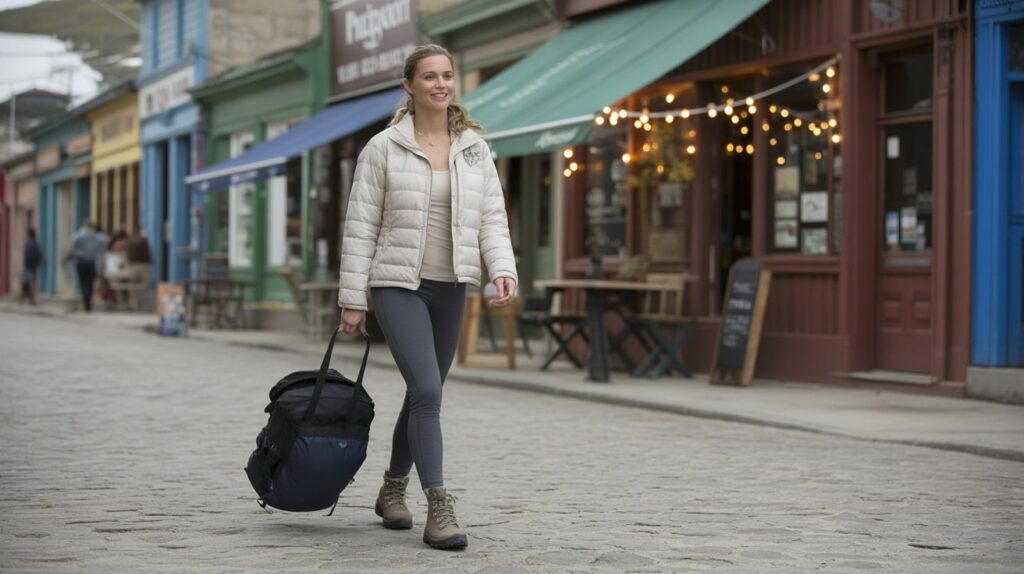
Patagonia days often end in a windy town stop, so use layers that look tidy and stay warm. Start with a neutral base top, add a light puffy jacket, and wear hiking leggings or slim trail pants for an easy silhouette. This outfit keeps you ready for a short sunset walk while still fitting a restaurant or lodge lobby. A compact rain shell in your tote adds backup coverage if the evening turns wet. Keep colors simple so layering stays easy across multiple days.
Choose waterproof Chelsea boots or sleek low hikers to stay dry on cobblestones and muddy sidewalks. Add a wool beanie and simple earrings or a scarf for a travel-ready look that still feels functional. Keep a small packable tote for gloves and a camera, since wind can make pockets awkward. For Pinterest photos, warm café lights paired with a matte puffy texture creates cozy contrast with cold outdoor scenes. For clean pin photos, place one bright item against neutral layers for contrast.
8) Glacier Tour Kit for Ice, Wind, and Cold Air
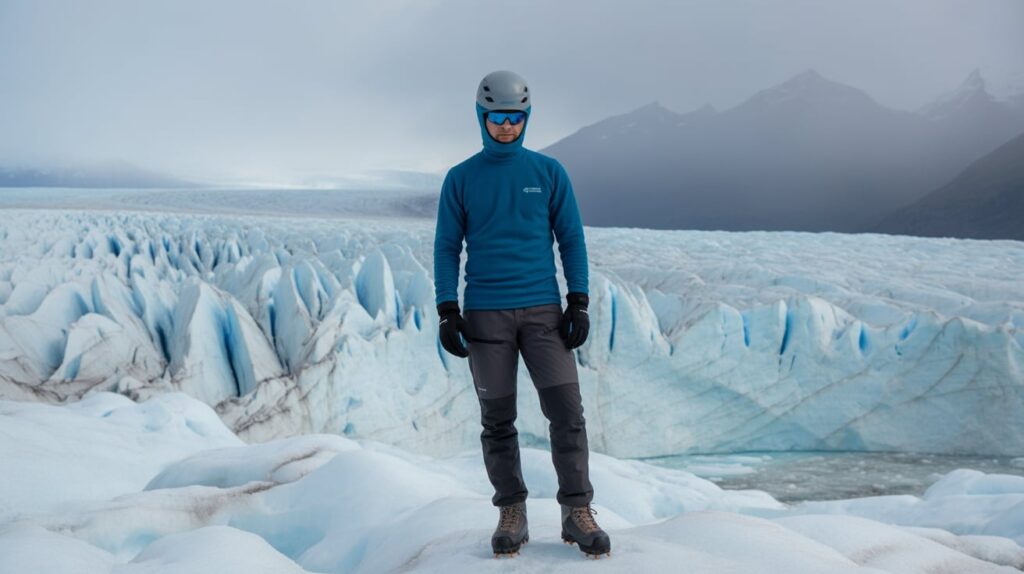
For glacier walks, build warmth without bulk so you can move safely in gear. Start with a merino base, then add an expedition-weight fleece that stays warm even during short rests. Top it with a waterproof hardshell to block wind off the ice and protect from sleet. Choose sturdy hiking pants or softshell bottoms that fit comfortably under a harness if your tour uses one. Add a thin beanie in a pocket, since wind can drop temperatures in minutes.
Bring warm gloves with good grip, plus thin liners for adjusting straps and camera controls. A balaclava or buff protects your face from cold air bouncing off ice surfaces. Pick boots that support crampons or microspikes, and wear thick socks with enough toe room for comfort. For photos, keep your shell color bold, since blue ice backgrounds make bright jackets pop without heavy editing. Pack a microfiber cloth for lenses, since mist and rain spots show quickly in wide shots.
9) Horseback Day Outfit for Steppe Wind and Saddle Comfort
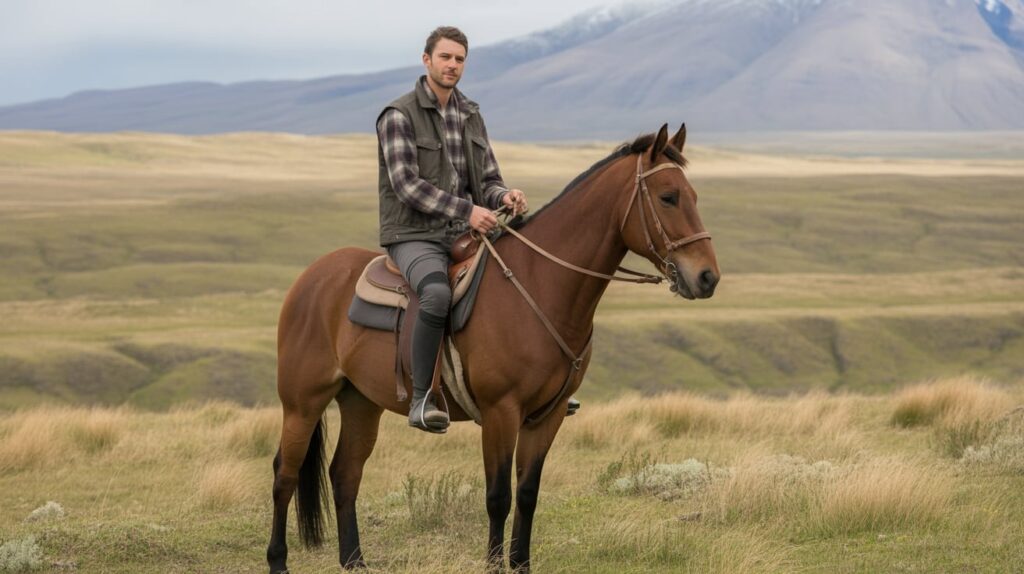
Horseback days across Patagonia’s steppe call for comfort, wind protection, and flexible fabric. Wear a breathable base tee, add a flannel shirt for warmth, then layer a softshell jacket to block gusts. Choose stretch riding pants or durable leggings with minimal seams to reduce rubbing in the saddle. This outfit keeps you warm without bulky layers that bunch when you sit for long periods. Keep colors simple so layering stays easy across multiple days.
Use boots with a smooth profile that fits securely in stirrups, and add wool socks for warmth. Bring a neck gaiter for dust and wind, plus thin gloves for rein comfort and chilly mornings. Keep rain protection close, since open plains can shift fast. For Pinterest visuals, earthy tones match the steppe palette, and a bright bandana or scarf adds a clean accent in photos. For clean pin photos, place one bright item against neutral layers for contrast. Keep snacks accessible, since cold air makes breaks feel shorter.
10) Kayak-Friendly Layers for Cold Water and Drizzle
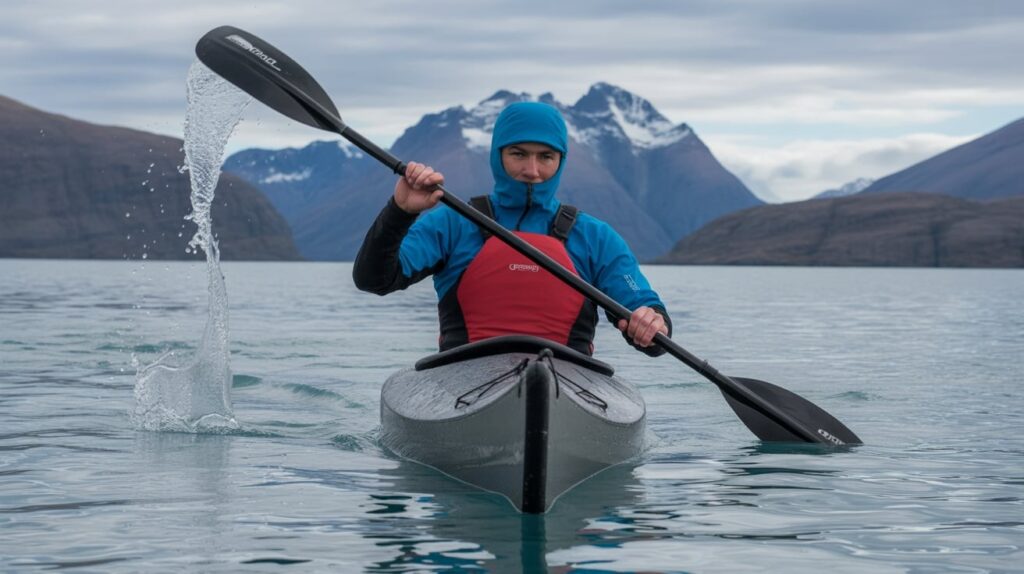
Cold water and wind make kayaking days feel colder than the forecast. Start with a synthetic base layer that dries fast, then add a lightweight fleece if temperatures feel low. Top with a waterproof paddling jacket or rain shell that seals at cuffs and neck to reduce spray. Choose quick-dry pants that stay comfortable when damp, since dock areas and boat transfers often involve splashes. Aim for flat seams and a close fit so the base layer stays comfortable under straps.
Bring a warm beanie for breaks, and keep a spare pair of dry socks sealed in a waterproof bag. Neoprene booties or water-friendly shoes help with wet landings and keep feet warmer than sneakers. Use sunglasses with a retainer strap, since wind and water movement can knock them loose. For photos, shoot low over the paddle blade to capture spray and mountains, then keep your jacket color bright for contrast. A small dry bag for gloves and electronics keeps essentials protected from spray.
11) Campfire Evening Setup for Freezing Temperatures
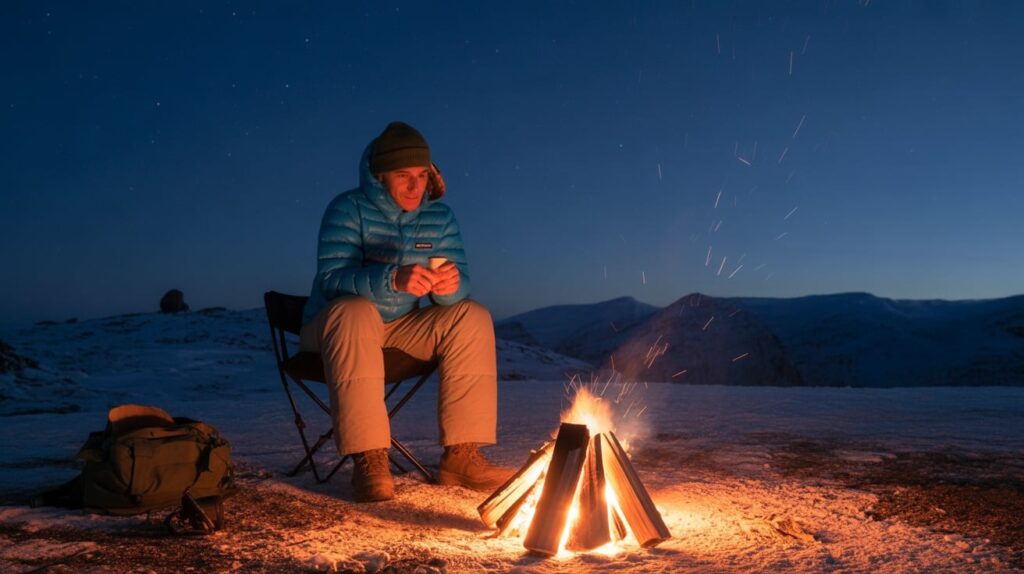
Evenings at camp often feel much colder than daytime trails, so switch into dedicated warmth layers. Wear a clean base layer set, add down or synthetic insulated pants, and top with a long insulated parka. This combo keeps legs warm while sitting on a camp chair and reduces heat loss during slow cooking and stargazing. Keep your daytime shell nearby to block wind if gusts pick up around the tent area. Add a thin beanie in a pocket, since wind can drop temperatures in minutes.
Use thick wool socks and insulated camp booties or waterproof boots, depending on ground moisture. Add a beanie and a buff to protect ears and cheeks, plus warm mittens for hands near the fire. Store tomorrow’s trail layers in a dry bag inside your tent so they stay warm and dry overnight. For Pinterest photos, firelight plus a matte parka texture creates cozy contrast that reads instantly as winter-ready travel. After the day, hang damp layers with airflow so they dry before morning.
12) Lodge Lounge Outfit That Still Handles Sudden Rain
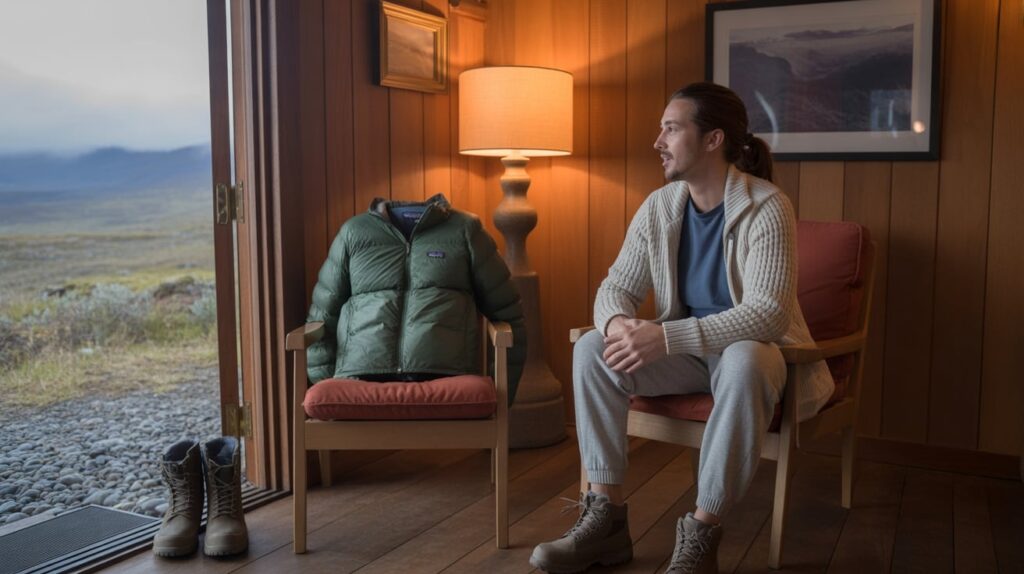
After a wet trail day, a lodge lounge outfit helps you recover while staying ready for quick errands. Start with a soft base tee, add a cozy cardigan or light fleece, and wear joggers or relaxed travel pants that feel comfortable indoors. Keep a packable rain jacket by the door, since drizzle can start with no warning. This outfit works for breakfast, packing, and short walks to town without changing again. Choose pieces that dry fast on a hanger inside a lodge room. Keep colors simple so layering stays easy across multiple days.
Choose slip-on waterproof shoes or warm socks for indoor comfort, then swap to boots for outside. Add a simple beanie for chilly hallways and early mornings. Keep a small pouch with lip balm, charger, and headlamp so you can grab it fast. For Pinterest visuals, photograph a clean flat-lay on the bed: cardigan, rain jacket, gloves, and a map, with neutral colors that feel calm and organized. Pack a microfiber cloth for lenses, since mist and rain spots show quickly in wide shots.
13) Windy Beach and Lagoons Outfit for Cold Gusts
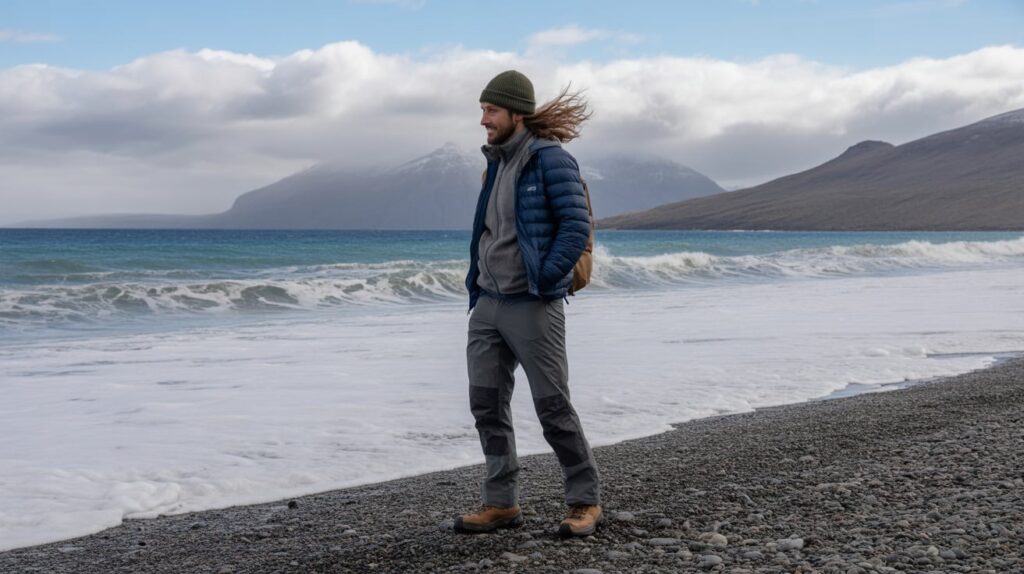
Patagonia beaches and lagoons look calm in photos, yet the wind often hits hard. Wear a breathable base, add a fleece vest for core warmth, and top with a wind shell that blocks gusts without heavy insulation. Pair with hiking pants that resist sand and dry quickly if spray reaches your legs. This outfit keeps you warm while walking shoreline trails and stopping often for wide landscape shots. Add a thin beanie in a pocket, since wind can drop temperatures in minutes.
Use a snug beanie and a buff to protect ears and cheeks, since wind chill builds fast near water. Choose grippy boots or trail shoes for slippery stones and wet boardwalks. Carry a lightweight rain shell if your wind layer lacks water resistance. For Pinterest images, keep your outfit colors muted so the scenery stays the hero, then add one bright accessory like a scarf for a clean focal point. If wind is strong, tighten the hood and tuck the buff under the collar to seal gaps.
14) Rainforest Trail Outfit for Constant Drip and Mud
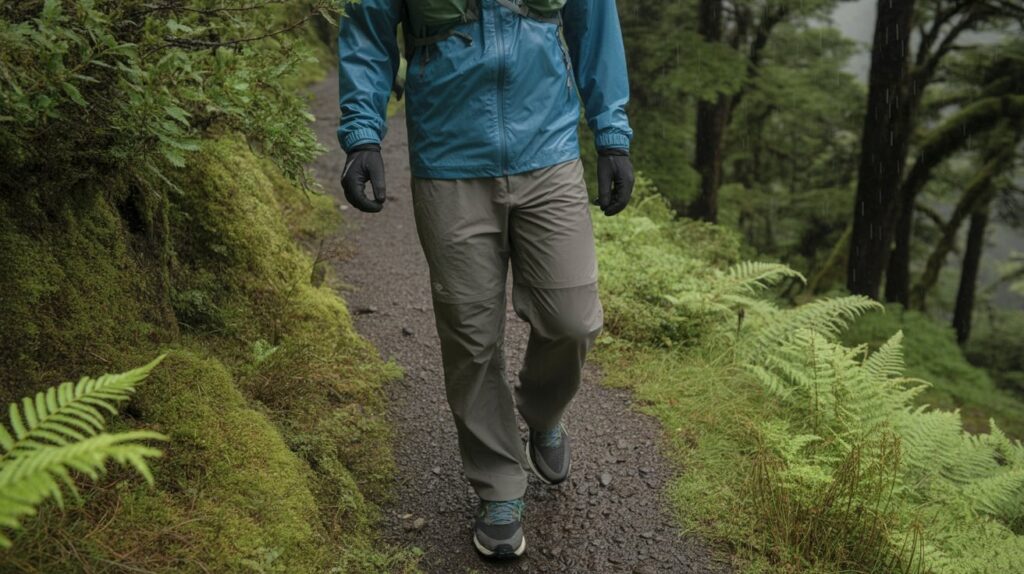
For rainforest sections, prioritize quick-dry fabrics and light rain protection that stays comfortable during steady movement. Wear a moisture-wicking long sleeve, add a lightweight rain jacket with venting, and choose convertible pants or nylon hikers that shed water and mud. Trail runners work for well-built paths, while waterproof shoes suit soggy days. This outfit keeps you moving through dripping trees without feeling weighed down by saturated layers. Choose pieces that dry fast on a hanger inside a lodge room.
Use a cap under your hood to keep rain off your face and reduce lens droplets during photos. Add gaiters if the trail holds deep mud, and pack a spare pair of socks in a sealed bag. Choose a small umbrella only for town use, since trails often stay narrow and windy. For Pinterest shots, focus on texture: wet leaves, mossy trunks, and your rain jacket beads, then keep edits natural so greens stay believable. Pack a microfiber cloth for lenses, since mist and rain spots show quickly in wide shots.
15) High-UV, High-Wind Outfit for Bright, Cold Sun
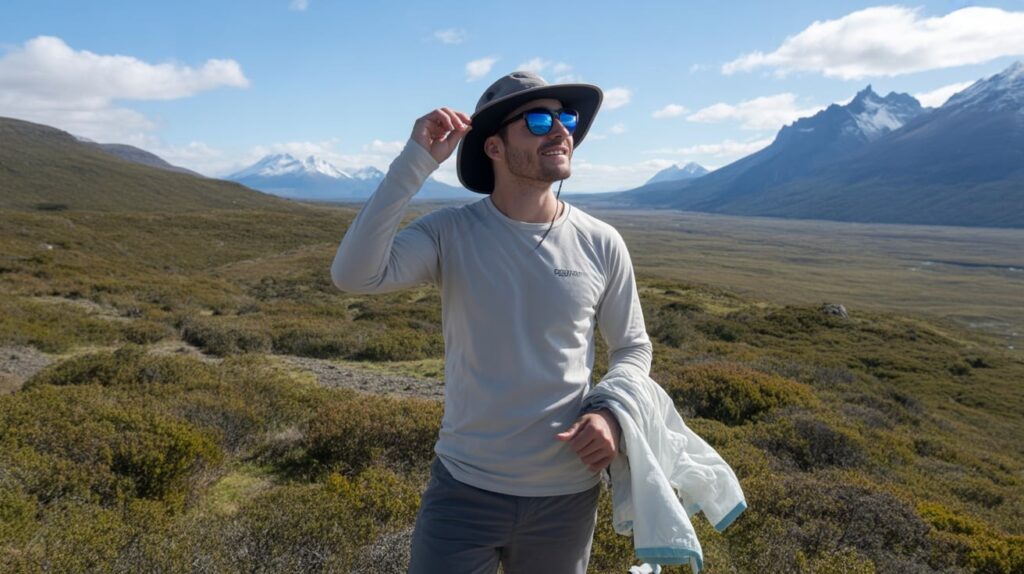
Patagonia sun can feel intense even when the air stays cold, so cover skin without overheating. Wear a UPF long-sleeve top or sun shirt, pair it with lightweight hiking pants, and carry a thin windbreaker for exposed ridges. Add a wide-brim hat and sunglasses to reduce glare off water and snow patches. This outfit works well for long photo days where you stop often and feel wind more than heat. Add a thin beanie in a pocket, since wind can drop temperatures in minutes.
Choose breathable fabrics that dry fast after sweat, especially around the collar and cuffs. Add a light buff to protect your neck and to cover your face when wind carries dust. Use trail shoes with good grip for dry paths and rocky viewpoints. For Pinterest visuals, photograph the hat and sun shirt as a flat-lay with sunscreen and a map. Clean, simple gear photos often earn saves from planners building a packing list. For clean pin photos, place one bright item against neutral layers for contrast.
16) Night-Sky Outfit for Stargazing and Cold Air
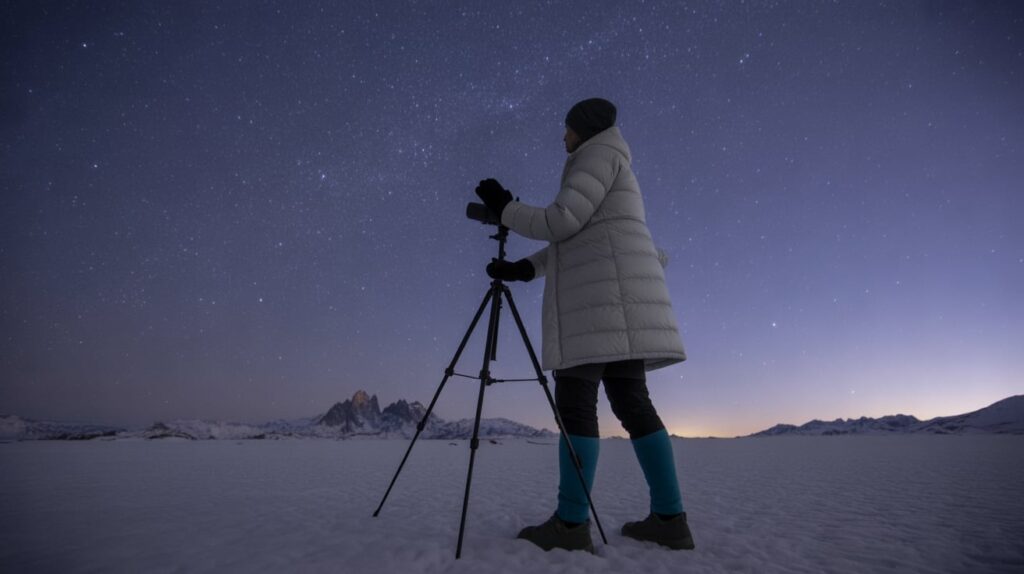
Stargazing in Patagonia often means still air mixed with sudden gusts and deep cold. Wear a warm base layer, add a thick fleece, then top it with a long down coat that covers hips and thighs. Pair with thermal leggings under lined pants or insulated bottoms so your legs stay warm while you stand at a tripod. This outfit supports slow photography sessions without constant shivering and rushing shots. Add a thin beanie in a pocket, since wind can drop temperatures in minutes.
Bring a headlamp with a low setting and keep spare batteries inside an inner pocket to stay warm. Use warm mittens over liner gloves so you can operate camera buttons without exposing skin for long. Add a beanie and a neck gaiter to seal gaps around your jawline. For Pinterest content, photograph the setup: tripod, coat, gloves, and a thermos, then write a short caption about windproof layers and lens fog management. Keep snacks accessible, since cold air makes breaks feel shorter.
17) 3-Top Capsule Outfit Formula for Multi-Day Trips
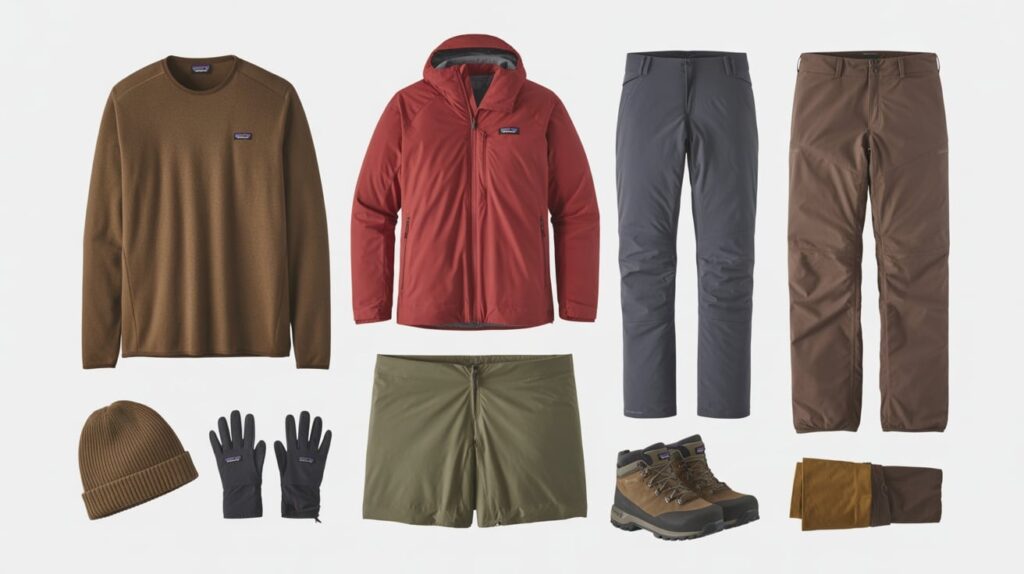
A simple capsule makes Patagonia packing easier: one merino base, one fleece midlayer, and one waterproof shell cover most weather swings. Rotate two bottoms: softshell pants for trail days and quick-dry travel pants for town. This formula keeps weight low while still handling wind, rain, and cold photo stops. Use the fleece as your main warmth layer during movement, then add the shell when gusts and drizzle arrive. Choose pieces that dry fast on a hanger inside a lodge room.
Build small add-ons that change the feel without adding bulk: a buff, liner gloves, and a warm beanie. Add one lightweight puffy as an optional boost for evenings or high viewpoints. Choose colors that mix easily: black, gray, olive, and one bright jacket. For Pinterest pins, show a neat flat-lay labeled “3 tops, 2 bottoms, 1 shell,” then add notes about keeping the puffy in a dry bag and swapping socks daily. A small dry bag for gloves and electronics keeps essentials protected from spray.
18) Photographer’s Pocket-Friendly Outfit for Windy Viewpoints
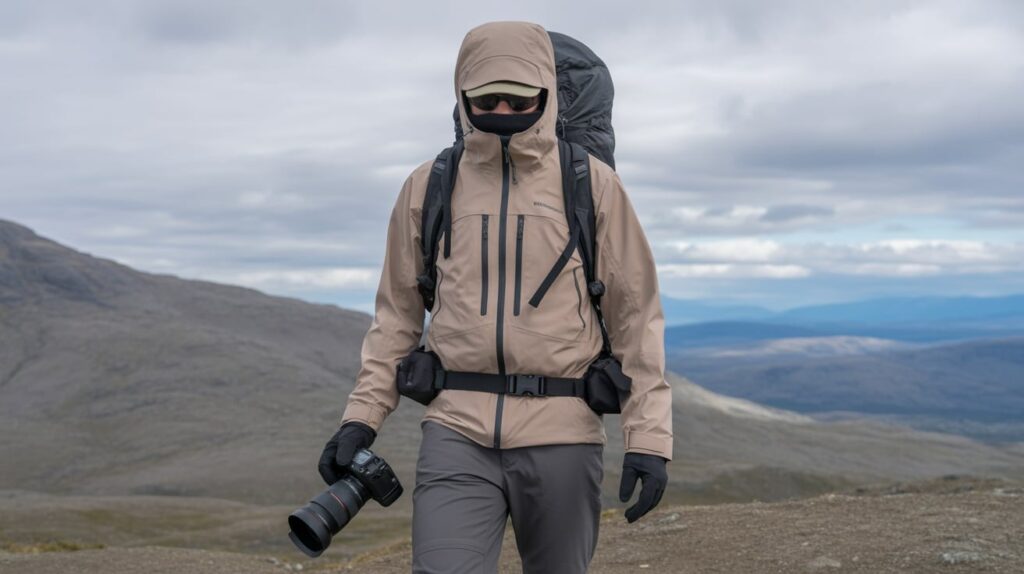
Photo planning in Patagonia means frequent stops, quick glove changes, and gear access without exposing skin too long. Wear a neutral base layer, add a pocket-rich softshell or fleece jacket, and carry a waterproof shell for sudden rain. Pair with hiking pants that have secure zip pockets for lens caps and batteries. This outfit supports fast transitions: shoot, pack, hike, then shoot again without bulky layers slowing you down. Aim for flat seams and a close fit so the base layer stays comfortable under straps.
Choose gloves with touch-friendly fingertips or use thin liners under warm mitts for control and warmth. Keep spare batteries near your body, since cold reduces performance. Add a brimmed cap under your hood so wind does not pull it off during ridge shots. For Pinterest visuals, photograph your jacket pocket layout with labels: batteries, cloth, hand warmers, and snacks. People save pins that turn chaos into a simple system. Pack a microfiber cloth for lenses, since mist and rain spots show quickly in wide shots.
19) Active Trail-Run Outfit for Wind and Light Drizzle
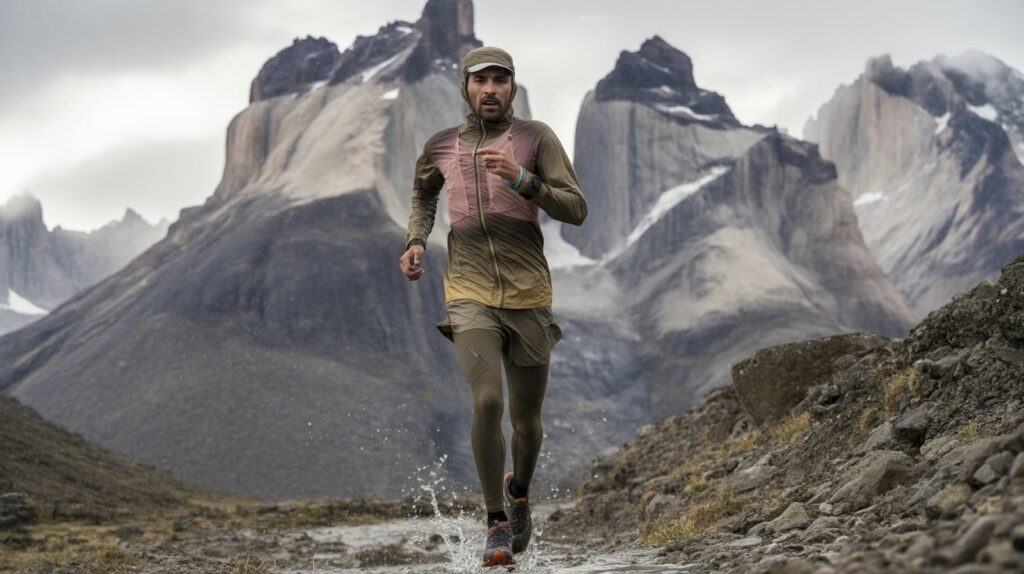
For fast hikes or trail runs, use layers that breathe and block wind without overheating. Start with a thermal long sleeve, add a thin windproof jacket, and wear running tights that stay warm when damp. Choose a cap to keep drizzle off your eyes and to sit under a hood if rain increases. This outfit keeps motion comfortable in gusty valleys where stopping even briefly can feel cold. Add a thin beanie in a pocket, since wind can drop temperatures in minutes.
Carry a compact rain shell only if the forecast looks wet, since heavy waterproof fabric can trap heat during running. Add lightweight gloves for cold fingers, plus a buff for neck warmth on exposed sections. Use trail shoes with reliable grip for wet rocks and wooden bridges. For Pinterest photos, capture movement: a mid-stride shot with wind in the jacket fabric, then a close-up of your layering flat-lay showing how small everything packs. Keep snacks accessible, since cold air makes breaks feel shorter.
20) Bike Day Layers for Variable Wind and Sudden Showers
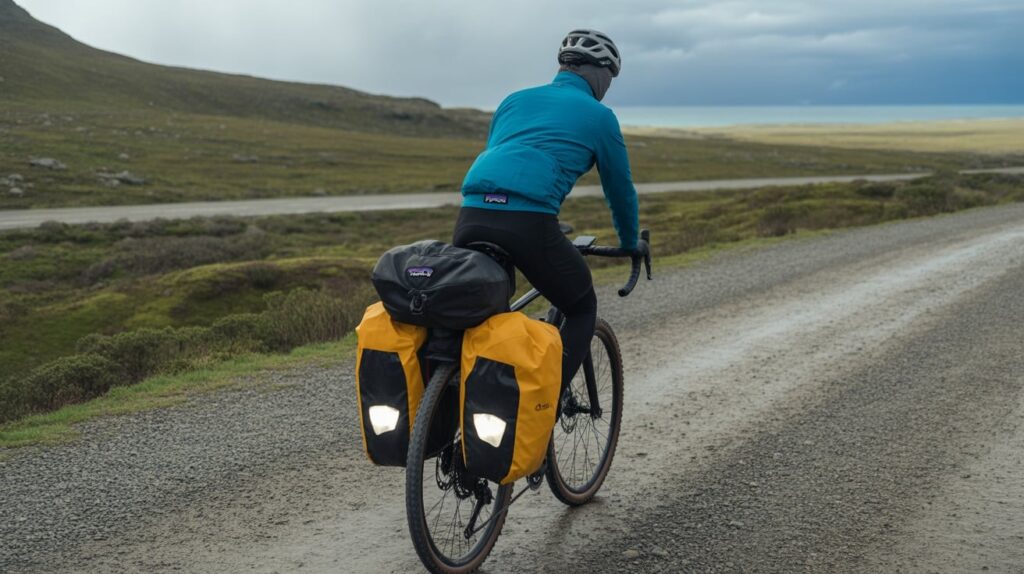
Cycling in Patagonia adds wind chill, so focus on wind-blocking layers that stay comfortable in motion. Wear a breathable base layer, add a softshell jacket, and use cycling tights or stretch pants that move easily. Pack a lightweight waterproof shell in your pannier or daypack for short rain bursts. This setup supports long gravel-road rides where temperature changes with elevation and cloud cover. Add a thin beanie in a pocket, since wind can drop temperatures in minutes. Keep colors simple so layering stays easy across multiple days.
Use a thin skullcap or headband under your helmet for ear warmth, plus full-finger gloves for grip. Choose water-resistant shoes or shoe covers if roads stay wet. Add a bright outer layer for visibility in gray weather and dust. For Pinterest pins, photograph the outfit next to a bike and a map, then add a caption about wind-proofing the front of your torso and keeping rain gear accessible for quick stops. For clean pin photos, place one bright item against neutral layers for contrast.
21) Lodge Dinner Outfit with Hidden Weather Protection
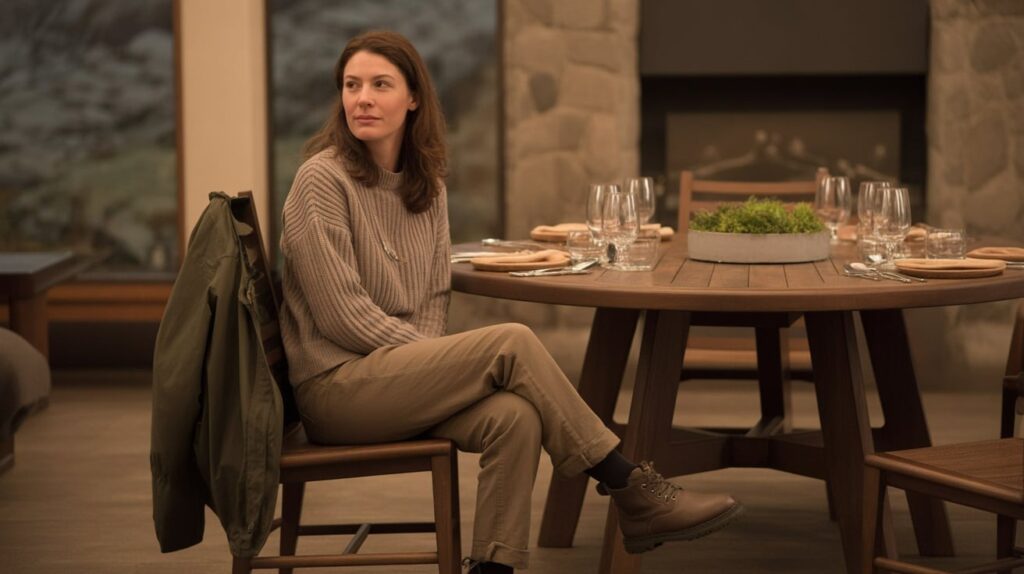
For a nicer lodge dinner, keep the outfit simple and warm while staying ready for wet sidewalks and wind. Wear a knit sweater over a thin base tee, pair it with wool trousers or dark travel pants, and choose ankle boots that handle puddles. Add a packable rain shell in your bag, since evening weather can change quickly. This look photographs well indoors and transitions easily to a short walk outside afterward. Keep colors simple so layering stays easy across multiple days.
Choose fabrics that resist wrinkles and feel soft after a long day. Add a small scarf for warmth and a polished detail, plus a compact umbrella only for calm town streets. Keep gloves and a beanie nearby if you plan a nighttime stroll. For Pinterest visuals, show a three-piece capsule: sweater, trousers, boots, with the rain shell folded beside it. This pin style performs well because it feels realistic, not costume-like. After the day, hang damp layers with airflow so they dry before morning.
22) Road-Trip Outfit for Scenic Stops and Cold Wind
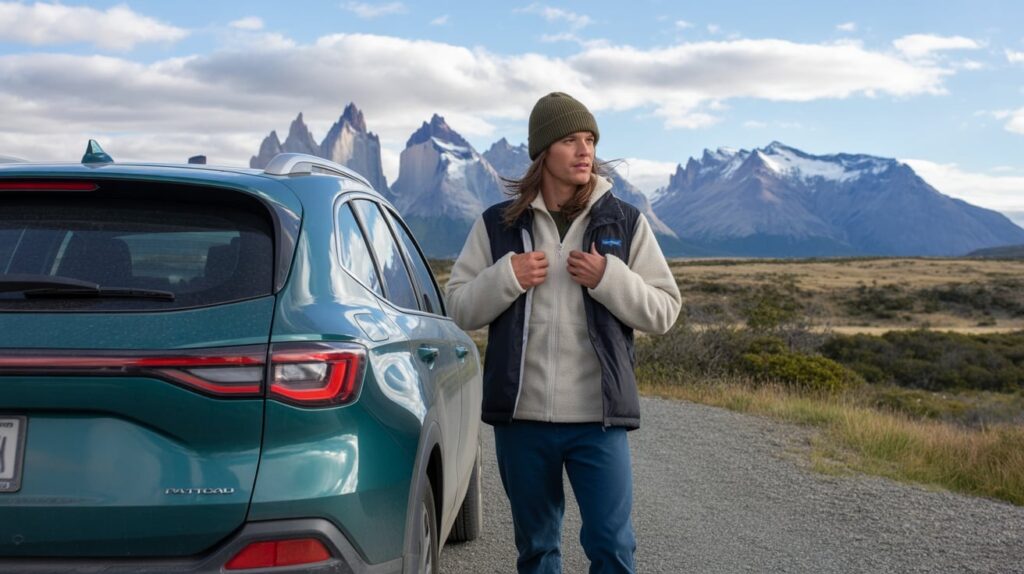
Road-trip days mix short walks, scenic pullouts, and sudden wind blasts when you open the car door. Wear a comfortable base, add a fleece jacket, and keep a waterproof shell ready for surprise rain. Pair with stretch jeans or travel pants that feel good for long drives and short hikes. This outfit stays camera-ready at viewpoints without feeling like full hiking gear while you sit for hours. Add a thin beanie in a pocket, since wind can drop temperatures in minutes.
Keep a beanie and gloves in the door pocket so you can grab them quickly at windy stops. Choose shoes that work for both gas stations and short muddy paths, like waterproof sneakers or low hikers. Add sunglasses, since glare can appear even under clouds. For Pinterest photos, capture the “stop-and-shoot” moment: shell in hand, car behind you, mountains ahead, and a simple caption about layering for wind as soon as you step outside. Pack a microfiber cloth for lenses, since mist and rain spots show quickly in wide shots.
23) Full Storm Outfit for All-Day Rain and Strong Wind
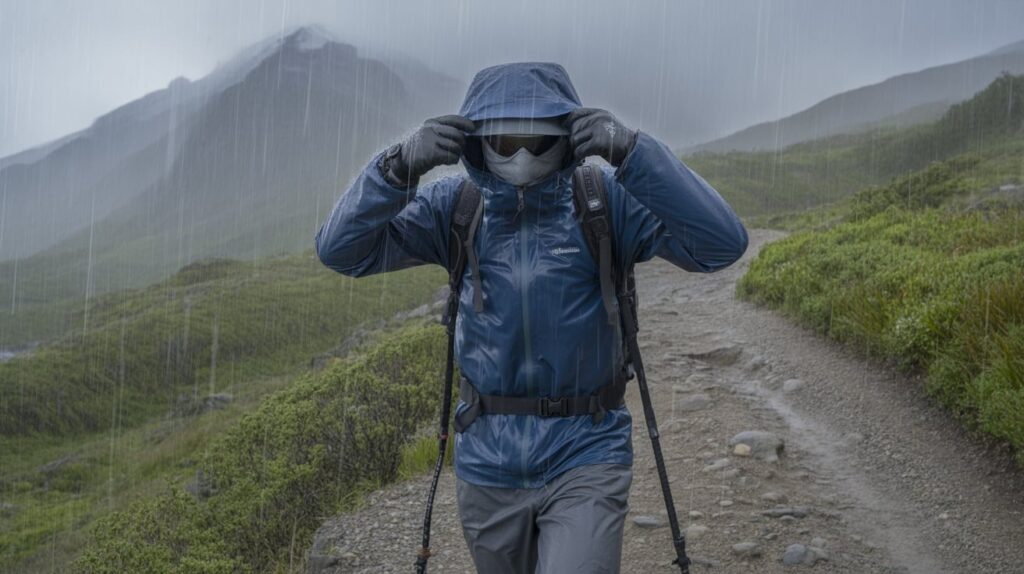
For a true all-day storm, go with a full waterproof set that seals at hood, cuffs, and ankles. Wear a wicking base, add a thin fleece for warmth, then layer a waterproof jacket and rain pants on top. Use gaiters to keep water and mud from creeping into boots, especially on boggy trails and wet boardwalks. This outfit keeps you moving safely when visibility drops and wind-driven rain hits sideways. Add a thin beanie in a pocket, since wind can drop temperatures in minutes.
Choose waterproof gloves or mitt shells over liners, since wet hands lose warmth quickly. Add a brimmed cap under your hood to guide rain away from your eyes and camera. Use waterproof boots with solid traction and carry a dry pair of socks for the end of the day. For Pinterest content, photograph raindrops beading on fabric and a simple checklist overlay: shell, rain pants, gaiters, gloves, buff, and dry-bag essentials. A small dry bag for gloves and electronics keeps essentials protected from spray.
Conclusion (≈75 words):
With this Patagonia outfit guide, navigating wind, rain, and trail days has never been easier. By layering smartly and choosing high-performance pieces, you can stay comfortable, dry, and stylish while exploring the outdoors. Keep this guide as a reference for your next adventure, and share it with friends who love the outdoors. With the right Patagonia outfits, every hike, trail run, or outdoor excursion becomes a more enjoyable and hassle-free experience.
