

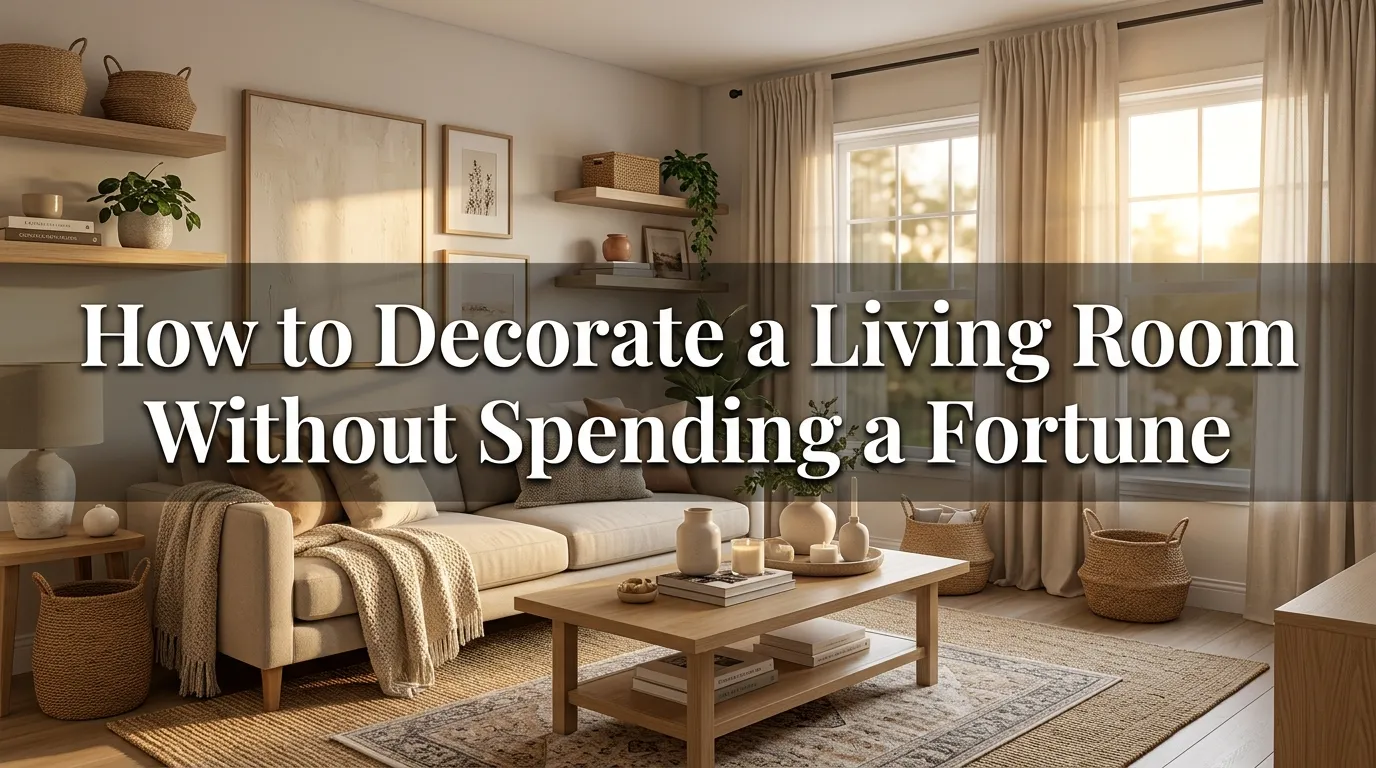
You can decorate a living room on a budget by rearranging your furniture, painting walls or furniture, layering affordable textiles, adding thrifted décor, improving lighting, and using natural accessories. Small, thoughtful updates often have the biggest impact and can make any living room feel warm, stylish, and professionally designed without a major renovation.
A beautiful living room doesn’t have to come with a luxury price tag. While it’s easy to admire professionally styled homes on Pinterest or in interior design magazines, recreating that polished look is often much more affordable than people expect. The secret isn’t buying expensive furniture—it’s learning how to combine thoughtful layouts, layered textures, and carefully chosen decorative accents to create a space that feels welcoming and timeless.
Many homeowners and renters assume they need a complete makeover to refresh their living room. In reality, some of the biggest transformations come from simple updates like rearranging furniture, introducing softer lighting, swapping outdated hardware, or adding a few vintage accessories with character. These small improvements can dramatically change how a room looks and functions without stretching your budget.
In my experience, the most inviting living rooms always feel intentional rather than expensive. They combine comfort with personality, making everyday life more enjoyable while providing a beautiful place to gather with family and friends. That’s why professional designers often focus on balance, scale, and texture before purchasing new furniture.
This guide shares 11 practical decorating ideas that prove you don’t need to spend a fortune to create a living room you’ll love. Whether your style leans modern, farmhouse, coastal, or classic, these ideas will help you build a cozy, stylish space that feels beautifully put together while staying within your budget.
Table of Contents
1. Smart Furniture Layout
Learn how rearranging your existing furniture can instantly make your living room feel larger and more inviting.
2. Vintage Decor Finds
Discover affordable thrifted treasures that add timeless character and personality.
3. Fresh Paint Updates
Transform walls and outdated furniture with one of the most budget-friendly home improvements.
4. Oversized Area Rugs
Anchor your seating area with the right rug to create a cohesive, designer-inspired layout.
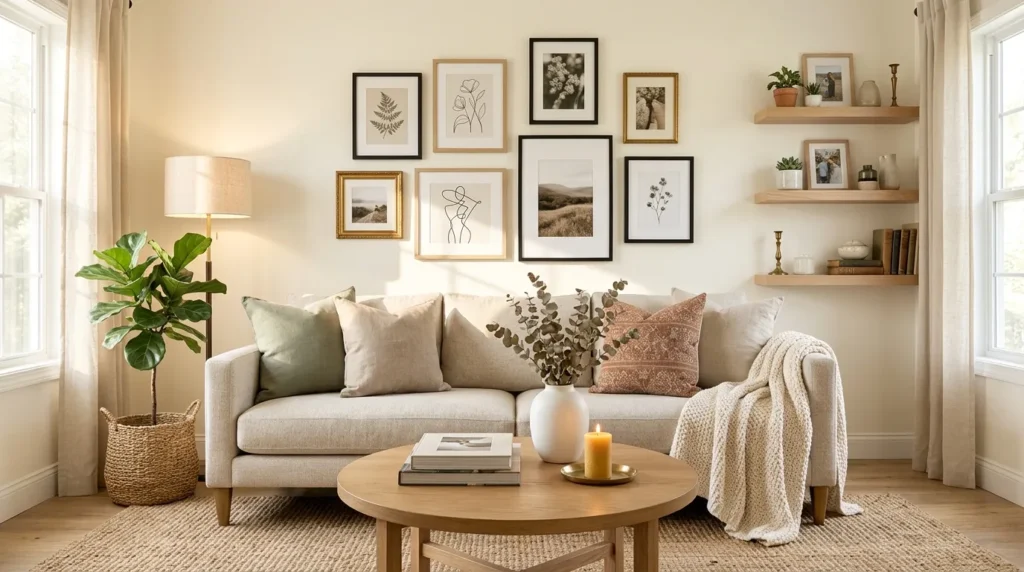
5. Gallery Wall Display
Fill empty walls with affordable artwork that reflects your personal style.
6. Layered Cozy Textiles
Use pillows, blankets, and soft fabrics to make your living room feel warm and inviting.
7. Natural Greenery Decor
Bring fresh life indoors with plants and simple natural accents.
8. Budget Storage Makeover
Upgrade inexpensive storage pieces to achieve a custom built-in appearance.
9. Layered Lighting Design
Create a cozy atmosphere by combining multiple light sources.
10. Coffee Table Styling
Style your coffee table like a designer using a few carefully selected accessories.
11. Elevated Window Treatments
Make windows appear larger and ceilings taller with simple curtain placement tricks.
1. Smart Furniture Layout
Quick Benefits
- Costs nothing to implement
- Improves everyday functionality
- Makes small rooms feel larger
- Creates comfortable conversation areas
- Highlights architectural focal points
Why It Works
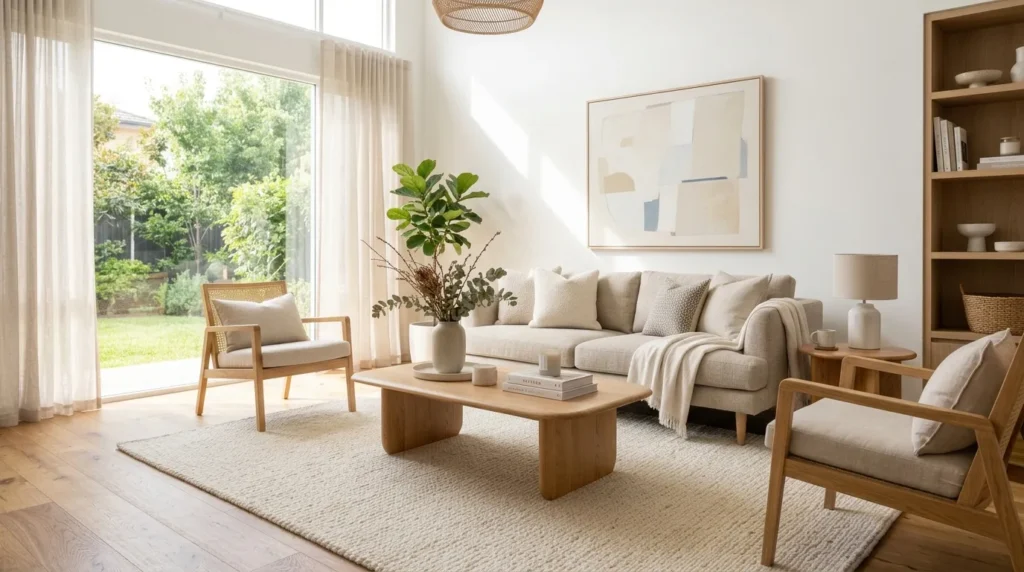
One of the easiest ways to refresh a living room is by changing the furniture layout instead of buying something new. A common mistake many homeowners make is placing every piece directly against the walls, assuming it creates more space. In reality, this often makes the room feel disconnected and less inviting. Pulling furniture inward helps define the seating area while creating a natural flow throughout the room. Even a few inches of adjustment can make the layout feel more balanced, comfortable, and intentionally designed.
How To Style It
Start by identifying the room’s natural focal point, whether it’s a fireplace, large window, or entertainment center. Position your sofa to face that feature and arrange accent chairs nearby to encourage conversation. Leave approximately three feet of walking space around the seating area to maintain easy movement. Finish the arrangement with a coffee table centered between the seating pieces and a large area rug that anchors the entire layout.
Designer Tip
Instead of filling every corner with furniture, leave a little breathing room around larger pieces. The extra negative space helps the room feel brighter, more open, and professionally styled.
2. Vintage Decor Finds
Quick Benefits
- Adds personality and charm
- Creates a collected designer look
- Saves money compared to buying new
- Supports sustainable decorating
- Introduces unique statement pieces
Why It Works
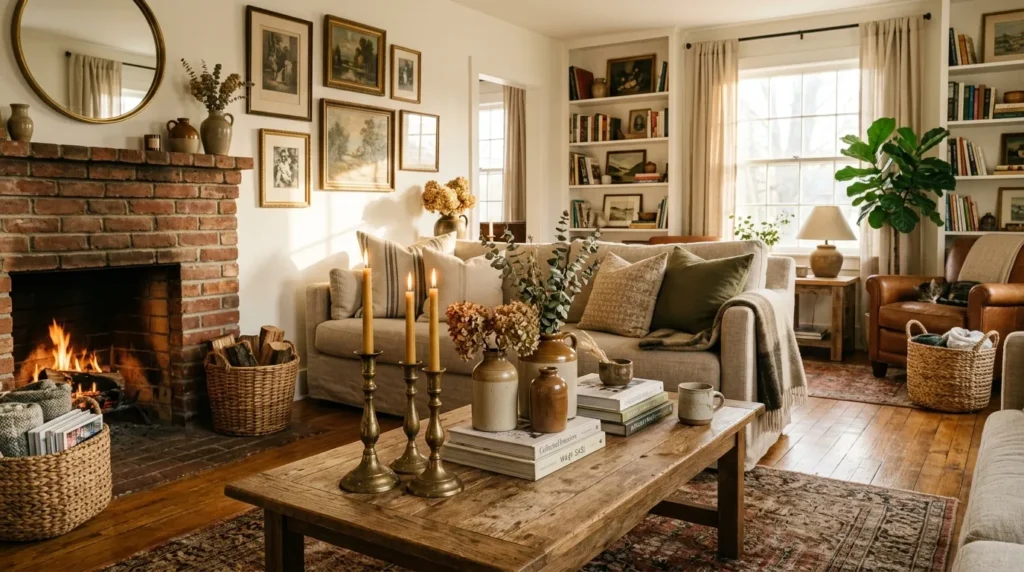
Rooms filled entirely with brand-new furniture can sometimes feel flat or overly staged. Vintage décor introduces history, texture, and individuality that simply can’t be replicated by mass-produced items. Thrift stores, estate sales, and flea markets often hide beautiful ceramic vases, wooden side tables, framed artwork, and brass accessories at surprisingly affordable prices. Mixing old and new pieces creates visual depth while giving your living room a warm, lived-in character that feels authentic.
How To Style It
Look for timeless materials such as solid wood, aged brass, ceramic, woven baskets, or natural stone. Style a vintage vase on your coffee table, place antique candlesticks on a mantel, or use a reclaimed wooden stool beside your sofa. Pair these pieces with modern furniture to create a balanced look that feels curated instead of cluttered.
Designer Tip
Choose one vintage statement piece for every modern grouping. This simple approach creates contrast without making the room feel busy.
3. Fresh Paint Updates
Quick Benefits
- Affordable weekend makeover
- Brightens dark interiors
- Refreshes outdated furniture
- Adds visual depth
- Completely changes the room’s mood
Why It Works
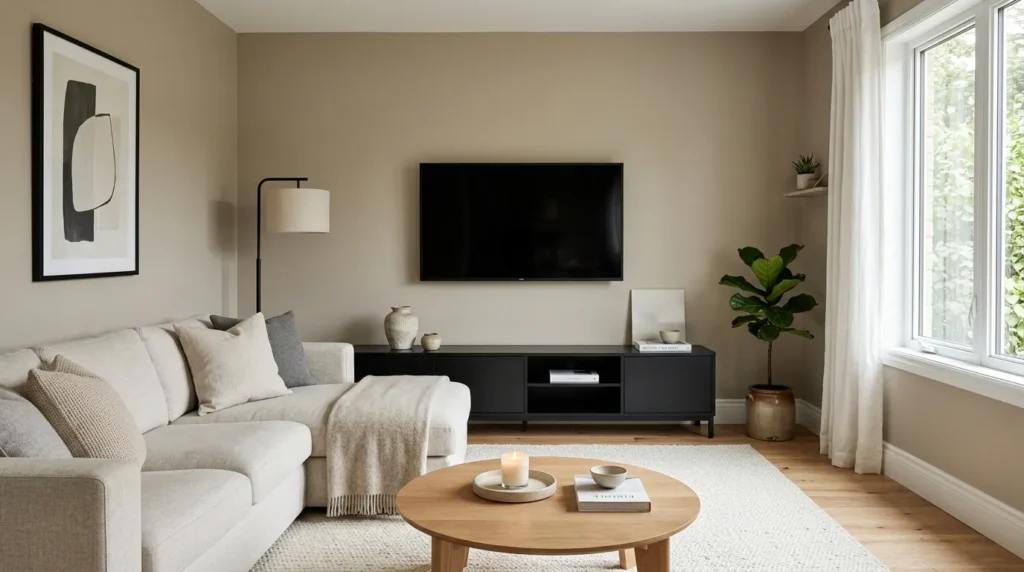
Few decorating projects deliver as much impact for as little cost as paint. A fresh coat on the walls instantly brightens the room, while painting older furniture gives it a completely new personality. Soft neutrals make smaller spaces feel larger, while deeper accent colors introduce warmth and sophistication. Because paint changes the perception of light and scale, it’s one of the first updates designers recommend when working with a limited budget.
How To Style It
Choose timeless shades like warm white, soft greige, light taupe, or muted sage for the walls. If you have older furniture that still functions well, consider sanding and repainting it in a rich matte black or charcoal finish. Complete the look with updated hardware, modern table lamps, and neutral artwork for a cohesive designer-inspired space.
Designer Tip
Painting walls, trim, and baseboards the same soft neutral color creates a seamless look that makes ceilings appear higher and rooms feel more spacious.
4. Oversized Area Rugs
Quick Benefits
- Defines your seating area beautifully
- Makes the room feel larger and more cohesive
- Adds warmth and softness underfoot
- Reduces noise in busy living spaces
- Creates a designer-inspired foundation
Why It Works
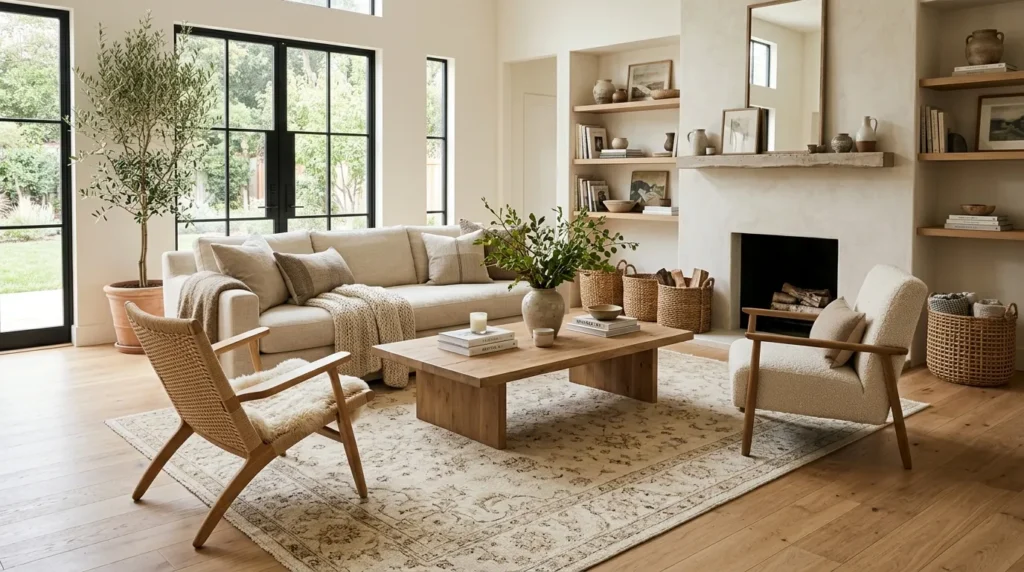
A properly sized area rug is one of the most important elements in living room design, yet it’s often overlooked. Many homeowners choose a rug that’s too small, causing furniture to feel disconnected and the room to appear smaller than it really is. A larger rug visually unifies the sofa, chairs, and coffee table into one cohesive seating zone. This simple upgrade immediately gives the room a polished, professionally designed appearance while making the entire space feel warmer and more inviting.
How To Style It
Choose a rug that’s large enough for at least the front legs of your sofa and accent chairs to rest on it. Neutral shades like ivory, beige, soft gray, or muted earth tones provide a timeless foundation that complements nearly every decorating style. Vintage-inspired patterns are excellent for hiding everyday wear while adding subtle character. Layer the rug with natural wood furniture, woven baskets, and textured fabrics to create a comfortable space that feels effortlessly stylish.
Designer Tip
If your budget allows only one major purchase, invest in a larger rug rather than smaller decorative accessories. It delivers one of the biggest visual transformations in the entire room.
5. Gallery Wall Display
Quick Benefits
- Adds personality to blank walls
- Creates an eye-catching focal point
- Displays meaningful artwork and memories
- Budget-friendly alternative to expensive art
- Easy to update over time
Why It Works
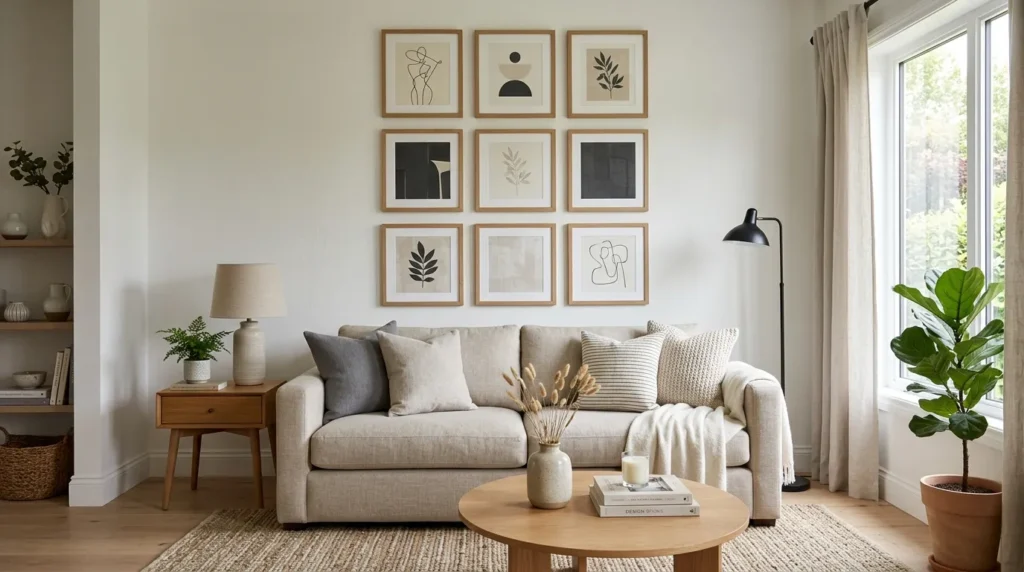
Empty walls can make even beautifully furnished living rooms feel unfinished. A thoughtfully designed gallery wall adds color, personality, and visual balance without requiring expensive artwork. Professional designers often combine framed prints, personal photography, botanical illustrations, and vintage artwork to create a collection that feels curated rather than purchased all at once. The result is a timeless display that reflects your personal style while drawing attention to the room’s main seating area.
How To Style It
Select matching frames in black, oak, or white for a clean, cohesive look. Mix minimalist artwork with family photographs or printable botanical illustrations to create depth and variety. Before hanging anything, arrange the frames on the floor to find the perfect layout. Leave approximately two inches between each frame to maintain even spacing and hang the collection at eye level for a balanced, gallery-inspired appearance.
Designer Tip
Keep one consistent element—such as matching frames or a unified color palette—to make mixed artwork feel intentional and professionally styled.
6. Layered Cozy Textiles
Quick Benefits
- Makes any sofa feel more inviting
- Adds warmth and texture instantly
- Refreshes your décor seasonally
- Introduces color without repainting
- Creates a comfortable, lived-in atmosphere
Why It Works
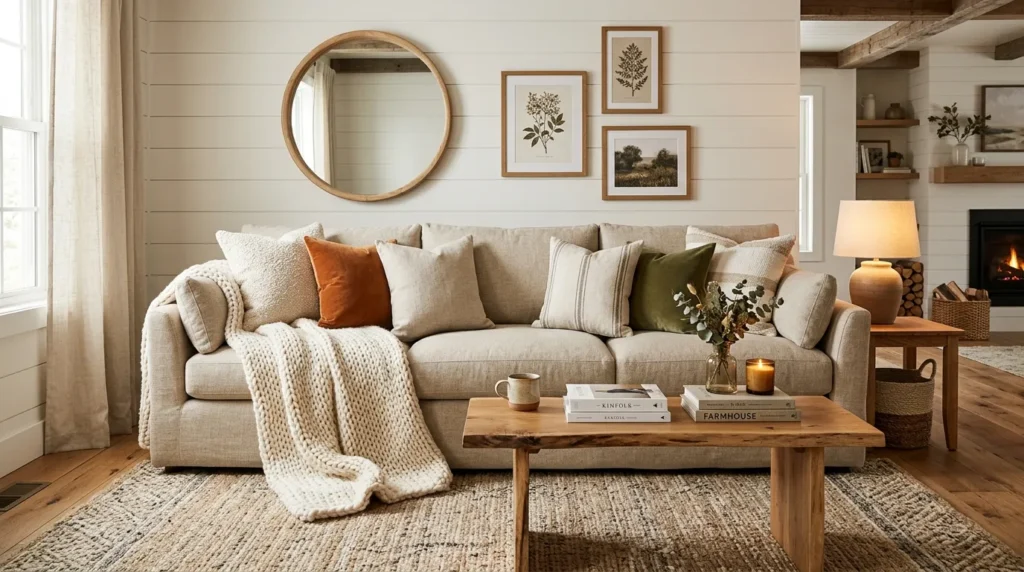
Texture plays a major role in creating a cozy and welcoming living room. Even the simplest furniture can feel luxurious when layered with soft fabrics that add depth and visual interest. Combining materials like linen, velvet, boucle, chunky knit, and cotton creates subtle contrast that keeps the room from feeling flat. Designers often rely on layered textiles to soften modern furniture and make everyday spaces feel more comfortable without investing in new pieces.
How To Style It
Start with two or three throw pillows in different sizes and complementary textures instead of identical matching sets. Add a chunky knit or waffle-weave throw blanket casually draped over one corner of the sofa or an accent chair. Choose a color palette of two or three coordinating tones, then repeat those colors in your curtains, rug, and decorative accessories to create a cohesive look that feels warm and inviting.
Designer Tip
Use oversized feather or down-alternative inserts inside your pillow covers. Fuller pillows instantly create the plush, high-end look often seen in professionally styled homes.
7. Natural Greenery Decor
Quick Benefits
- Brings fresh color into your living room
- Creates a calm and relaxing atmosphere
- Softens hard furniture lines
- Works with every decorating style
- Budget-friendly way to refresh your space
Why It Works
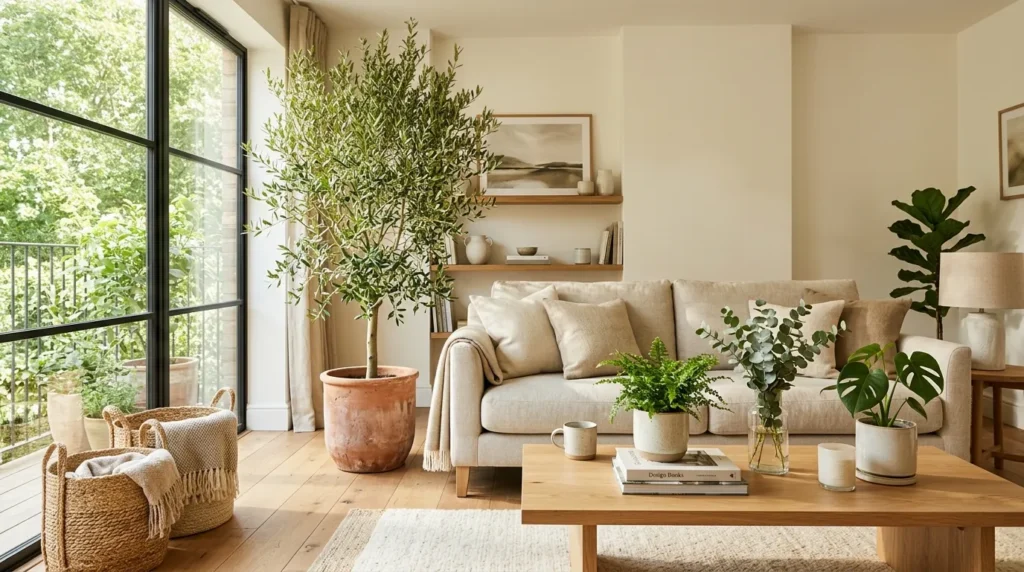
Natural elements instantly make a living room feel more welcoming and lived in. Whether you choose real plants, fresh branches, or realistic faux greenery, adding organic textures helps balance furniture, soften architectural lines, and introduce movement throughout the room. One thing I’ve noticed is that professionally styled living rooms almost always include greenery because it creates contrast against neutral walls and furniture. Even a single oversized plant or sculptural vase filled with branches can transform an empty corner into a beautiful focal point without requiring a large decorating budget.
How To Style It
Place a tall fiddle leaf fig, olive tree, or faux eucalyptus in an empty corner to add height and visual interest. Style a ceramic vase filled with seasonal branches on your coffee table or mantel for an effortless designer look. Smaller plants such as pothos, snake plants, or succulents work beautifully on floating shelves, side tables, and bookcases. Choose woven baskets, textured ceramic planters, or natural stone pots to complement the rest of your décor while adding warmth and texture.
Designer Tip
Group plants in odd numbers and vary their heights. This creates a more natural, balanced arrangement that feels professionally styled rather than overly symmetrical.
8. Budget Storage Makeover
Quick Benefits
- Keeps everyday clutter organized
- Gives inexpensive furniture a custom look
- Adds valuable storage space
- Improves the room’s overall appearance
- Maximizes unused wall space
Why It Works
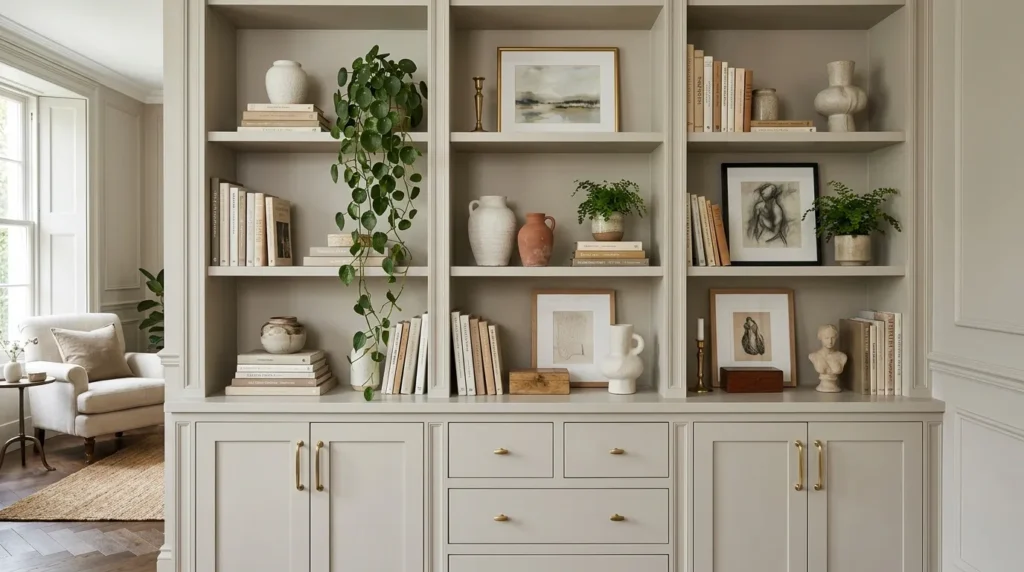
Storage furniture doesn’t have to be custom-built to look expensive. Many affordable bookcases, cabinets, and shelving units can be transformed with a few simple upgrades. Painting them to match the wall color creates the illusion of built-in cabinetry, while replacing basic hardware instantly elevates their appearance. These small improvements make the room feel more refined and intentional without the cost of custom woodworking.
How To Style It
Arrange two matching bookcases side by side to create a larger built-in effect. Paint them the same color as the surrounding walls and add simple crown molding across the top if possible. Replace plastic knobs with brushed brass, matte black, or antique bronze hardware for a custom finish. Style the shelves with books, ceramic vases, framed artwork, woven baskets, and greenery, leaving open space between objects to keep the display clean and uncluttered.
Designer Tip
Avoid filling every shelf. Leaving small gaps between decorative items makes built-in storage feel lighter, more elegant, and thoughtfully curated.
9. Layered Lighting Design
Quick Benefits
- Creates a warm, inviting atmosphere
- Eliminates harsh shadows
- Highlights decorative features
- Makes evenings feel cozier
- Adds depth and dimension to the room
Why It Works
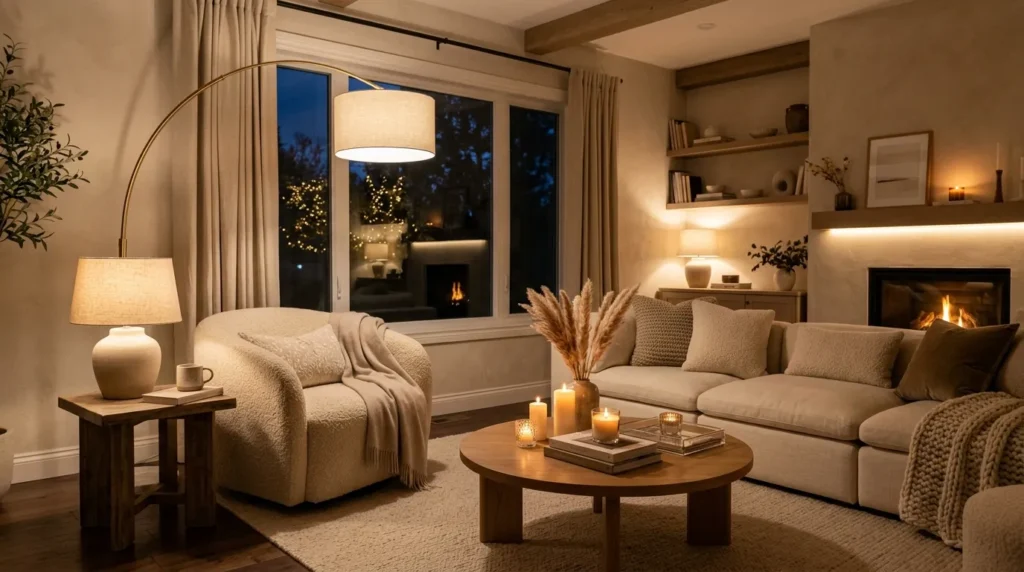
Lighting is often the finishing touch that transforms an ordinary living room into a welcoming retreat. Depending on a single ceiling fixture can make the space feel flat and overly bright. Designers instead layer several light sources at different heights to create warmth, depth, and flexibility. Combining floor lamps, table lamps, wall sconces, and accent lighting allows you to adjust the mood throughout the day while highlighting artwork, shelving, and architectural details.
How To Style It
Position a floor lamp beside your favorite reading chair, place matching table lamps on side tables, and use battery-operated sconces or LED puck lights to illuminate bookcases and display shelves. Choose warm white bulbs around 2700K to create a soft, comfortable glow that flatters furniture and décor. Finish the room with candles or flameless lanterns for additional ambiance during evenings and special gatherings.
Designer Tip
Instead of one bright light, use three to five smaller light sources throughout the room. Layered lighting creates a cozy, high-end atmosphere that feels much more inviting.
10. Coffee Table Styling
Quick Benefits
- Creates a polished focal point
- Keeps everyday essentials organized
- Adds personality without clutter
- Easy to update throughout the year
- Makes inexpensive furniture look more refined
Why It Works
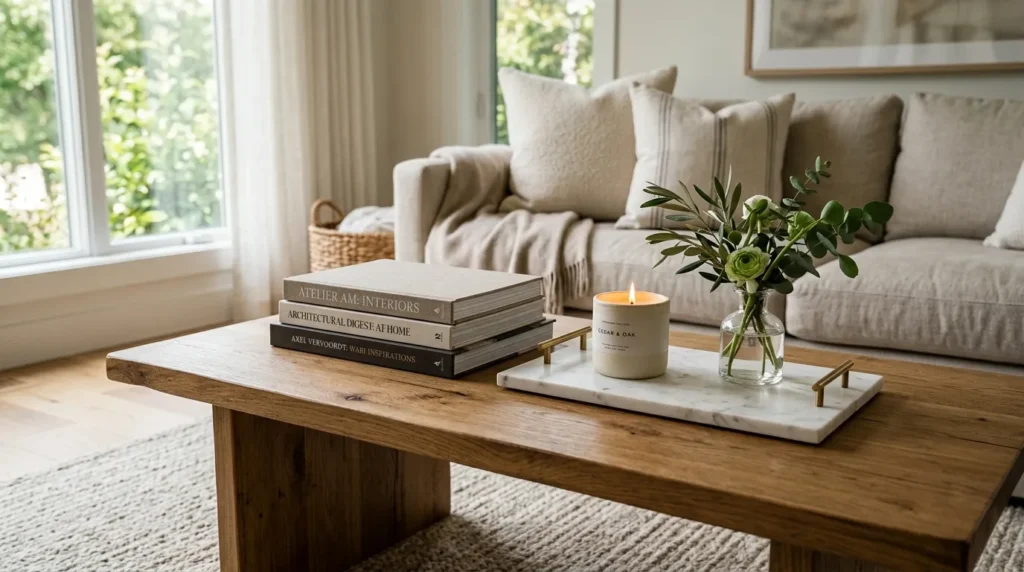
The coffee table sits at the center of most living rooms, making it one of the first areas guests notice. When it’s covered with random items, it can make the entire space feel disorganized. Thoughtful styling creates balance while giving the room a finished, designer-inspired appearance. One thing that works especially well is using only a few carefully selected decorative pieces instead of filling every inch of the tabletop. This simple approach keeps the room feeling open, organized, and visually appealing.
How To Style It
Start with a stack of two or three beautiful coffee table books to create height and structure. Add a decorative tray to organize remotes, coasters, or candles, then finish with a small vase of fresh flowers or greenery. Incorporate natural materials like wood, woven rattan, ceramic, or marble to add warmth and texture. Keep enough open space around each item so the arrangement feels clean and intentional rather than crowded.
Designer Tip
Follow the “Rule of Three” by grouping objects in sets of three with different heights and textures. This classic styling technique creates a balanced display that looks effortless and elegant.
11. Elevated Window Treatments
Quick Benefits
- Makes ceilings appear taller
- Maximizes natural light
- Frames windows beautifully
- Adds softness to the room
- Gives inexpensive curtains a custom look
Why It Works
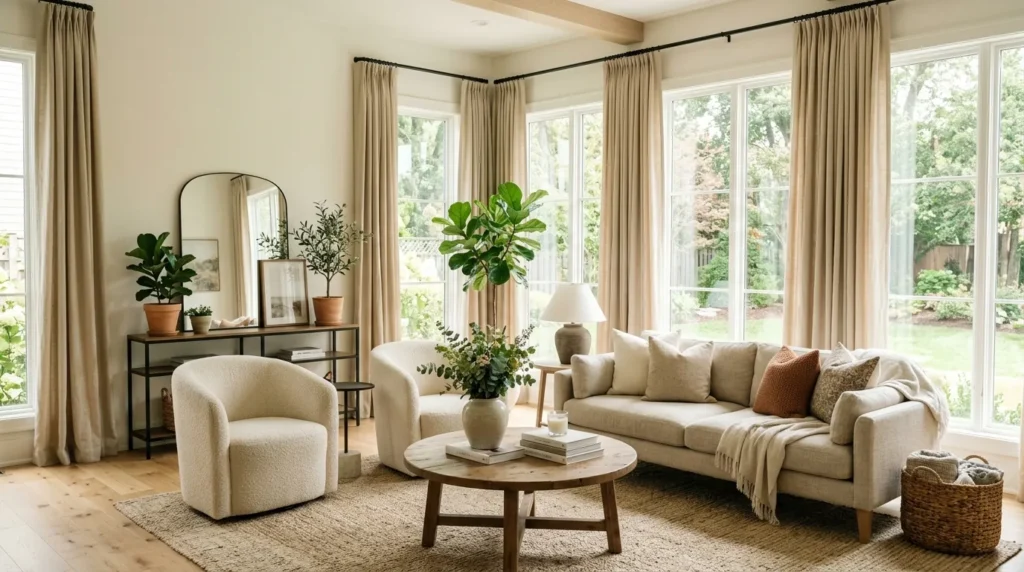
Window treatments have a surprisingly large impact on how spacious a living room feels. Curtains that are hung too low or barely cover the window can make the walls appear shorter and the room feel cramped. By mounting curtain rods higher and extending them beyond the window frame, you create the illusion of larger windows and higher ceilings. This professional design trick instantly elevates the room without requiring expensive custom drapery.
How To Style It
Install a simple metal curtain rod just below the ceiling line and extend it 10–12 inches beyond each side of the window. Choose full-length linen or linen-look curtains in soft neutral shades like ivory, oatmeal, or warm white. Allow the fabric to lightly touch the floor for a tailored appearance. During the day, keep the curtains open to maximize natural light and make the room feel brighter and more spacious.
Designer Tip
If your curtains are slightly too short, lower the curtain rings or use clip rings to gain a few extra inches for a more custom appearance.
Frequently Asked Questions
What is the easiest way to decorate a living room on a budget?
Start by decluttering the space and rearranging your existing furniture. A fresh layout often makes the room feel larger without costing anything. Then focus on affordable updates like paint, throw pillows, lighting, and second-hand décor to gradually build a cohesive, stylish look.
How can I make my living room look more expensive?
Layer different textures, choose a large area rug, upgrade your lighting, and use a consistent color palette. Mixing vintage accessories with modern furniture also creates a collected, designer-inspired appearance that feels elegant without requiring a large budget.
What colors make a living room feel bigger?
Light neutrals such as warm white, soft beige, greige, and light gray reflect more natural light, making the room feel brighter and more spacious. Adding subtle contrast through wood tones, greenery, and textiles prevents the space from feeling flat.
Where can I find affordable living room décor?
Thrift stores, estate sales, flea markets, local antique shops, and online marketplaces are excellent places to find unique furniture and accessories. Many retailers also offer affordable seasonal décor that can easily be mixed with vintage pieces for a balanced look.
How often should I refresh my living room décor?
Small updates every season help keep your living room feeling fresh. Swap pillow covers, throws, candles, greenery, and decorative accessories instead of replacing large furniture. These simple changes are affordable and allow your space to evolve throughout the year.
Can renters decorate without making permanent changes?
Absolutely. Use removable wallpaper, peel-and-stick hooks, freestanding shelving, washable rugs, floor lamps, and temporary window treatments. These updates personalize your living room while protecting your security deposit.
Conclusion
Creating a beautiful living room doesn’t have to mean spending thousands of dollars on brand-new furniture or expensive renovations. In fact, some of the most impressive transformations come from thoughtful styling, smart furniture placement, and carefully selected decorative details. By focusing on layout, lighting, texture, and timeless accessories, you can create a welcoming space that feels comfortable, functional, and uniquely your own.
Whether you begin by rearranging your furniture, adding a larger area rug, painting an outdated cabinet, or styling your coffee table, every small improvement contributes to a room that feels more polished and inviting. The goal isn’t to copy a magazine-perfect interior—it’s to create a living room that reflects your personality while supporting everyday life.
Start with one or two ideas that fit your budget, then build your space gradually over time. Thoughtful decorating always creates a greater impact than simply buying more furniture. With a little creativity and careful planning, your living room can become a warm, stylish retreat you’ll enjoy for years to come.
Related Articles
- 10 Cozy Bedroom Ideas – Create a relaxing bedroom with layered textures and calming colors.
- 10 Small Living Room Layout Ideas – Maximize every square foot with smart furniture placement.
- 10 Modern Farmhouse Living Room Ideas – Blend rustic charm with modern comfort.
- 10 DIY Accent Wall Ideas – Add personality and visual interest without a major renovation.
- 10 Neutral Home Decor Ideas – Build a timeless color palette that works in every season.
