

1) Campsite “Quick Drop” Bag (First 10 Minutes Saver)
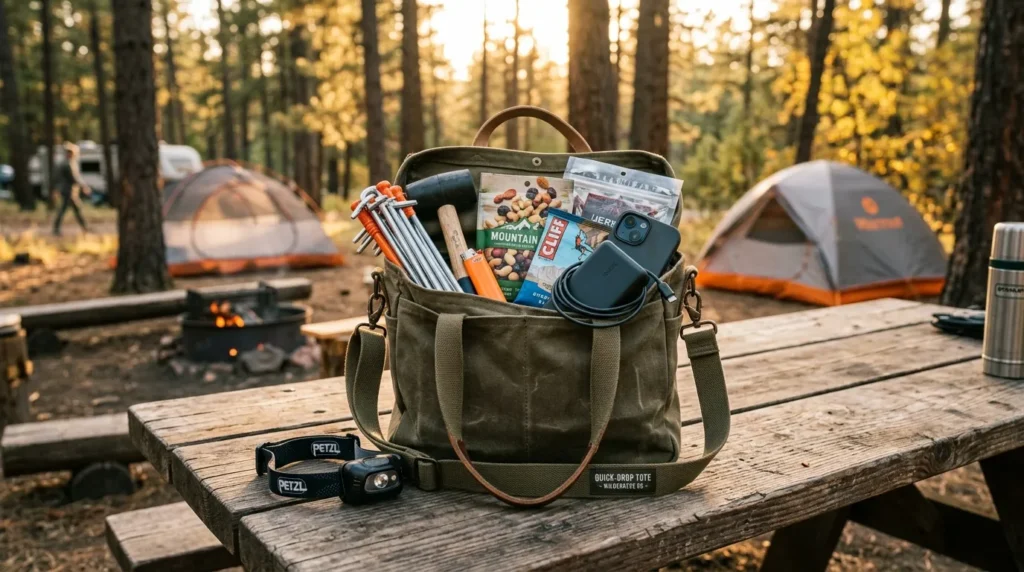
The first night feels chaotic if essentials are buried under everything. Pack a “quick drop” bag that stays on top of your gear: headlamp, lighter/matches, tent stakes, multitool, bug spray, wipes, and a snack. When you arrive, grab this first so you can set up fast and avoid rummaging in fading daylight.
For your checklist, label the bag and keep it in the car trunk opening or top of the backpack. Add a small roll of trash bags and a portable charger so you’re covered if plans shift. This one step makes first-night setup calmer, especially when you arrive late or weather changes quickly.
2) Tent + Footprint Setup (Dry Ground, Less Stress)
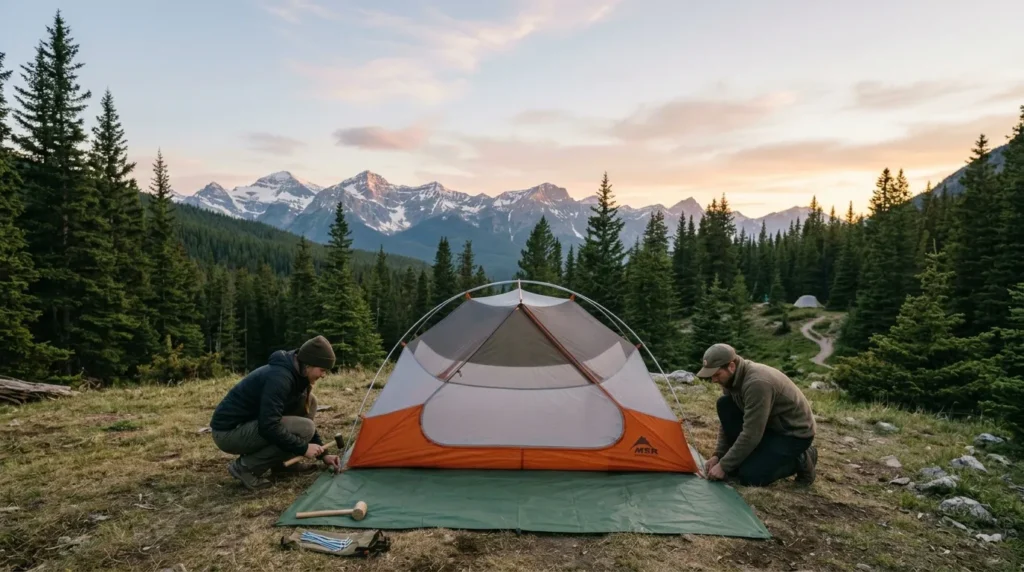
Start with a footprint or tarp under your tent to protect the floor from rocks, moisture, and surprise puddles. Lay it flat, then position your tent so the door faces the best view—or away from wind if it’s breezy. A clean, dry base makes the whole night more comfortable and helps your tent last longer.
For packing, keep the footprint and stakes in an outer pocket so you can access them first. Bring a small mallet (or use a rock) for tough ground. If rain is possible, pitch the rainfly early. A solid base setup reduces problems before they start.
3) Stake + Guyline Check (Wind-Proof Your Night)
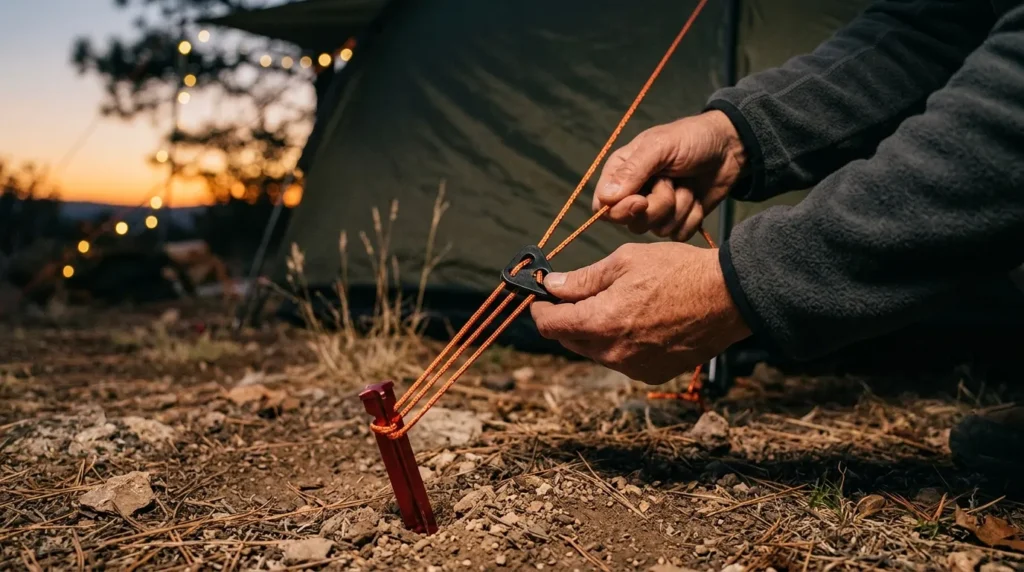
Even on calm evenings, wind can show up at 2 a.m. and turn your tent into a noisy mess. After pitching the tent, check every stake and tension the guylines so the fabric stays tight. It prevents flapping, reduces leaks in rain, and makes the tent feel sturdier when you’re trying to sleep.
For the checklist, pack extra stakes and a few lengths of cord—ground can be tricky, and a backup saves frustration. Learn one simple knot (like a taut-line hitch) or use line tensioners. This small step keeps your first night quieter, warmer, and way more secure.
4) Sleeping System Test (Warmth = Happiness)
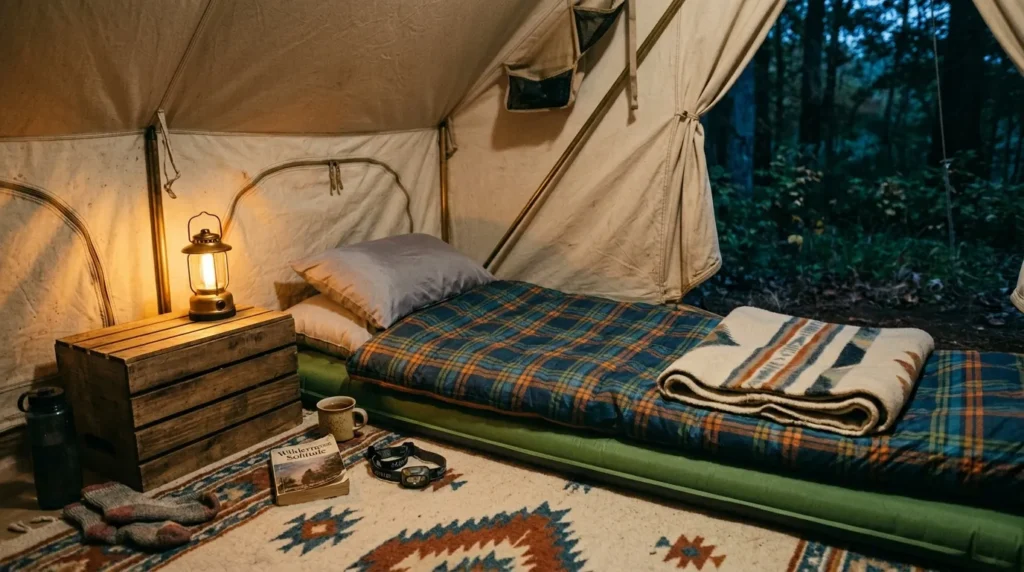
Before it gets fully dark, set up your sleeping pad and bag so you can quickly crawl in when you’re tired. A sleeping pad matters as much as the sleeping bag—cold ground steals heat fast. Add a liner or extra blanket if the night will be chilly. The goal is comfort, not survival mode.
For packing, keep your sleeping gear in waterproof bags. Bring a compact pillow or use a stuff sack filled with clothes. If you get cold easily, pack warm socks and a beanie just for sleeping. A cozy sleep setup makes the first night feel relaxing instead of stressful.
5) Headlamp + Lantern Setup (Hands-Free Night Mode)
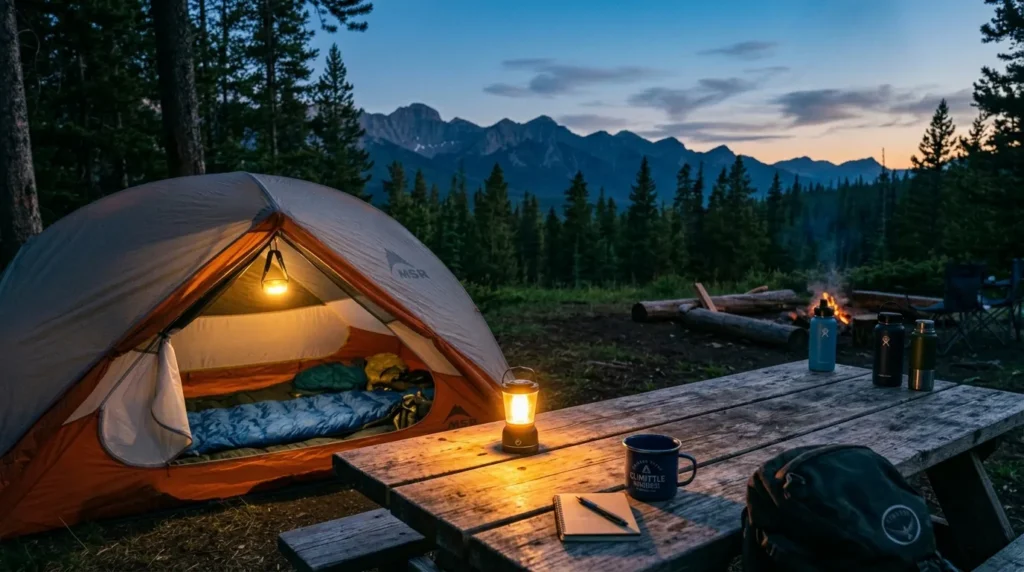
The moment the sun drops, lighting becomes your best friend. Put on a headlamp before it’s dark and set a lantern on the table or hang it in the tent. Hands-free light helps with cooking, organizing gear, and finding zippers without turning the night into a frustrating scavenger hunt.
For your checklist, pack spare batteries (or fully charged rechargeable lights). Keep one headlamp per person if possible. Use warm light modes for a cozy vibe and to attract fewer bugs. Store the lights in your “quick drop” bag so you can grab them the second you arrive.
6) First-Night Camp Kitchen Bin (One Box = Dinner Ready)
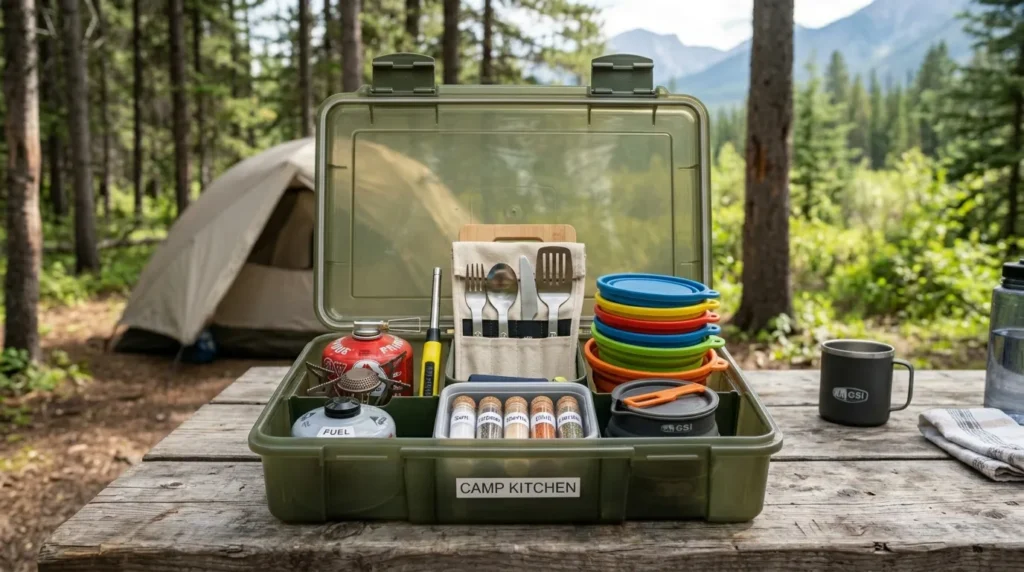
Instead of digging through random bags, pack your kitchen in one bin: stove, fuel, lighter, pot, utensils, cutting board, and a small spice kit. On the first night, you want a simple dinner without chaos. A dedicated kitchen bin means you can go from “arrival” to “meal” quickly—especially helpful if you arrive late.
For packing, label the bin and keep it accessible in the car. Add paper towels, soap, and a sponge in a zip bag. Pack a backup lighter and a small trash bag. When your kitchen is organized, camping feels easy and fun instead of messy.
7) Water Plan (Drinking + Cooking + Cleaning)
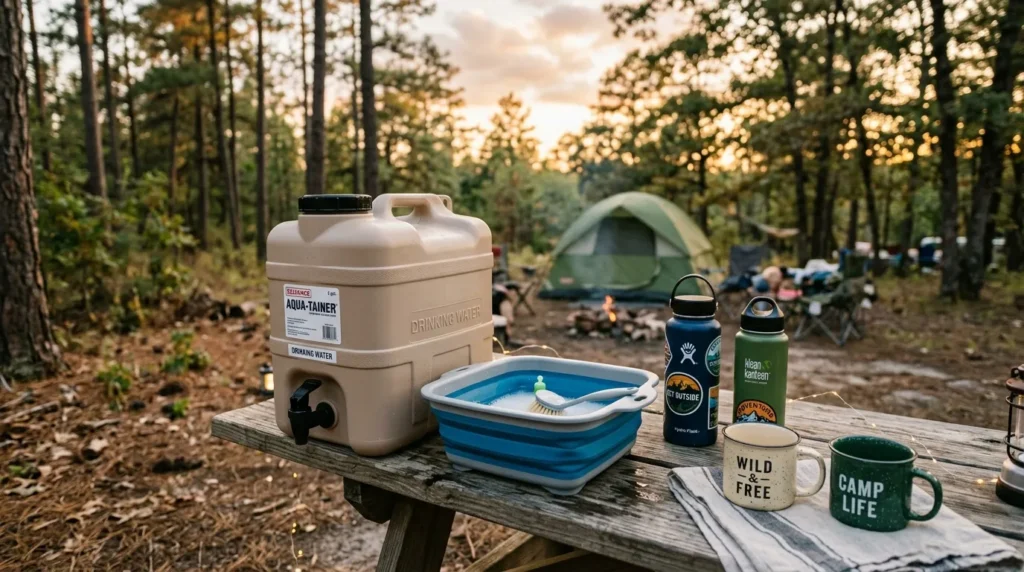
Water problems ruin first nights fast, so plan it early. Bring a large jug for camp and fill bottles as soon as you arrive. You’ll need water for drinking, cooking, brushing teeth, and quick cleanup. If you’re not at a campsite with taps, a jug and backup bottles are essential.
For the checklist, pack a water filter or purification tablets if you’re unsure about sources. Bring a collapsible sink or basin for washing dishes. Keep electrolyte packets for hot weather. Put your water setup near the cooking area so it becomes part of your routine—and you won’t forget to drink.
8) Simple First Dinner (No-Fuss, Low Cleanup)
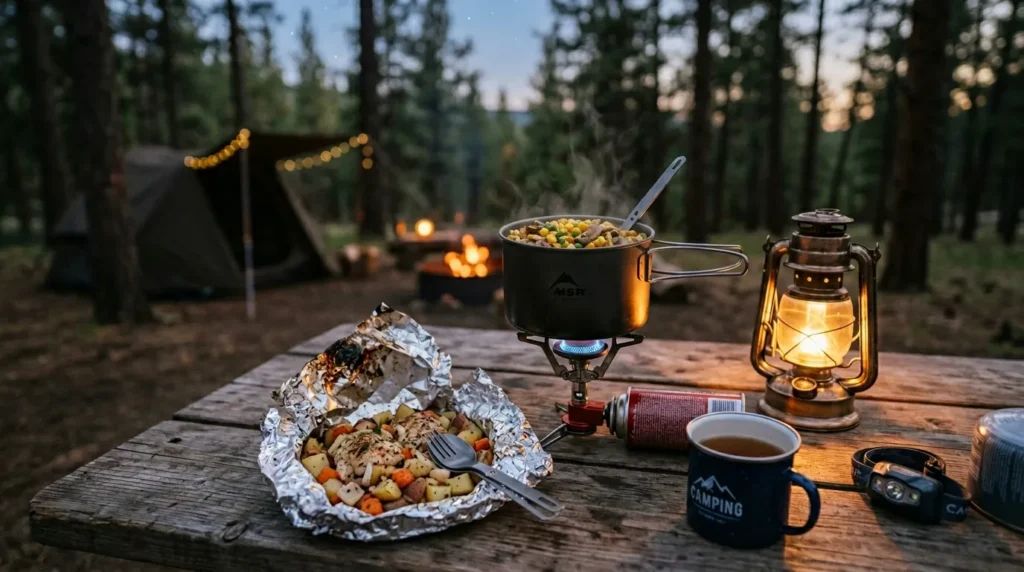
Your first night dinner should be easy, comforting, and low-cleanup. Think instant noodles with veggies, pre-made chili, foil packet meals, or wraps. The goal is to eat quickly so you can relax, not spend two hours cooking while daylight disappears. Simple meals make first-night camping feel smooth.
For packing, pre-chop ingredients at home and store them in containers. Bring one pot, one spoon, and minimal dishes. Pack a small spice mix for flavor without extra clutter. If you’re tired after travel, you’ll be glad you planned a “lazy dinner” that still tastes good.
9) Campfire Kit (If Fires Are Allowed)
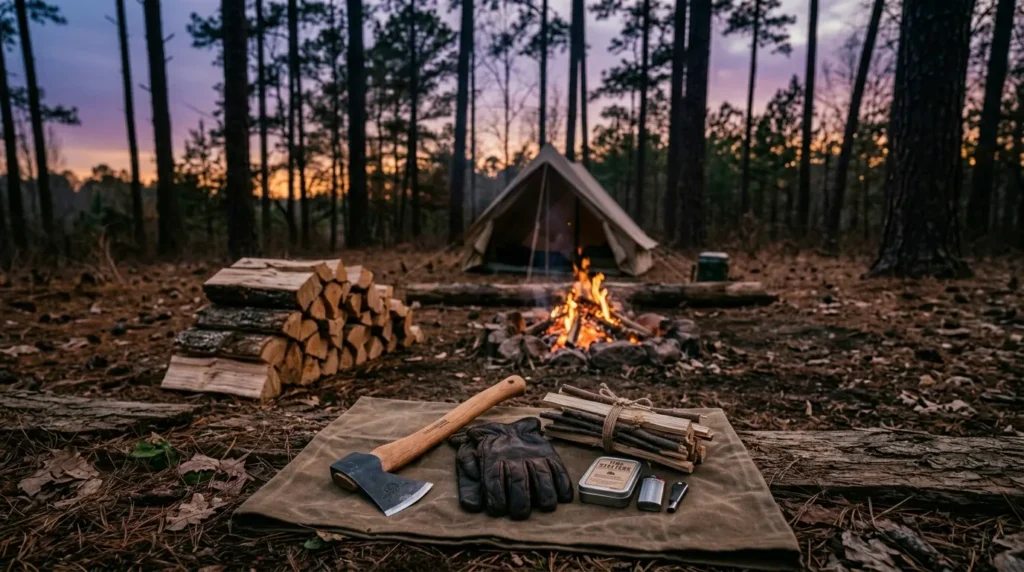
If your site allows campfires, pack a small fire kit: fire starters, lighter, gloves, and a few pieces of dry kindling. First nights are when people struggle because wood is damp or they’re rushing. A prepared kit helps you get a cozy fire quickly for warmth, cooking, and that classic camping vibe.
For your checklist, always check local fire rules and current restrictions before you go. Bring a small shovel tool if needed and have water nearby. Pack marshmallows for an easy first-night treat. Keep the kit separate from food so it stays clean and accessible.
10) Bug Defense Station (Don’t Wait Until You’re Bitten)
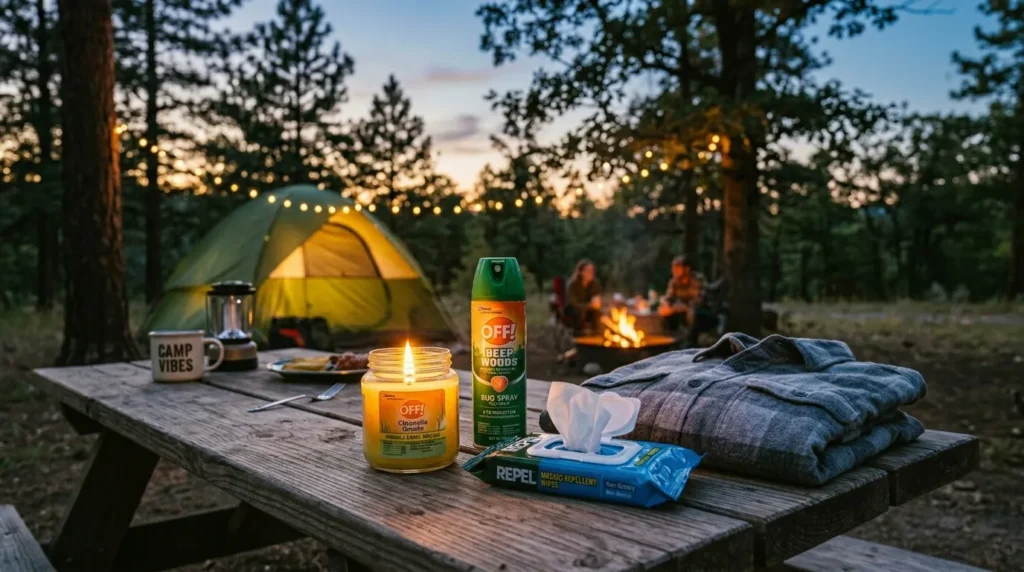
Bugs get worse right at dusk—exactly when you’re setting up and cooking. Create a “bug defense station” on the picnic table: repellent, wipes, citronella candle, and a lightweight long-sleeve layer. Doing this early saves you from the frustrating swat-and-run routine that ruins dinner.
For packing, include bite relief cream, antihistamine, and a small tick remover tool. Wear socks and closed shoes in buggy areas. Keep repellent in your quick-drop bag so you can grab it fast. A little preparation makes the first night feel calmer and much more comfortable.
11) Food Storage Plan (Keep Critters Away)
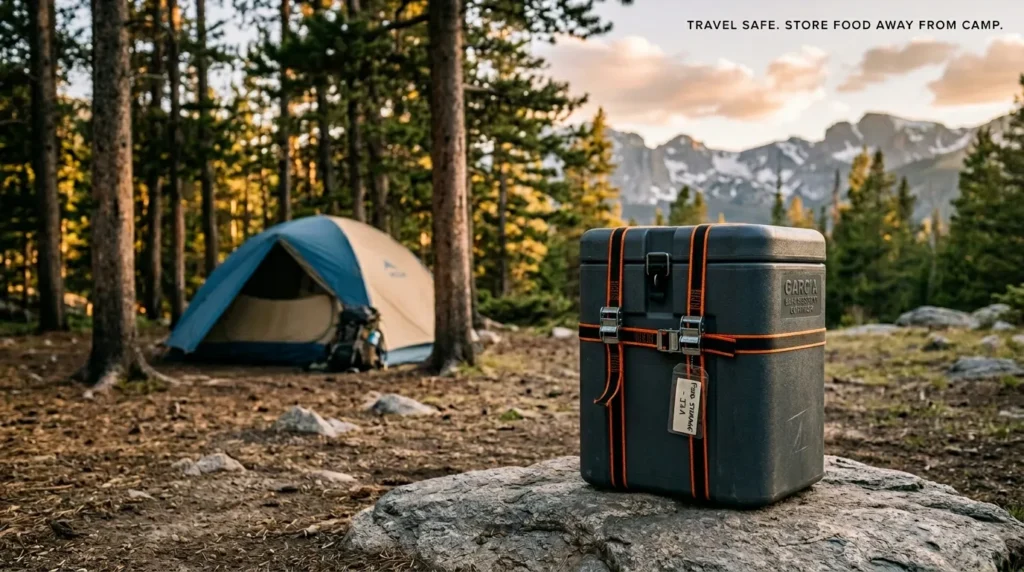
Food safety is a first-night priority. Store all food and scented items (toothpaste, deodorant) in a sealed cooler, bear canister, or campground locker. Leaving snacks in the tent is a common beginner mistake that invites animals and ruins your night fast. A clean campsite keeps you safer and helps protect wildlife.
For the checklist, pack odor-proof bags and label your food bin. Clean up right after dinner and dispose of trash properly. If you’re in bear country, follow local rules exactly. Keep your cooler in the car or locked area overnight. This one habit makes camping safer and less stressful.
12) Cozy Camp Clothes (Change Before You’re Cold)
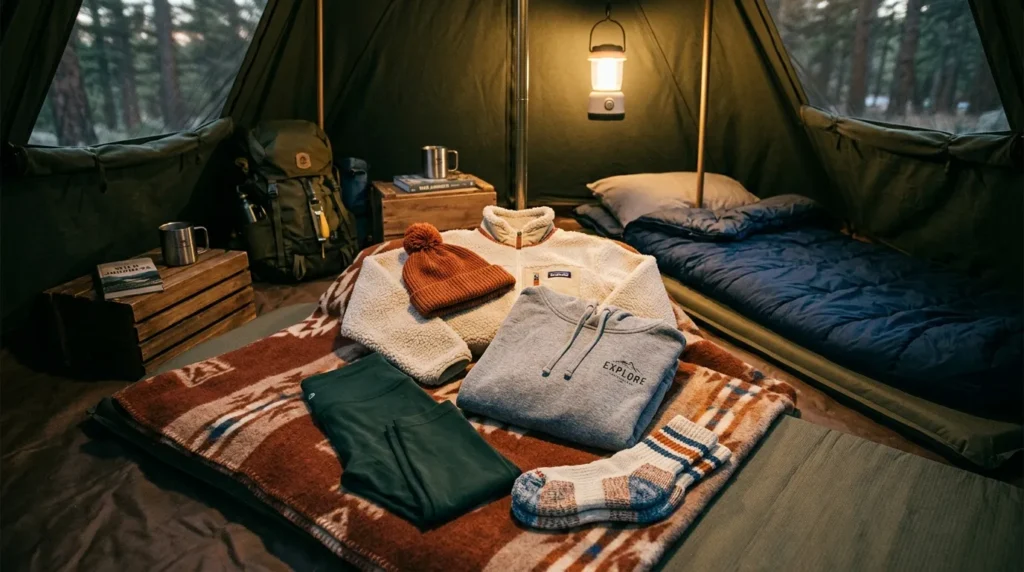
A simple trick: change into warm camp clothes before you get cold. Once the sun drops, temps can fall quickly near water or in forests. Pack a cozy set—leggings or joggers, a fleece, warm socks, and a beanie—so you can relax comfortably by the fire or in the tent.
For packing, keep camp clothes in a separate dry bag so they stay clean and easy to grab. Add a “sleep-only” set to keep your sleeping bag fresh. If it’s humid, pack a light layer too. Comfortable clothes make the first night feel cozy instead of uncomfortable.
13) Quick Cleanup Kit (Wipes, Soap, Trash Bags)
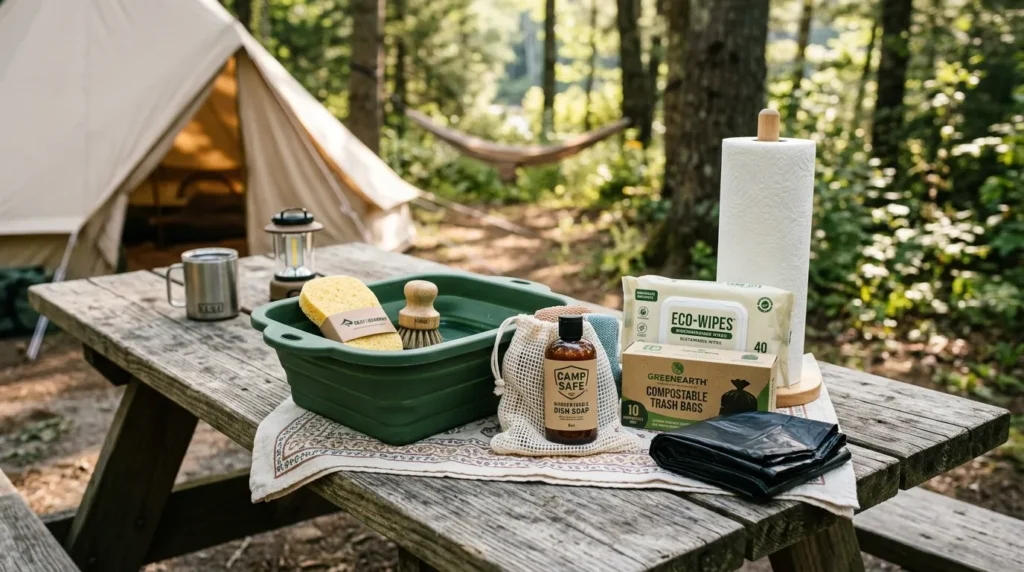
Cleanup is easier when you’re prepared. Pack wipes for hands, biodegradable soap, a sponge, paper towels, and trash bags. After dinner, a quick wipe-down keeps bugs away and makes the campsite feel organized. It also saves you from waking up to a messy table and leftover smells.
For the checklist, bring a small scrubber for pots and a zip bag for wet sponges. Keep trash secured and away from your tent. If water is limited, use wipes first and rinse minimally. A simple cleanup routine makes the first night feel smooth and sets you up for an easier morning.
14) Toilet Setup Plan (Nighttime Bathroom Confidence)
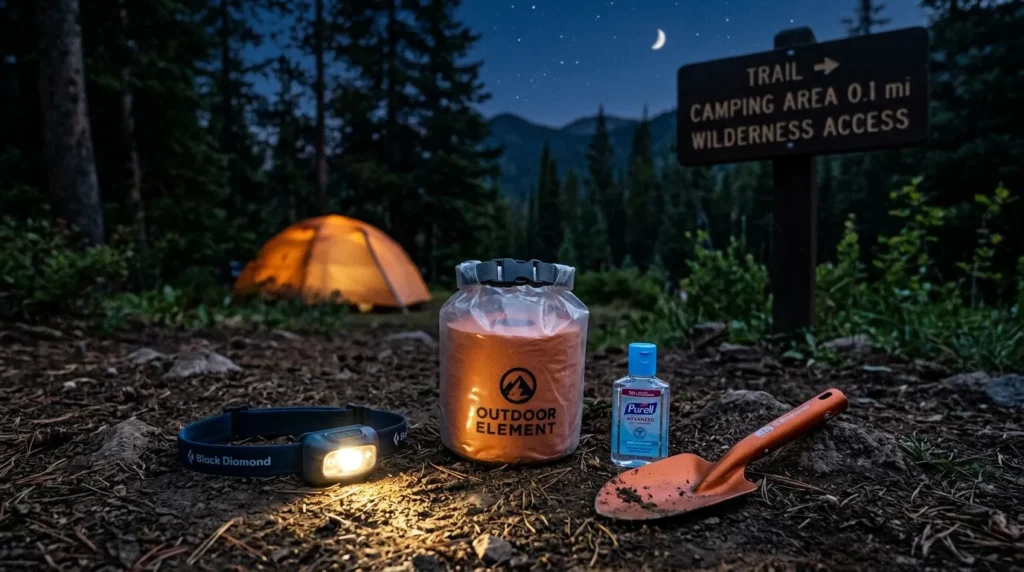
The first night bathroom situation can feel intimidating, so plan it early. Locate the restroom or decide your backcountry spot before dark. Pack toilet paper in a waterproof bag, hand sanitizer, and a small trowel if needed. Knowing your plan prevents panic at 2 a.m. when you’re sleepy and it’s pitch dark.
For packing, keep these items in an outer pocket or your quick-drop bag. Bring a headlamp and a small spare flashlight. Wear slip-on shoes at night for quick bathroom trips. If you’re nervous, do a “practice walk” to the restroom after setup. Confidence = better sleep.
15) Nighttime Warm Drinks (Cozy + Hydration)
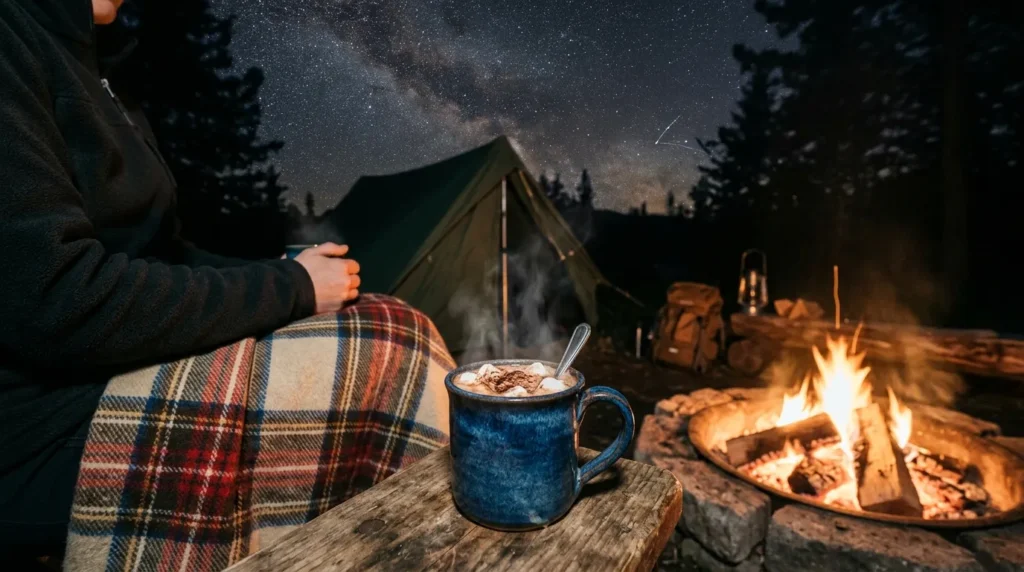
A warm drink makes the first night feel instantly cozy. Pack tea, hot cocoa, or instant cider and heat water on your camp stove. It helps you warm up, relax, and settle into the campsite vibe. Plus, it’s a comforting ritual after travel and setup, especially when the temperature drops.
For your checklist, bring insulated mugs so drinks stay hot longer. Pack a small honey or sugar packet if you like sweetness. If you’re in cold weather, consider a thermos to keep hot water ready. Keep caffeine low at night so you can sleep. A warm drink is an easy win.
16) Charging Plan (Power Bank + Cable Kit)
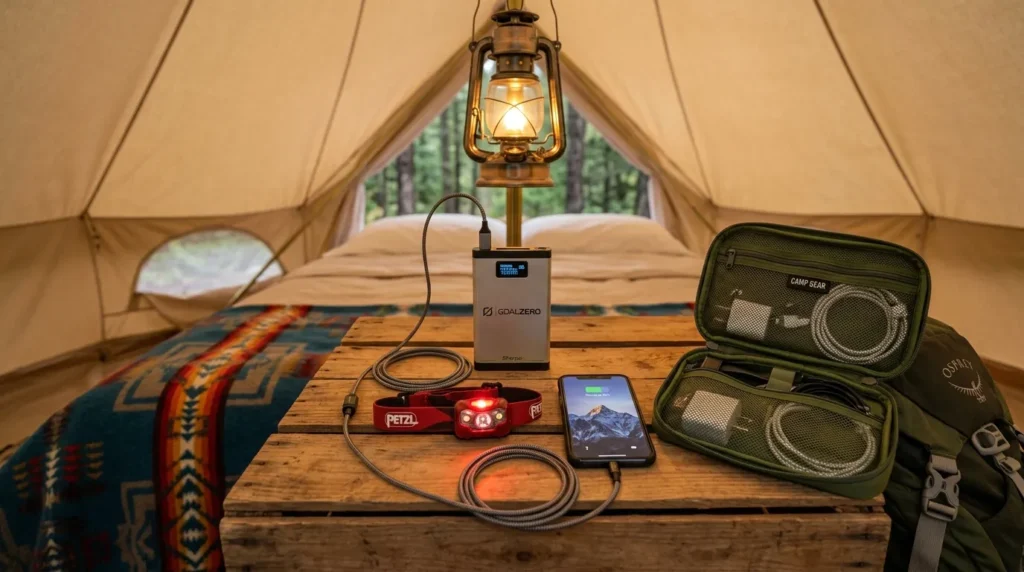
Phones die fast on camping trips because maps, photos, and low signal drain batteries. Pack a power bank and keep cables organized in a small pouch. Charge your headlamp too if it’s rechargeable. Having power means you can navigate, take photos, and handle emergencies without stress on the first night.
For the checklist, bring one high-capacity power bank per couple or group. Keep devices on low power mode and download maps offline before you leave. Store electronics in a dry bag overnight. If you’re car camping, a car charger is a great backup. Power planning makes everything easier.
17) Weather Layer Kit (Wind + Cold + Surprise Rain)
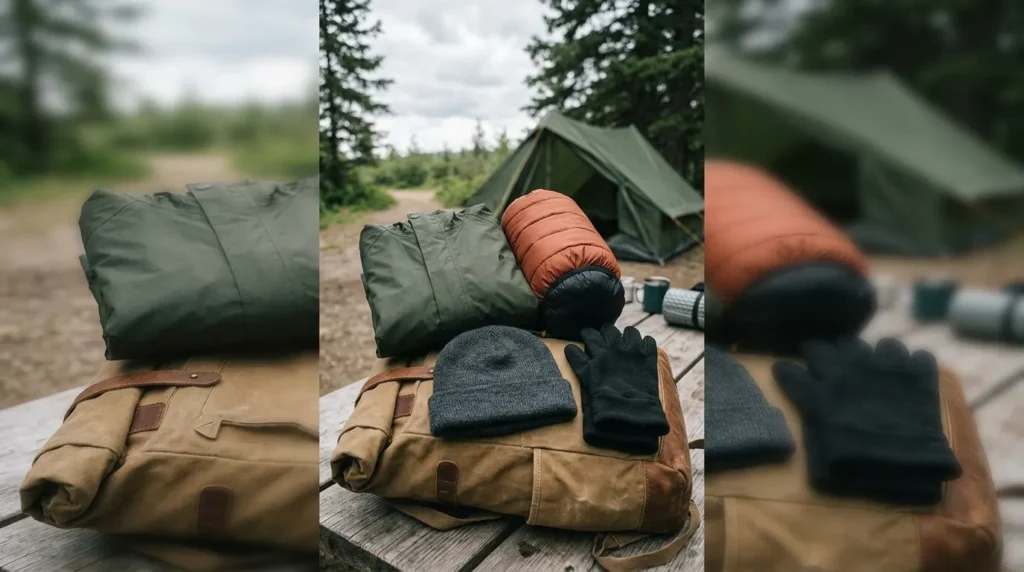
Even if the forecast looks fine, camping weather can surprise you. Pack a light rain jacket, a warm layer, and a beanie—especially for the first night when you’ll be sitting still after sunset. Wind near lakes or open areas makes everything feel colder, and a simple layer kit keeps you comfortable without overpacking.
For your checklist, avoid cotton hoodies as your only warm option—choose fleece or synthetic if possible. Pack gloves if it’s shoulder season. Keep layers accessible, not buried. If rain is likely, set up the rainfly early and keep your sleeping gear dry. Weather prep makes first nights smooth.
18) Safety Essentials (First Aid + Whistle + Map)
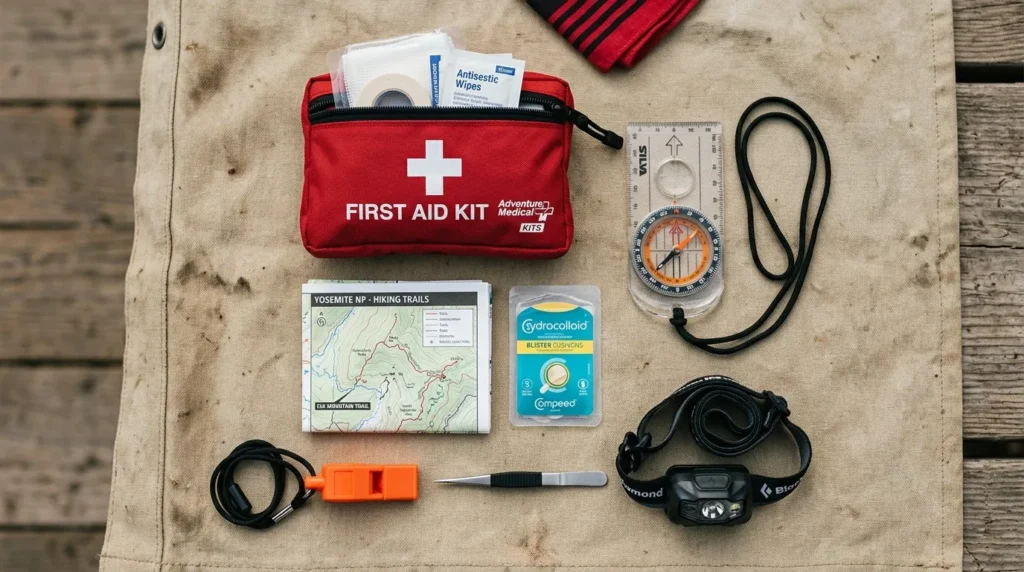
Safety doesn’t have to be complicated, but it must be intentional. Pack a basic first aid kit with blister care, bandages, tweezers, and pain relief. Add a whistle, a simple map, and a flashlight/headlamp. The first night is when little issues happen—scrapes, burns, or headaches—so being prepared keeps stress low.
For packing, keep safety items in a consistent spot and tell your group where it is. Add any personal meds and allergy items. If you’re hiking, download offline maps and note your campsite location. Don’t rely on cell service. A simple kit makes you feel confident, especially as a beginner.
19) Morning-Ready Setup (Coffee + Breakfast Pre-Plan)
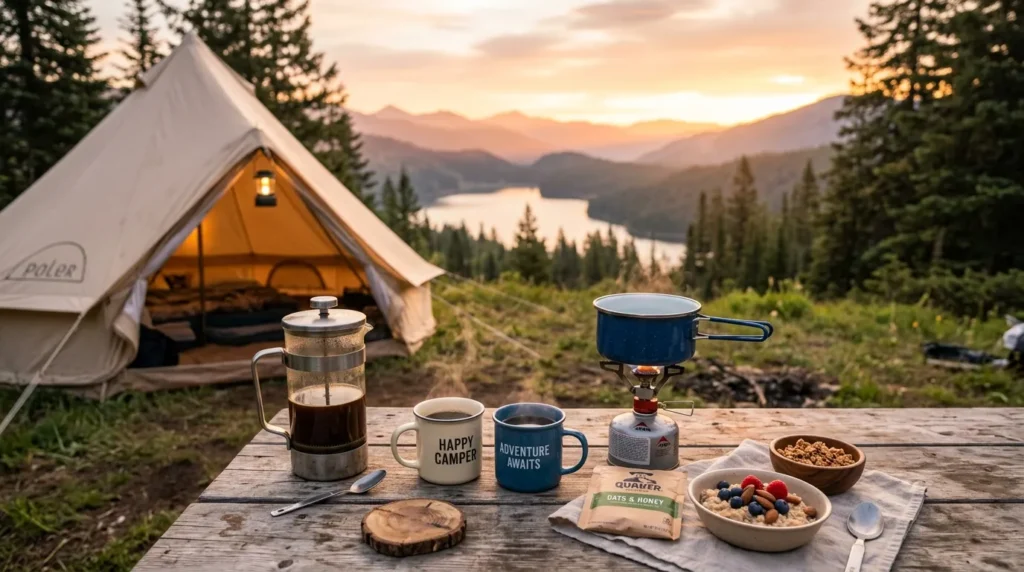
Make the first morning easy by prepping breakfast the night before. Set out coffee, mugs, and a simple breakfast like oatmeal, granola, or breakfast wraps. When you wake up, you’ll be grateful you don’t have to dig through bags before caffeine. This small step makes your trip feel organized and relaxing.
For the checklist, pack breakfast in a separate labeled bag. Pre-measure coffee grounds or bring instant coffee for speed. Keep a water bottle filled for morning cooking. If it’s cold, put your clothes for the next day in your sleeping bag so they’re warm. Morning prep makes camping feel effortless.
20) “Don’t Forget” Personal Comfort Items
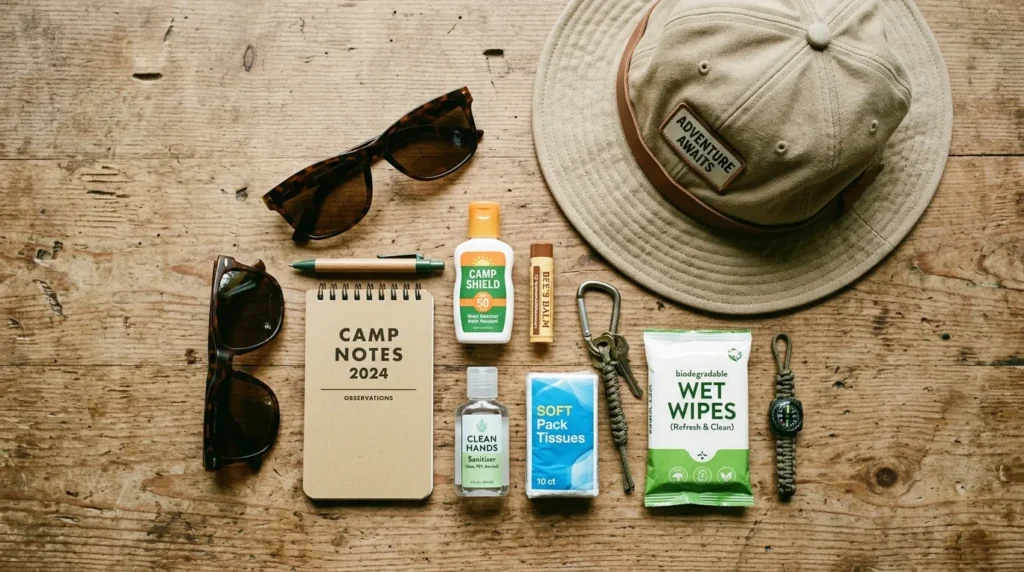
Camping feels harder when you forget small comfort items. Sunscreen, lip balm, tissues, wipes, and hand sanitizer make a big difference in how you feel on the first night and the next morning. These little items keep you clean, comfortable, and ready for photos and fun—especially if bathrooms are basic or far away.
For packing, keep these in a small pouch that stays in your day bag. Add a tiny hand lotion if it’s cold, and a mini fan if it’s hot. Don’t forget sunglasses and a hat. Comfort items are what turn “surviving camping” into actually enjoying it.
21) Pack-Out Plan (Leave No Trace Routine)
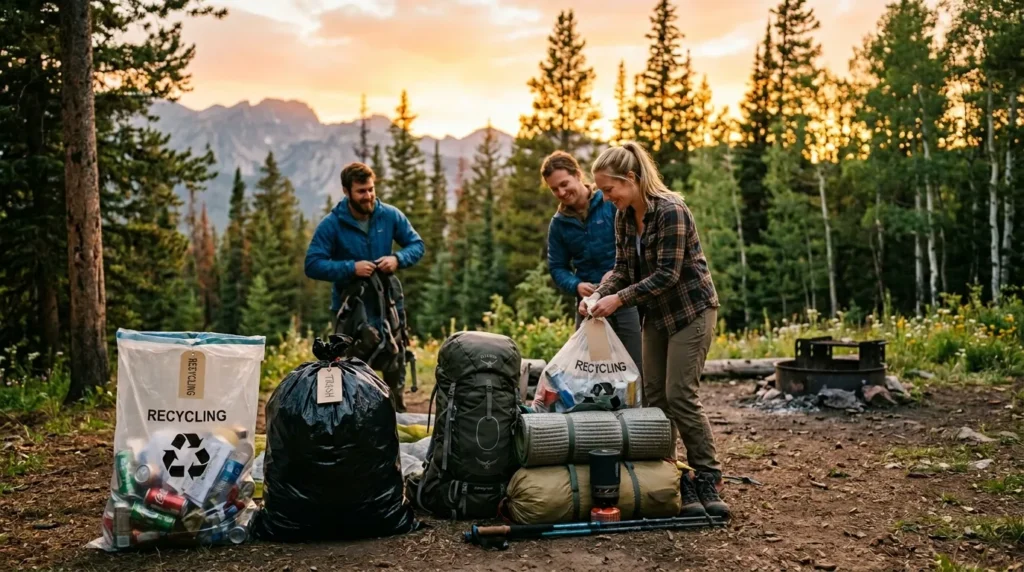
A good camping trip ends with a clean campsite. Plan your pack-out routine from the first night: trash bag ready, food stored properly, and gear grouped by category. When you keep things organized, leaving in the morning is faster and you won’t forget items. It also protects nature and keeps campsites nice for the next people.
For the checklist, bring extra trash bags and a small bag for recyclables. Do a quick “ground scan” before bed and again before you leave. Pack food scraps and wrappers immediately. If you used firewood, follow local rules for cleanup. A clean site is the mark of a confident camper.
