

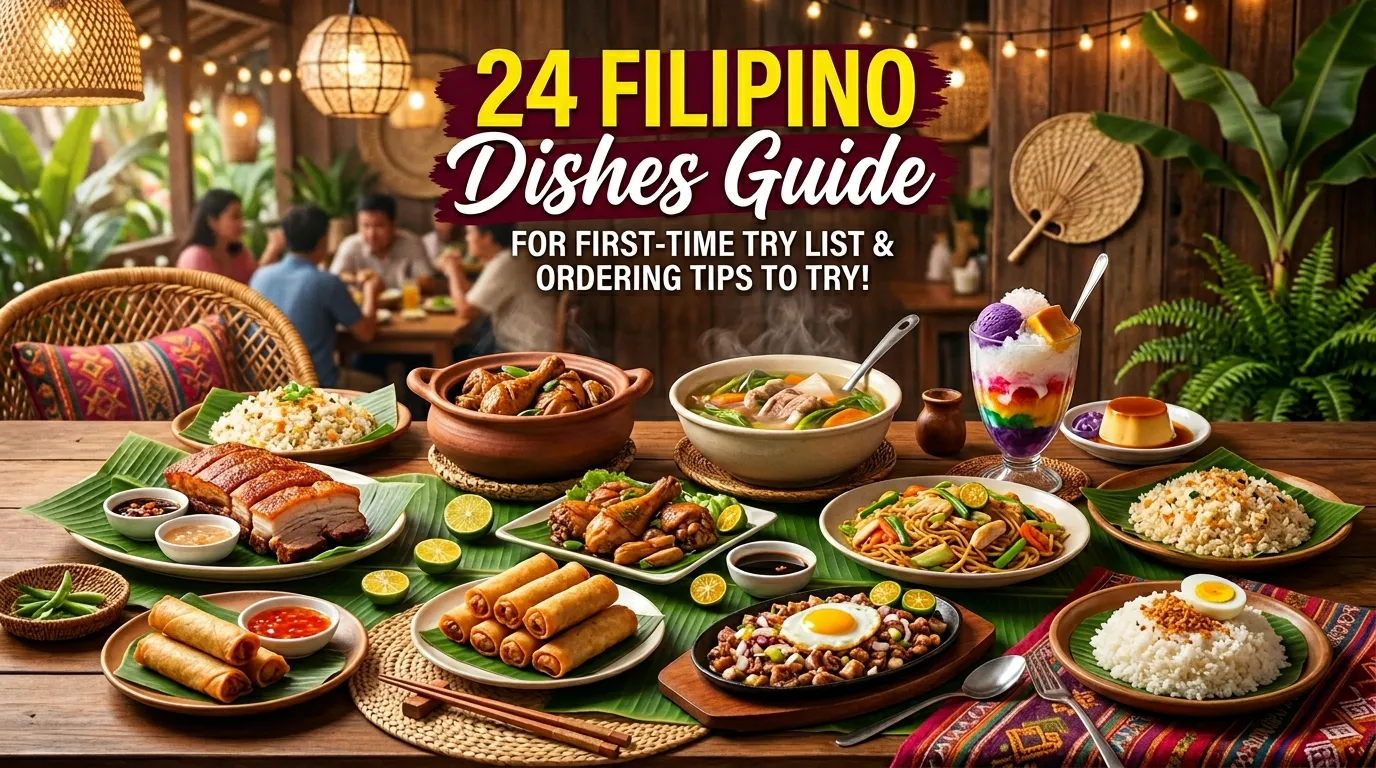
If you’re new to Filipino food, this list helps you order with confidence—what tastes like, what to pair it with, and what to ask for so you get the best first bite. Save it for your next restaurant visit or use it as a home-cooking try list.
1) Chicken Adobo
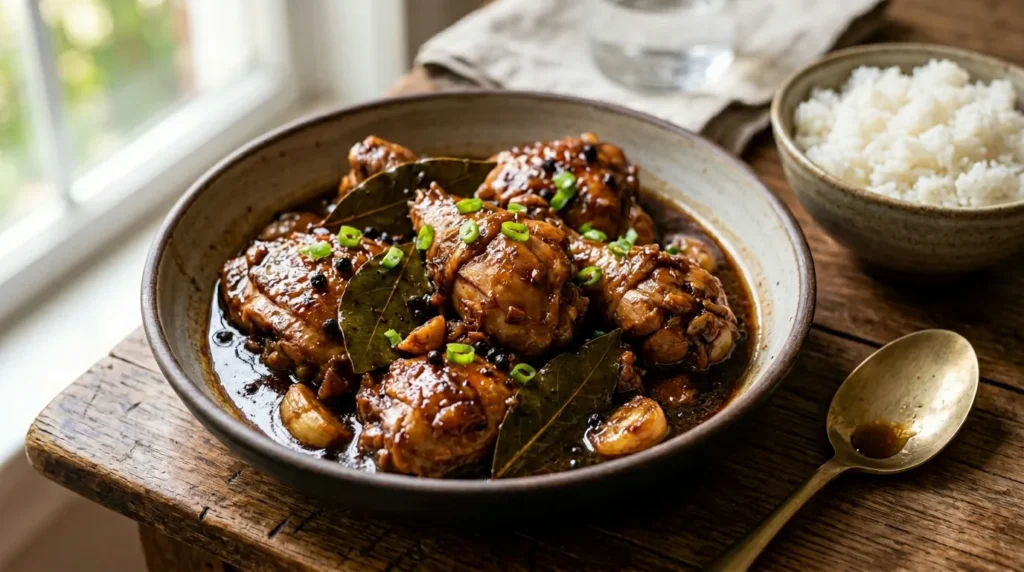
Chicken adobo is a classic comfort dish with a savory, garlicky sauce that tastes deeper the longer it sits. The flavor is salty-sour with a gentle sweetness, and the meat turns tender and juicy. It’s usually served with rice because the sauce is meant to be soaked up. For first-timers, it’s an easy entry point: familiar, rich, and not spicy. Every bite feels warm and homey.
When ordering, ask if they do chicken only, pork only, or a mix—combo is great for tasting variety. If you’re sensitive to vinegar tang, request “less sour” or “more soy-forward” if the kitchen allows. Ask for sauce on the side if you want to control saltiness. Garlic rice is a perfect upgrade if available. If they offer pickled veggies, add them for balance against the rich sauce.
2) Pork Sinigang

Sinigang is a sour soup that feels refreshing even when it’s hot. The broth is tangy, usually from tamarind, and it’s packed with vegetables like radish, long beans, and leafy greens. Pork adds richness, so the soup tastes bright but still satisfying. First-time diners love it because it’s light, clean, and comforting. It’s especially good when you want something soothing and not greasy.
Ordering tip: ask what makes their sourness—tamarind, guava, or another fruit—because the taste changes. If you’re unsure, request “medium sour” so it doesn’t surprise you. Ask for extra vegetables if you want it lighter, or extra pork if you want it heartier. It’s best with plain rice to calm the tang. If chili is offered, try it gradually rather than all at once.
3) Kare-Kare

Kare-kare is famous for its thick peanut sauce that tastes nutty, creamy, and slightly sweet. It’s often made with oxtail or beef, plus vegetables like eggplant and greens. The sauce looks bold but the flavor is gentle and comforting, especially over rice. It’s a great first-time choice if you enjoy peanut-based dishes or creamy stews. The texture is luxurious and feels like a special occasion meal.
The key ordering tip: kare-kare often comes with bagoong (fermented shrimp paste) on the side, which is salty and intense. Try a tiny amount first, then mix slowly until it tastes balanced to you. Ask what protein they use—oxtail is traditional, but beef or seafood versions exist. Request extra veggies if you want more contrast. This dish is rich, so it’s smart to share with one lighter soup or salad.
4) Lechon
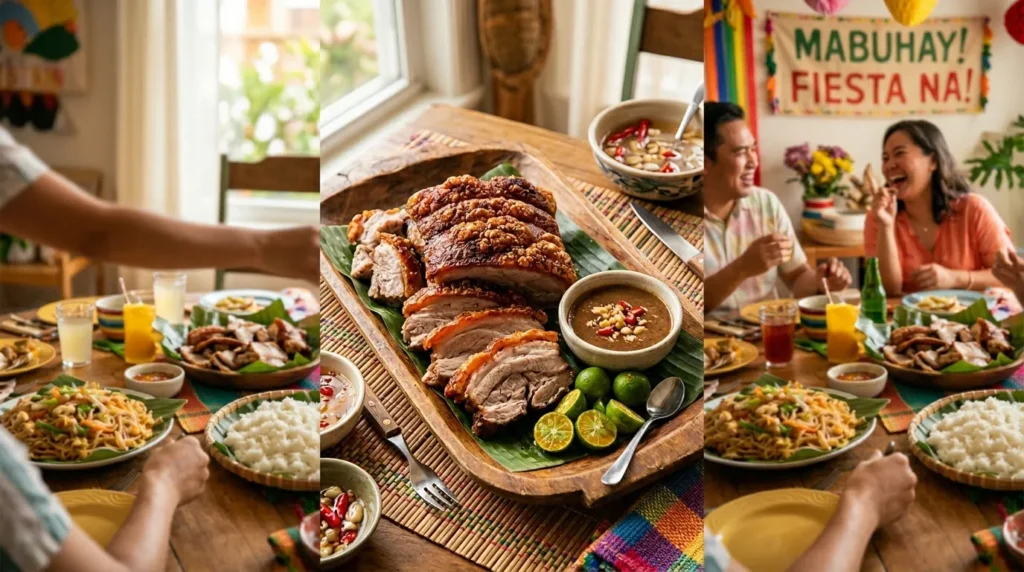
Lechon is roasted pork with crisp skin and juicy meat, known for its celebratory feel. The best lechon has skin that crackles and meat that stays moist, not dry. It tastes savory and clean, and it pairs perfectly with rice and a tangy dipping sauce. For first-timers, it’s a must-try because it shows how Filipino food turns simple pork into something unforgettable. It’s also very photo-friendly for Pinterest.
When ordering, ask if they serve “lechon kawali” (crispy fried pork) or “lechon” (roasted)—both are tasty but different. Request a mix of skin and meat for the best texture. If there’s a liver-based sauce, try it lightly first; it’s sweet-savory and unique. Calamansi or vinegar dip adds brightness, so ask if they have it. Lechon is rich, so pair it with a sour soup or fresh salad for balance.
5) Pancit Canton
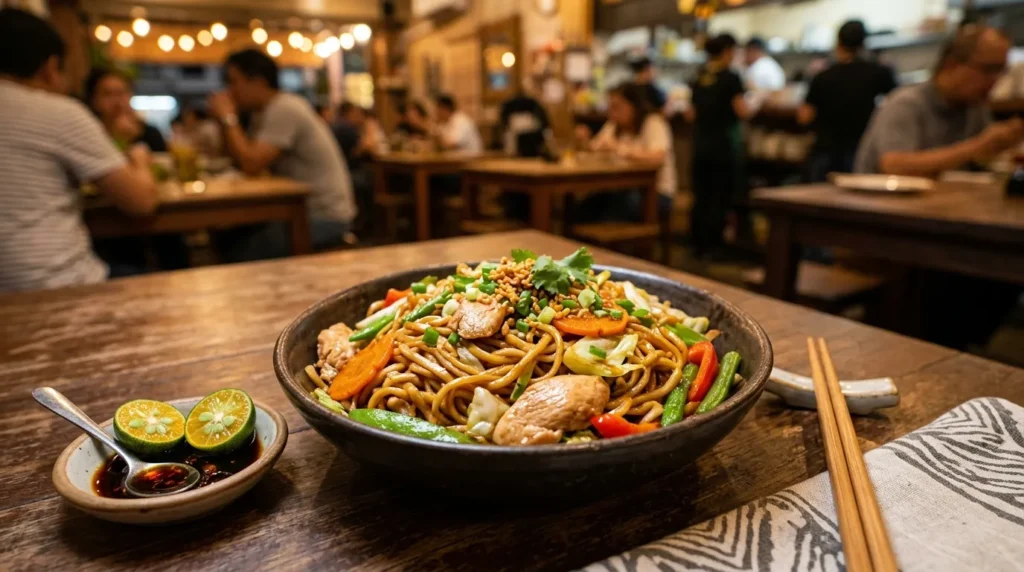
Pancit canton is stir-fried noodles that feel familiar but more flavorful than typical takeout. The noodles are chewy and tossed with soy sauce, vegetables, and often chicken or shrimp. It’s a go-to dish for sharing because it’s not heavy, yet it’s satisfying and savory. For first-time diners, pancit canton is comforting and easy to love. It’s especially good when you want something filling without a lot of spice.
Ordering tip: ask what protein comes in it and whether you can mix chicken and shrimp. Request extra vegetables if you want it fresher and lighter. Calamansi (Filipino citrus) is often served with pancit—squeeze it on top to brighten the flavor. If you’re salt-sensitive, ask for “light sauce” or extra calamansi. Pancit is great alongside grilled dishes because it balances smoky flavors well.
6) Pancit Palabok
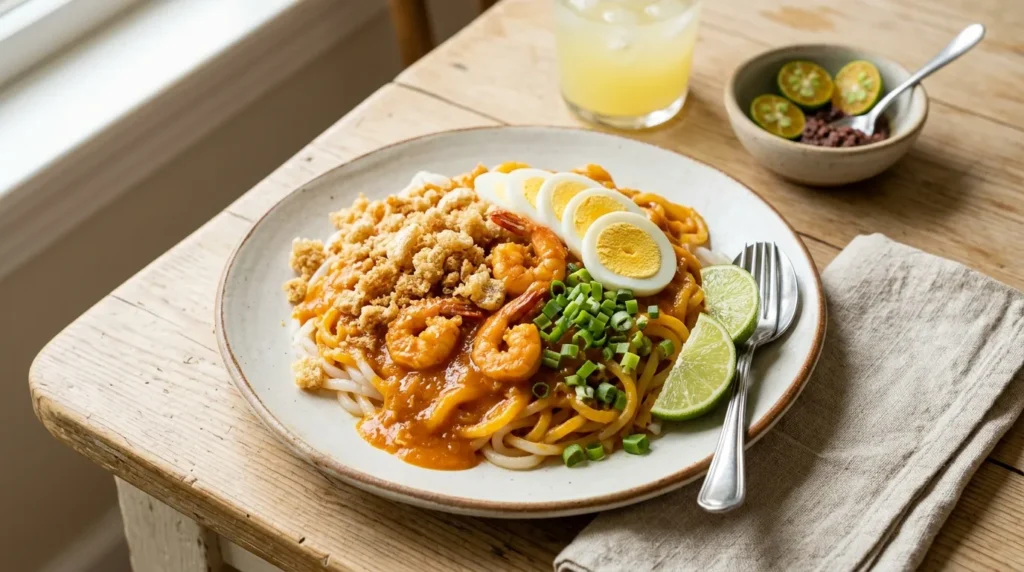
Pancit palabok is a noodle dish with a rich shrimp-based sauce that looks bright orange and tastes deeply savory. It’s usually topped with crushed chicharron, egg, and scallions, so every bite has crunch and softness. For first-timers, it’s exciting because the toppings make it feel like a complete flavor experience, not just noodles. It’s also a great way to try seafood flavors without ordering a full fish dish.
When ordering, ask if their palabok is seafood-forward or mild, because shrimp flavor can vary by restaurant. If you’re cautious with seafood, request extra egg and less shrimp topping while keeping the sauce. Calamansi or lemon on the side is important—add it to cut richness. If you don’t eat pork, ask whether the chicharron is optional. Palabok pairs nicely with grilled chicken or a light soup.
7) Lumpiang Shanghai
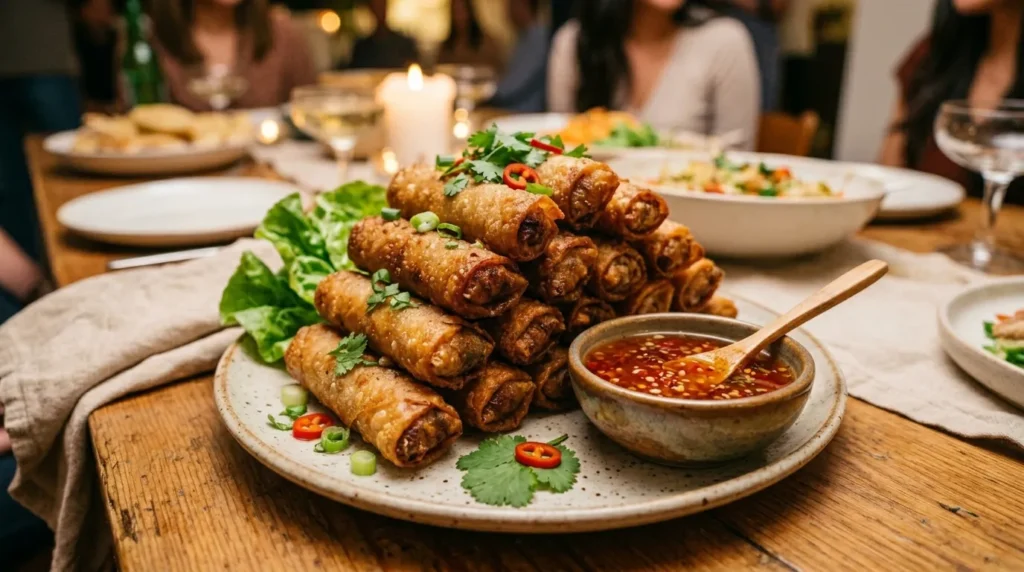
Lumpiang shanghai are small, crispy spring rolls filled with seasoned meat and sometimes tiny vegetable bits. They’re crunchy, salty, and addictive, making them perfect for first-timers who want a safe “starter” dish. Because they’re bite-sized, they’re easy to share and great for sampling before committing to bigger plates. They also photograph well, especially with a glossy dipping sauce and a clean, snackable presentation.
Ordering tip: ask what the filling is—some places use pork, chicken, or a mix. Request extra dipping sauce, usually sweet chili or vinegar-based, because it changes the flavor a lot. If you want maximum crispiness, ask for them “fresh fried” when possible. Lumpia pairs well with rice dishes and soups, so it’s an easy add-on. If you’re ordering for a group, get one plate per two people—they disappear fast.
8) Lumpiang Sariwa
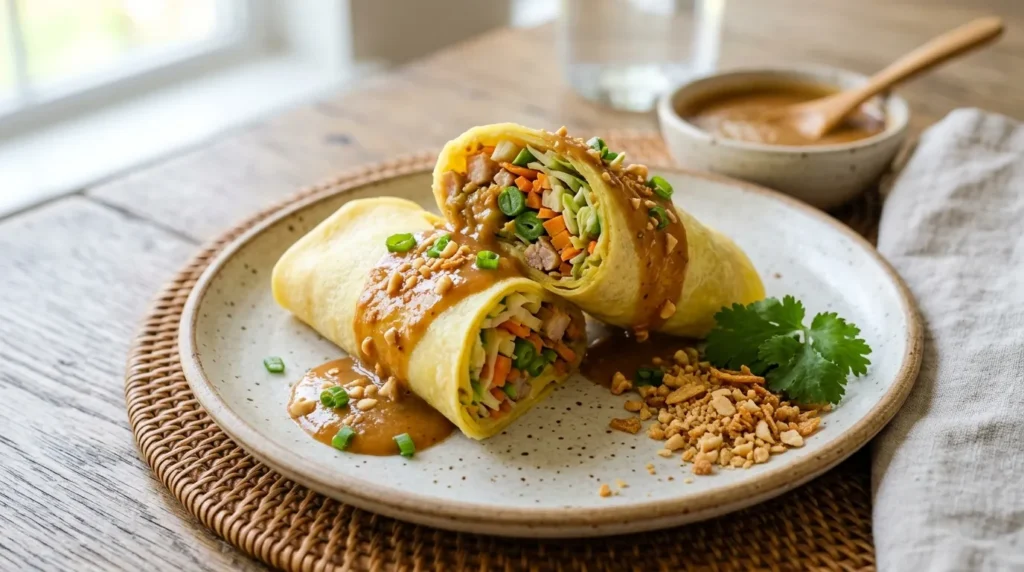
Lumpiang sariwa is the fresh, softer cousin of fried lumpia. It’s filled with vegetables and sometimes tofu or meat, wrapped in a tender crepe-like wrapper, then topped with a sweet-savory garlic sauce. For first-time diners, it’s a great balance to heavier dishes because it tastes fresh and light. The texture is comforting, and the sauce adds depth without being spicy. It’s a smart pick if you want something colorful and veggie-forward.
Ordering tip: ask if it includes shrimp, pork, or tofu so it fits your preferences. If you don’t like sweet sauces, request the sauce on the side for control. Some places add crushed peanuts—ask for extra if you like nutty flavor. It’s best eaten right away so the wrapper stays soft but not soggy. Pair it with a soup like sinigang to create a balanced meal of fresh and tangy.
9) Sisig
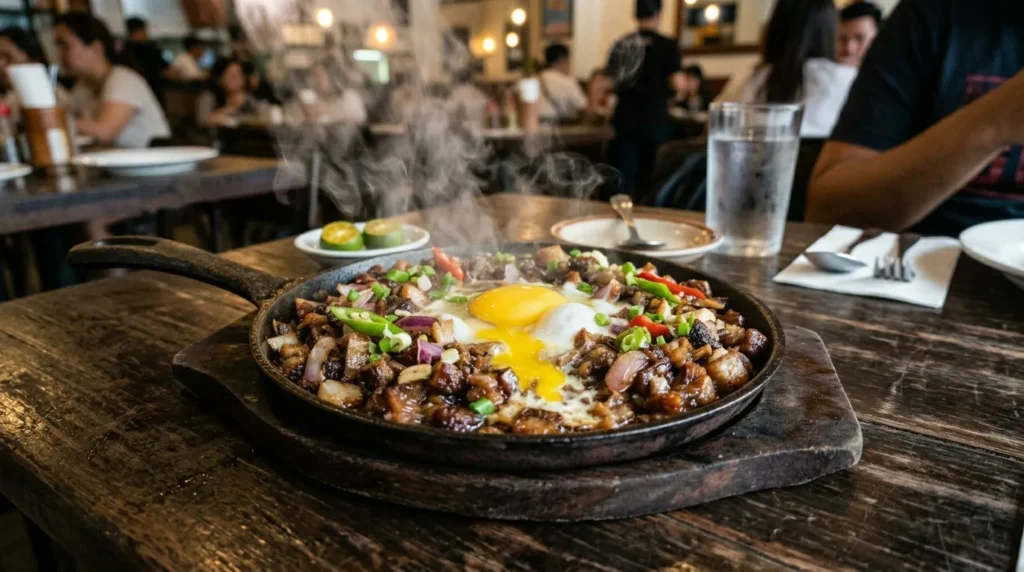
Sisig is a bold, sizzling dish that’s chopped, crispy, and packed with savory flavor. It’s often pork-based, mixed with onions and citrus, and served on a hot plate that keeps it crackling. First-time diners love it when they want something exciting and craveable. The taste is rich, salty, and tangy, with a little heat depending on the kitchen. It’s the kind of dish that makes you want extra rice immediately.
Ordering tip: ask about spice level because some sisig comes with chopped chilies already mixed in. If you want mild, request chilies on the side. Many places add egg on top—say yes if you want a creamier texture. Calamansi is a must; squeeze it before eating to brighten and cut richness. Sisig is very shareable, so order it as a center plate with rice and one lighter vegetable dish.
10) Chicken Inasal

Chicken inasal is smoky grilled chicken with a slightly sweet, garlicky marinade and a juicy bite. It’s flavorful without being heavy, making it perfect for first-timers who want something familiar but distinct. The charred edges add depth, and it pairs beautifully with garlic rice. Many people love it because it tastes like a perfect backyard grill, but with a unique Filipino twist. It’s a top choice if you want a “safe but memorable” dish.
Ordering tip: ask for thigh or leg if you want the juiciest cut, and request extra dipping sauce. The classic dip often includes vinegar, calamansi, and chilies—try it slowly to find your comfort level. If the restaurant offers garlic rice, upgrade from plain rice immediately. Chicken inasal pairs well with a sour soup or fresh salad, which helps keep the meal from feeling too smoky or rich.
11) Bistek Tagalog
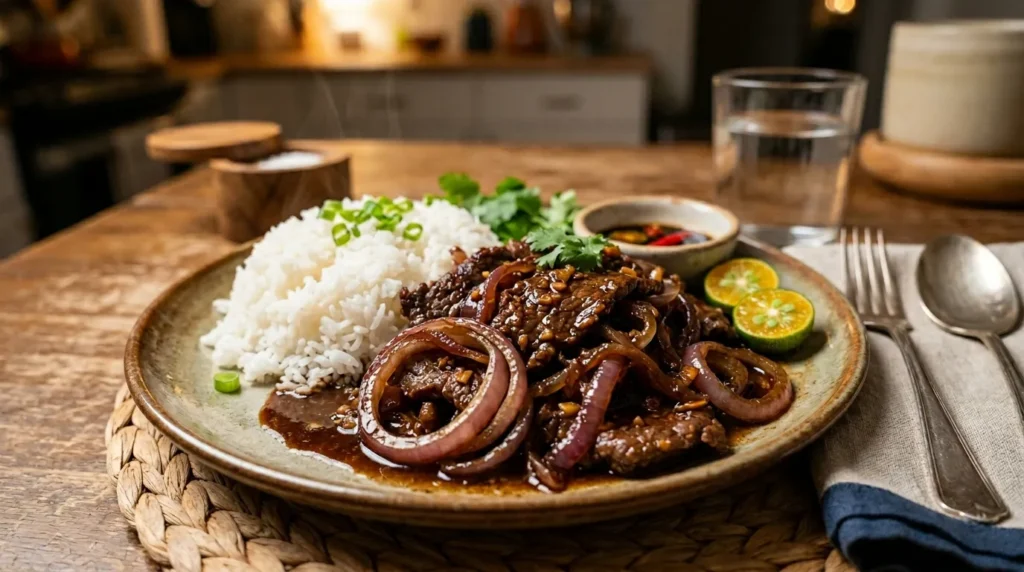
Bistek tagalog is Filipino-style beef steak with a soy-citrus flavor and lots of softened onions. It tastes savory, tangy, and comforting, especially when poured over rice. For first-time diners, it’s an easy dish to enjoy because it feels familiar like a steak-onions plate, but brighter and more saucy. The onions become sweet and silky, balancing the salty sauce. It’s a great order when you want “meaty and satisfying” without spice.
Ordering tip: ask if the beef is tenderized or thin-sliced, because texture varies by place. If you prefer less salt, request sauce on the side and add gradually. Extra onions are always a good idea for sweetness and volume. Bistek is best with plain rice to soak the sauce. If you’re ordering for a group, pair it with a vegetable dish like pinakbet so the meal feels balanced.
12) Tinola
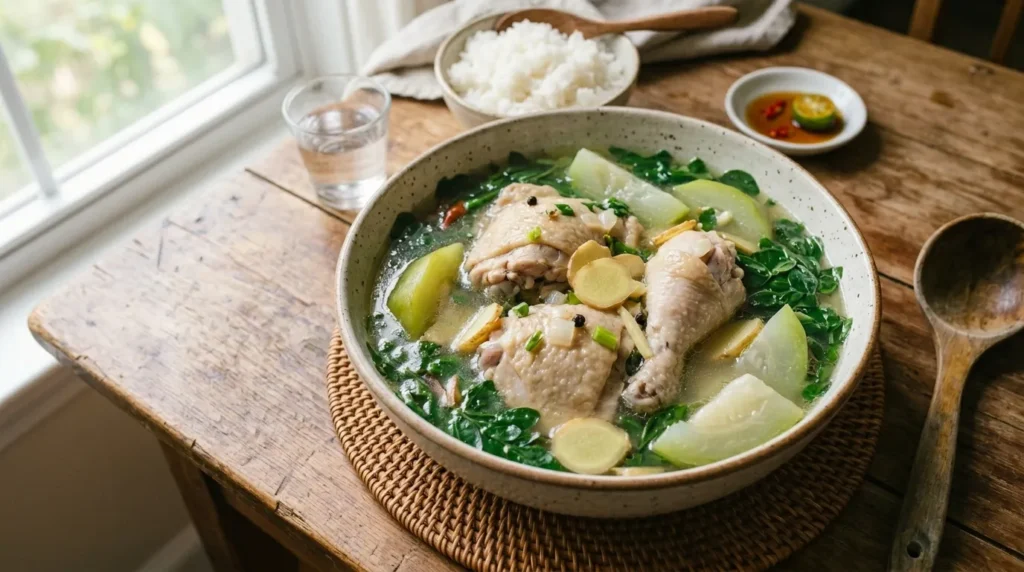
Tinola is a gentle chicken soup with ginger, leafy greens, and often green papaya or chayote. It tastes clean, soothing, and lightly peppery, making it a perfect first-time dish if you want something comforting and not heavy. The ginger aroma is the star and feels especially good when you’re tired or want a warm, simple meal. It’s typically served with rice, which makes the broth feel more filling without becoming rich.
Ordering tip: ask whether they use papaya or chayote, since the texture and sweetness differ. If you love ginger, request “extra ginger” for a more aromatic bowl. Some versions are very mild; add fish sauce sparingly if it’s provided, because it boosts flavor fast. Tinola pairs well with crispy dishes like lumpia, creating a nice contrast of light soup and crunchy bites. It’s also a smart choice for sharing with kids or picky eaters.
13) Bulalo
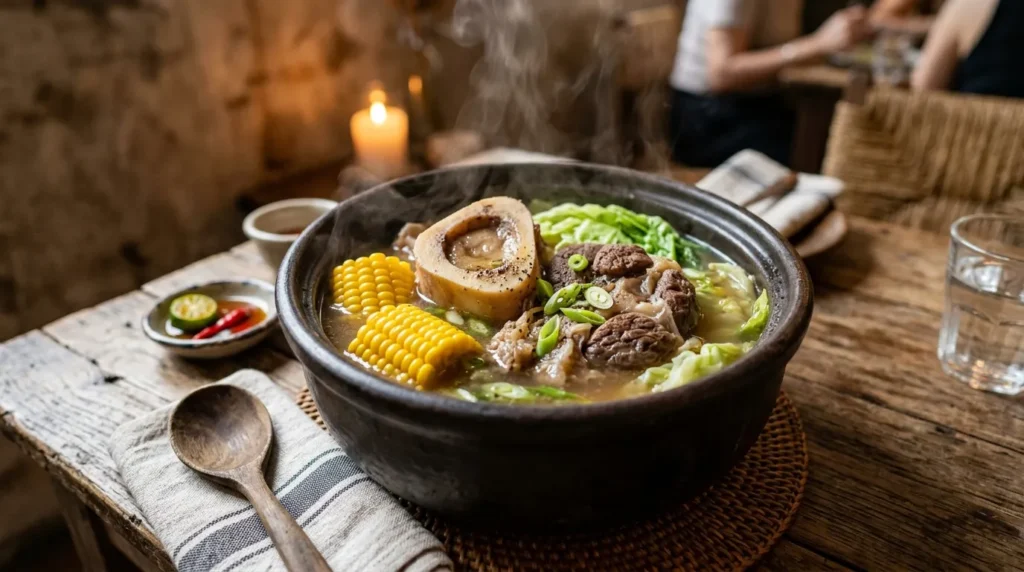
Bulalo is a rich beef soup known for its tender shank meat and flavorful bone marrow. The broth tastes deeply beefy and comforting, and it often includes corn and cabbage for sweetness and freshness. For first-time diners, bulalo is a memorable dish because it feels like a big, warm hug in a bowl. It’s especially satisfying on cooler days or after long travel. The combination of soft meat and hearty broth makes it a standout.
Ordering tip: bulalo is usually large and meant for sharing, so ask about portion size before ordering. If you’re new to marrow, try a small scoop on rice first—it’s rich and buttery. Request extra vegetables if you want a lighter finish. Many people add a citrus-vinegar dip for brightness; ask if they have one. Bulalo pairs best with plain rice and a simple side like sautéed greens to cut the richness.
14) Laing
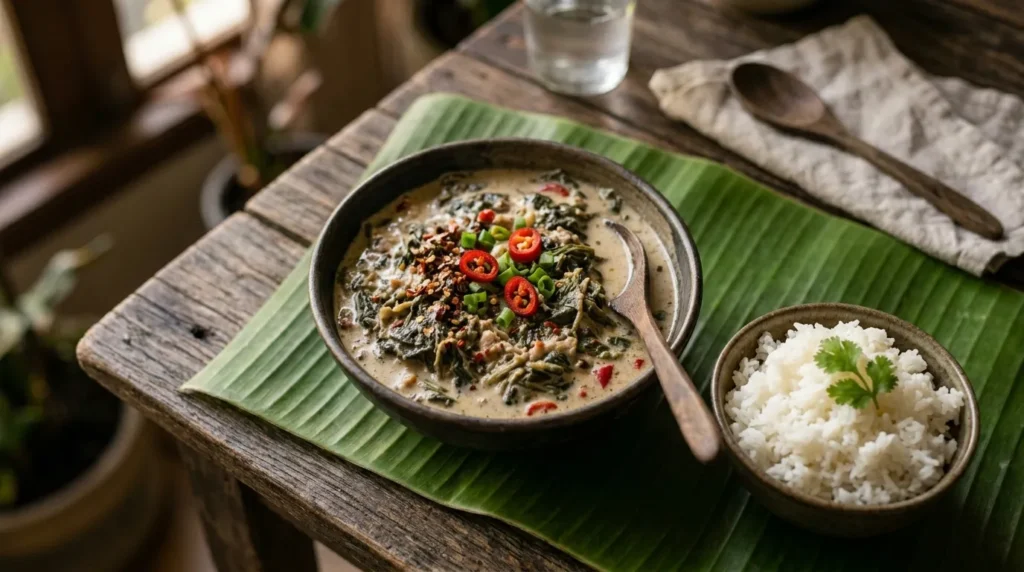
Laing is a Bicol dish made with taro leaves cooked in coconut milk until creamy and flavorful. It tastes rich, slightly earthy, and often a little spicy, with a slow-building heat that makes it addictive. For first-time diners, it’s a great introduction to coconut-based savory dishes without needing to order seafood. The texture is soft and stew-like, perfect over rice. It’s also a smart choice if you want something different from meat-forward plates.
Ordering tip: ask about spice level, because laing can range from mild to fiery depending on the kitchen. If you want mild, request it specifically or ask for chilies on the side if possible. Since it’s creamy, it pairs well with grilled dishes like chicken inasal to balance smoke and richness. Extra rice is almost always needed because the sauce is made to be soaked up. If you’re unsure about taro leaf texture, share it first before ordering a full portion.
15) Bicol Express
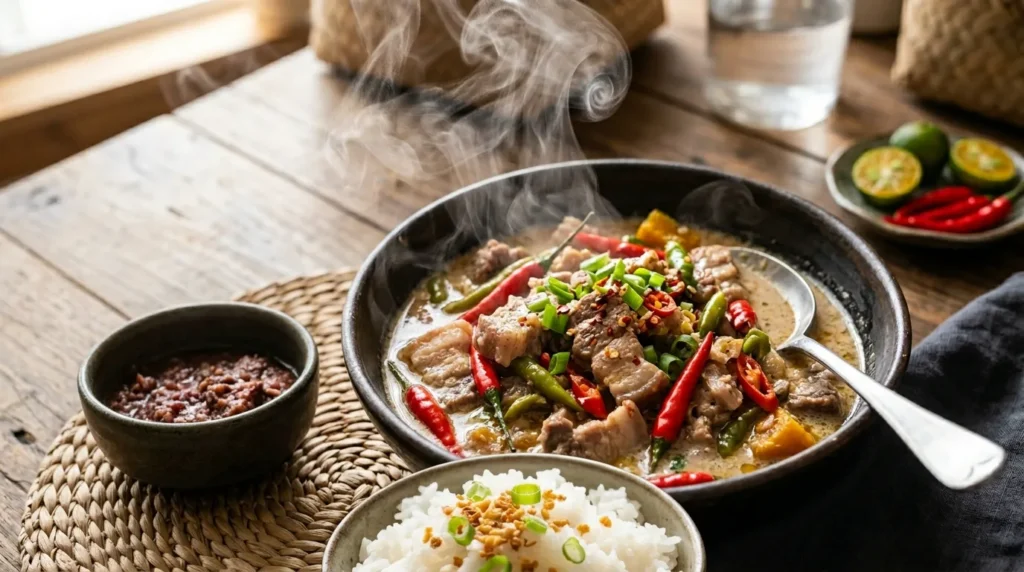
Bicol express is a creamy, spicy coconut pork dish that’s bold from the first bite. The sauce is rich and fragrant, and the chilies bring heat that wakes up your palate. For first-time diners, it’s perfect if you love spicy food and want a dish that feels uniquely Filipino. It’s also very satisfying because coconut milk makes the heat feel balanced rather than harsh. Over rice, it becomes deeply comforting and addictive.
Ordering tip: always ask how spicy it is, because some versions are extremely hot. If you want to try it safely, request “mild” or ask for a smaller portion to share. Extra rice is a must because the dish is intense and salty-rich. If you’re sensitive to pork fat, ask if they use leaner cuts or if you can get it with less fatty pieces. Pair it with a sour soup or fresh veggie dish to cool your palate between bites.
16) Pinakbet
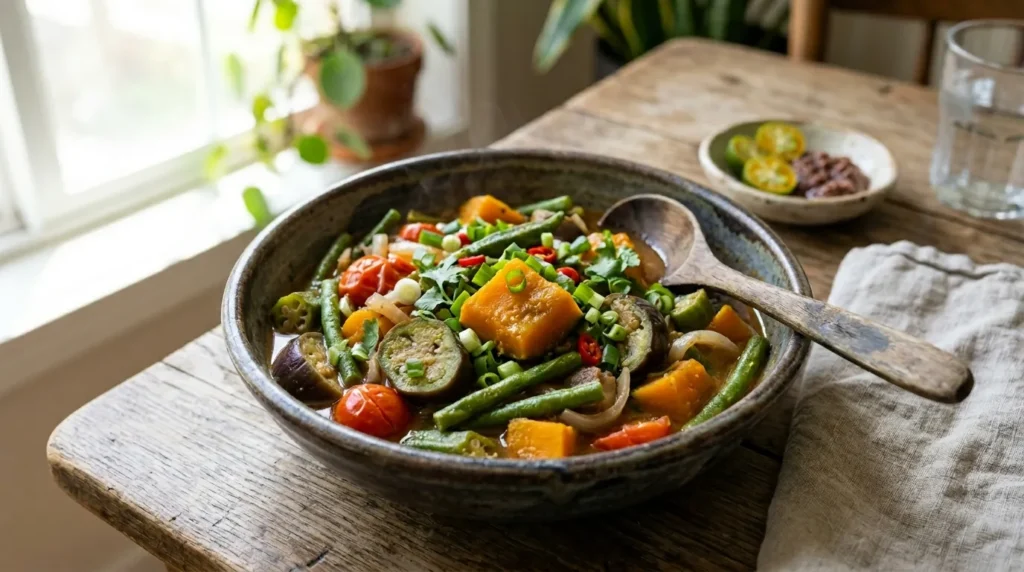
Pinakbet is a vegetable-forward stew with a savory depth that comes from fermented seafood seasoning in many traditional versions. It includes a mix of squash, eggplant, okra, and long beans, creating a hearty yet healthy plate. For first-time diners, it’s a great way to balance a meal with vegetables that still taste bold and satisfying. The flavors feel earthy, slightly salty, and comforting. It’s especially good if you want something hearty without being heavy.
Ordering tip: ask if their pinakbet uses bagoong or another seasoning, especially if you avoid seafood flavors. If you’re new to okra texture, try a small portion first; it can be soft and slightly slippery. Pinakbet pairs beautifully with crispy pork or grilled chicken because it adds freshness and contrast. Request extra squash if you like a sweeter bite. It’s also an easy shared dish that makes the table feel more complete.
17) Inihaw na Liempo
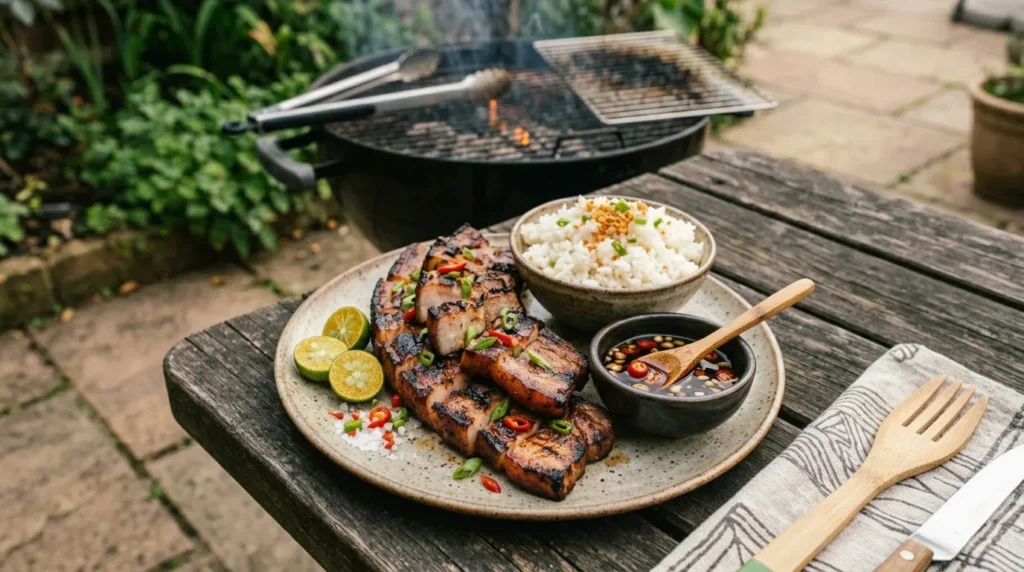
Inihaw na liempo is grilled pork belly that’s smoky, savory, and perfectly charred around the edges. The meat is juicy with a satisfying bite, and it’s often served with a tangy vinegar-citrus dip that makes each bite brighter. For first-time diners, it’s a great choice because it tastes familiar like barbecue but with a distinctly Filipino balance of sweet, salty, and smoky. It’s especially fun for sharing because everyone grabs a piece and dips.
Ordering tip: ask if their liempo is sweet-glazed or more savory, depending on your preference. If you want less fat, request more meaty slices, though belly will always be rich. The vinegar dip is important—try it with calamansi if available for a fresher flavor. Pair it with a sour soup like sinigang or a vegetable dish like pinakbet to cut the richness. Extra rice is a smart move, because the smoky flavors beg for something plain.
18) Tapsilog
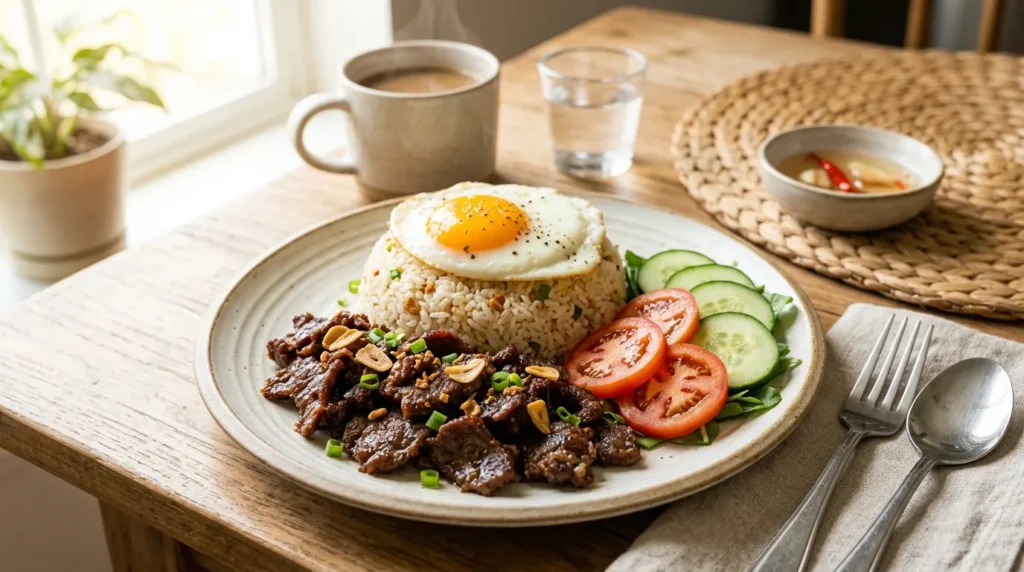
Tapsilog is a Filipino breakfast favorite: beef tapa, garlic fried rice, and a sunny-side egg. It tastes savory, slightly sweet, and deeply satisfying, especially when the egg yolk mixes into the rice. For first-time diners, it’s a perfect “comfort plate” because each part is familiar but the overall flavor feels special. It’s also great any time of day, not just breakfast. If you want one dish that feels complete, this is it.
Ordering tip: ask how sweet their tapa is, because some versions are sugar-forward while others are more savory. Request the egg cooked your way—runny yolk is best for mixing into rice, but it’s personal. If you want more freshness, add tomatoes or cucumber on the side. Some places include vinegar dip; try a little for contrast. Tapsilog is ideal when you’re hungry and want a guaranteed satisfying order without guessing.
19) Bangus (Milkfish)
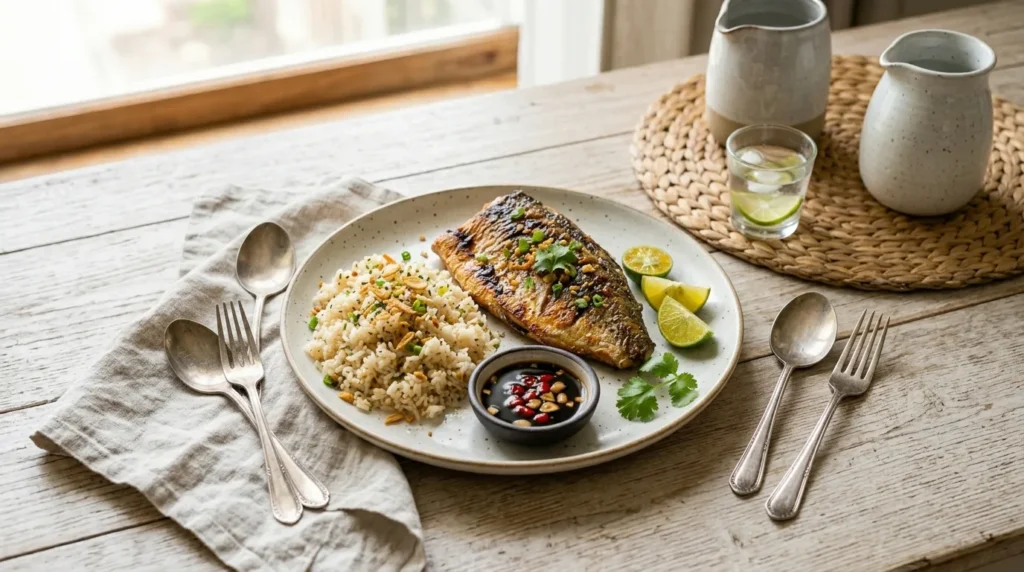
Bangus is a popular fish in Filipino cuisine, often grilled or fried until the skin turns crisp and the inside stays tender. The flavor is mild, slightly sweet, and very easy for first-time seafood eaters. It pairs naturally with garlic rice and a citrus-vinegar dip that brightens every bite. For first-timers, bangus is a great introduction because it doesn’t taste overly “fishy,” but still feels special and authentic. It’s a simple dish that shines with good seasoning.
Ordering tip: ask if it’s deboned, because bangus can have many small bones. If you’re new to it, deboned is the easiest first experience. Request the dipping sauce on the side and try it gradually; calamansi and vinegar can transform the fish. If you prefer crispiness, ask for fried; if you want cleaner flavor, ask for grilled. Bangus is excellent with a sour soup or vegetable side to keep the meal light and balanced.
20) Tocino
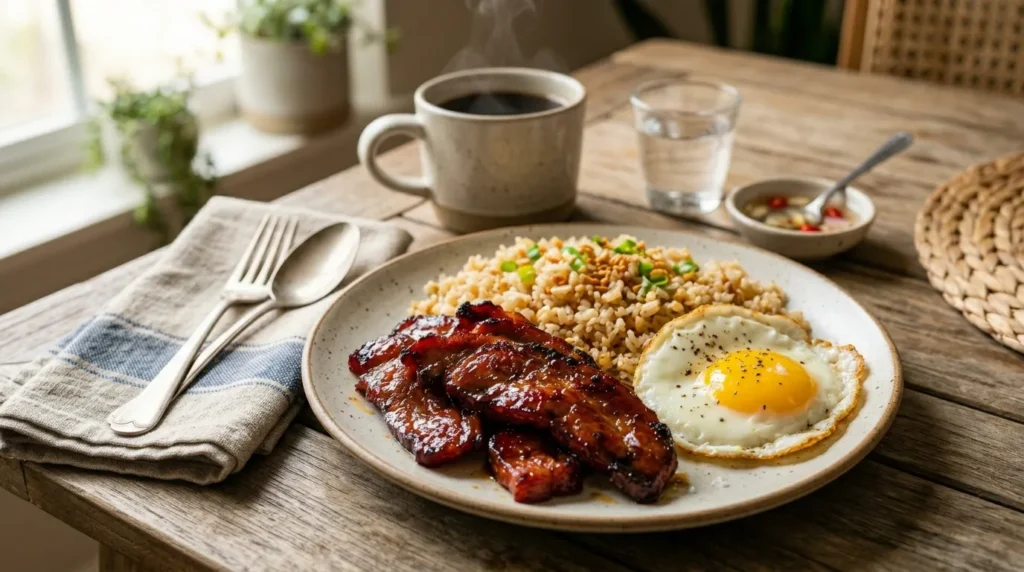
Tocino is sweet-cured pork with a caramelized glaze that makes it look shiny and irresistible. The taste is sweet-savory, and it’s usually served with garlic rice and egg, making it a top “comfort breakfast” order. For first-time diners, tocino is fun because it feels like a treat—bold flavor, tender meat, and that glossy finish that photographs beautifully. It’s especially good if you like sweet glazes or anything slightly smoky and sticky.
Ordering tip: if you prefer less sweetness, ask if they can serve a more savory cure or recommend another breakfast meat like tapa. Tocino pairs best with garlic rice to balance the sweetness. Ask for a side of tomatoes or pickled vegetables if you want freshness. Some places offer chicken tocino; it’s often lighter and still flavorful. If you’re sharing, it’s great alongside a sour soup or a veggie dish to keep the meal from feeling too sweet-heavy.
21) Longganisa
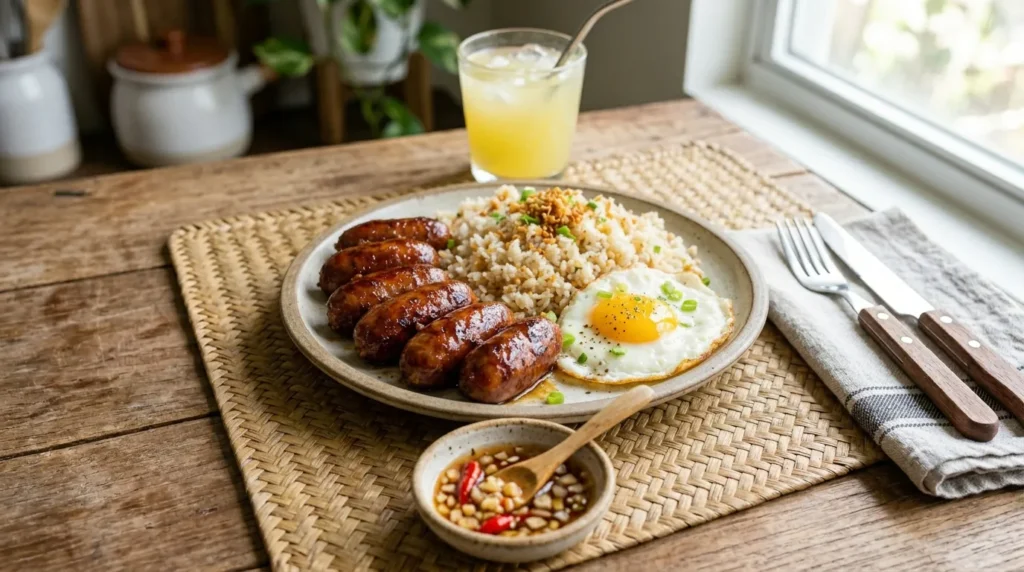
Longganisa is a Filipino sausage that can be sweet, garlicky, or spicy depending on the region. It’s juicy, flavorful, and perfect with rice and egg, making it a first-timer favorite when you want a bold, satisfying bite. The casing gives a slight snap, and the inside is rich and fragrant. It’s great for sharing because everyone can taste a piece and compare flavors. If you’re exploring Filipino breakfasts, longganisa is a must-try.
Ordering tip: ask what style it is—some are sweeter, while others lean salty-garlic or spicy. If you’re unsure, choose “garlic” for a balanced first experience. Pair it with plain or garlic rice, and add egg for a complete plate. Some places serve vinegar dip; try a little to cut through richness. If you love heat, ask if they have a spicy version, but start small because spice levels vary.
22) Halo-Halo
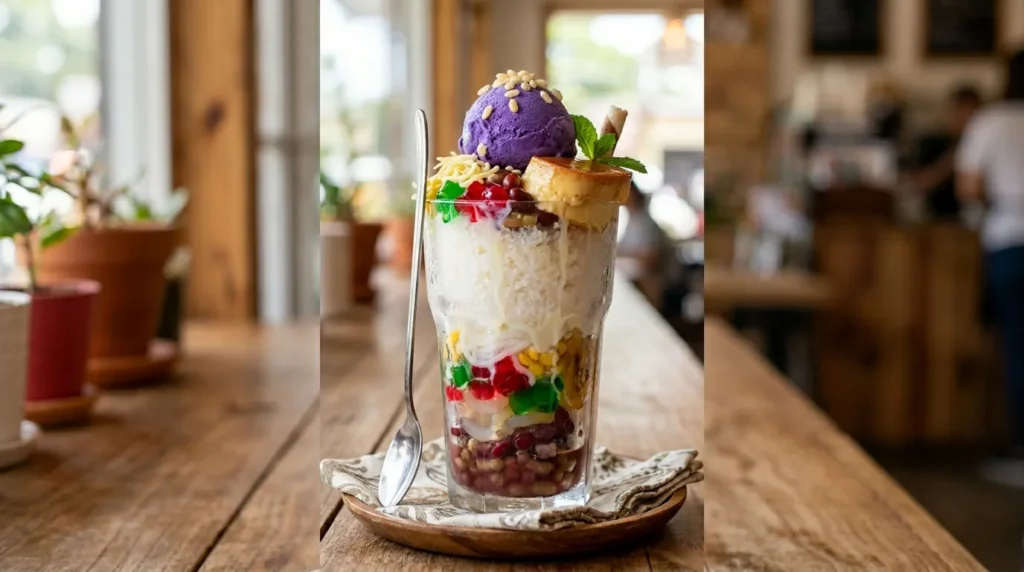
Halo-halo is a famous Filipino dessert with shaved ice, sweet beans, jellies, fruits, and creamy toppings like ube and leche flan. The fun is mixing everything until it becomes a sweet, icy, creamy treat with many textures. For first-time diners, halo-halo is the perfect “try once and remember forever” dessert because it’s playful and photogenic. It also cools you down after a rich meal. Every spoonful tastes different, which makes it exciting.
Ordering tip: ask what’s included because every place has its own mix. If you’re new, choose the “classic” version to taste the full experience. Request extra leche flan or ube if those flavors interest you; they add creaminess and depth. Mix well from the bottom so you don’t eat only ice at first. If you don’t like beans, ask if they can reduce them, because the texture surprises some first-timers.
23) Leche Flan

Leche flan is a silky caramel custard that tastes rich, creamy, and smooth. It’s sweet without being complicated, which makes it an easy first Filipino dessert to love. The caramel sauce adds a deep, toasty sweetness that pairs perfectly with the soft custard texture. For first-timers, it’s a safe, elegant choice—especially if you enjoy custards, crème caramel, or creamy desserts. It also photographs beautifully because of the glossy surface and caramel shine.
Ordering tip: ask if their flan is “firm” or “soft,” because texture can vary by kitchen. If you want the creamiest bite, choose a softer flan with more jiggle. Request extra caramel if you love deeper sweetness, or ask for a smaller portion if you’re sharing multiple desserts. Leche flan is best chilled, so it should arrive cold and smooth. Pair it with coffee or a simple milk tea-style drink to balance sweetness.
24) Bibingka
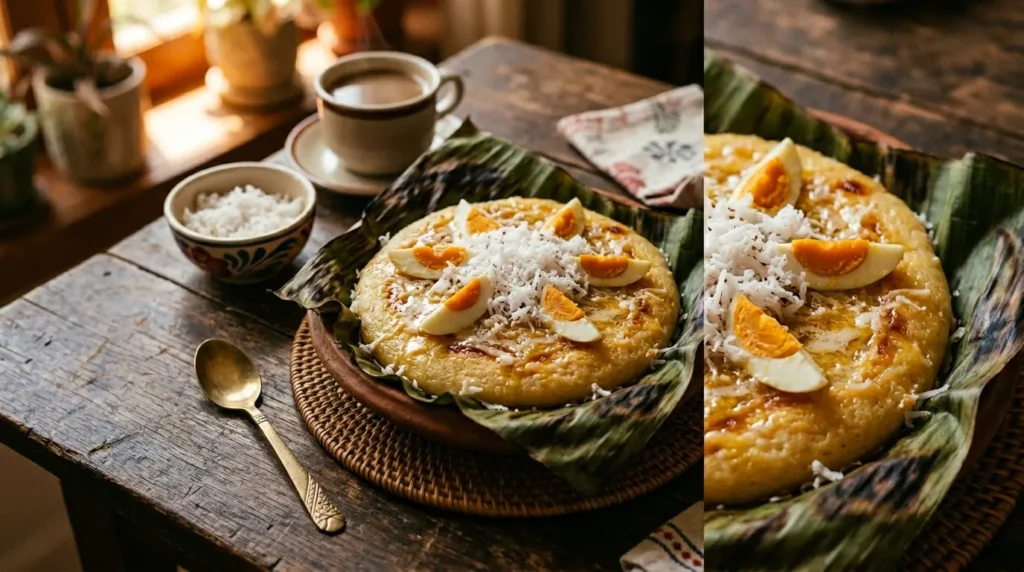
Bibingka is a soft rice cake traditionally baked until the edges turn slightly toasty and the center stays fluffy. It’s lightly sweet with a comforting aroma, often topped with butter, coconut, and sometimes salted egg for a sweet-salty contrast. For first-time diners, bibingka is a wonderful intro to Filipino kakanin (rice-based treats) because it tastes gentle and homey, not overly sugary. It’s perfect when you want a warm dessert that feels nostalgic even if it’s your first try.
Ordering tip: ask if it’s served warm, because bibingka is best when the butter melts into the cake. If salted egg is included and you’re unsure, try one bite first—it adds a surprising savory depth. Request extra coconut for texture and balance. If you like sweeter desserts, ask if they serve it with condensed milk or extra butter. Bibingka pairs nicely with hot coffee or tea, especially as a cozy ending to a savory meal.
