

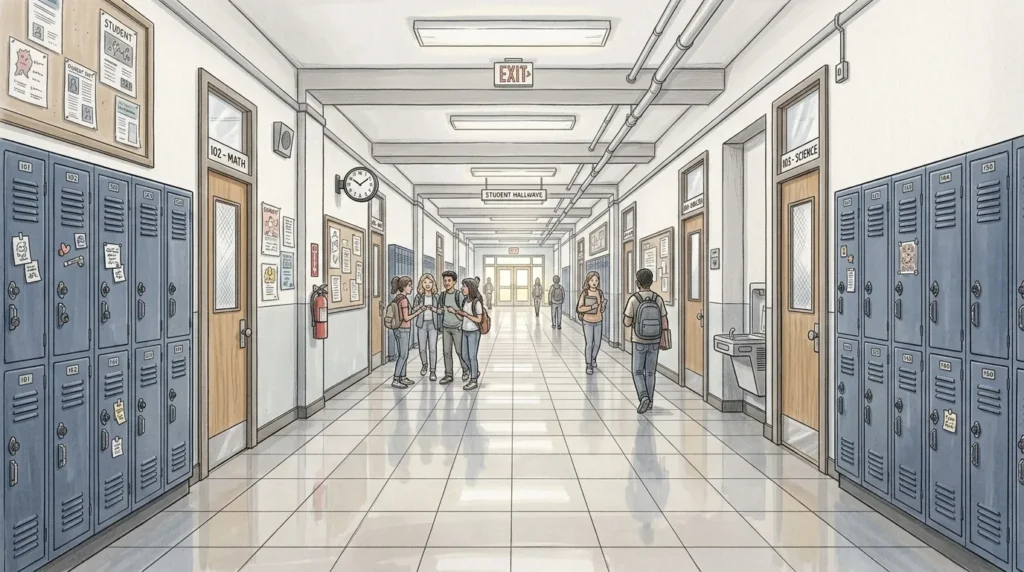
Drawing a school corridor can be surprisingly fun because it gives artists so many details to work with: lockers, classroom doors, bulletin boards, ceiling lights, polished floors, backpacks, posters, windows, and long perspective lines. Whether the artwork is for an art class, sketchbook practice, a classroom project, Pinterest content, or a themed illustration, a hallway scene gives you the chance to practice depth, structure, mood, and storytelling all in one place.
For USA students, teachers, and creative bloggers, these ideas are especially useful because they feel familiar. Most people can instantly recognize the rhythm of an American school corridor: rows of lockers, colorful announcements, tiled floors, trophy cases, art displays, and bright overhead lighting. That familiarity makes the subject easy to connect with, while the design details make it visually interesting.
The best hallway drawings are not just copies of a corridor. They have a clear focus. One drawing may highlight one-point perspective. Another may show a busy morning scene. Another may focus on a quiet after-school hallway with dramatic shadows. You can make the same basic location feel cheerful, nostalgic, mysterious, realistic, or cartoon-like depending on color, lighting, and composition.
Below are 10 practical and visually rich drawing concepts. Each idea includes helpful materials, layout suggestions, and styling logic so you can create artwork that feels detailed, readable, and Pinterest-worthy without becoming overwhelming.
1. Perspective Corridor
Bullet Points
- Helps practice one-point perspective with strong depth.
- Works well with lockers, floor tiles, ceiling lights, and classroom doors.
- Creates a clean, realistic drawing foundation for beginners and students.
- Best with ruler lines, a clear vanishing point, and simple shading.
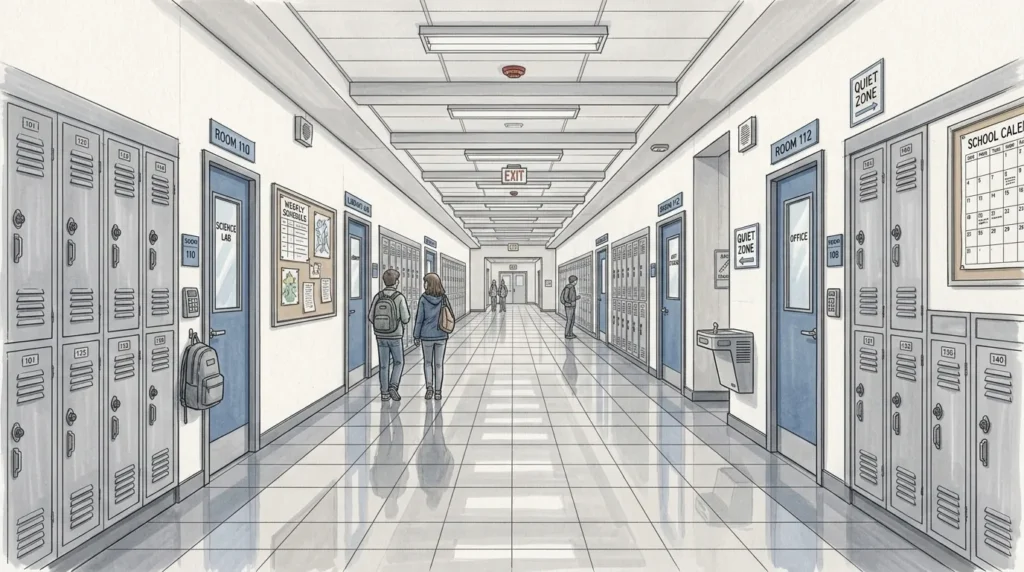
A perspective corridor is one of the strongest ways to make a hallway drawing feel realistic. Start by placing one vanishing point near the center of the page, then draw the walls, ceiling, floor tiles, and locker lines moving toward it. This gives the scene believable depth before you add decoration. In my experience, students improve quickly when they sketch the hallway structure lightly first, because the details become much easier to place once the perspective is correct and the space feels stable.
Use a ruler, pencil, eraser, fine liner, and colored pencils or markers for the final version. Add lockers on one side, classroom doors on the other, and repeating ceiling lights to strengthen the illusion of distance. Floor tiles are especially helpful because they guide the viewer’s eye through the scene. Keep objects smaller as they move toward the vanishing point. The finished drawing feels organized, realistic, and visually satisfying, making it a great choice for art assignments, sketchbook studies, or printable classroom inspiration.
2. Locker Row
Bullet Points
- Focuses on texture, repetition, and small school details.
- Great for middle school or high school themed artwork.
- Can include magnets, name tags, posters, locks, and backpacks.
- Works in realistic, cartoon, colorful, or graphic illustration styles.
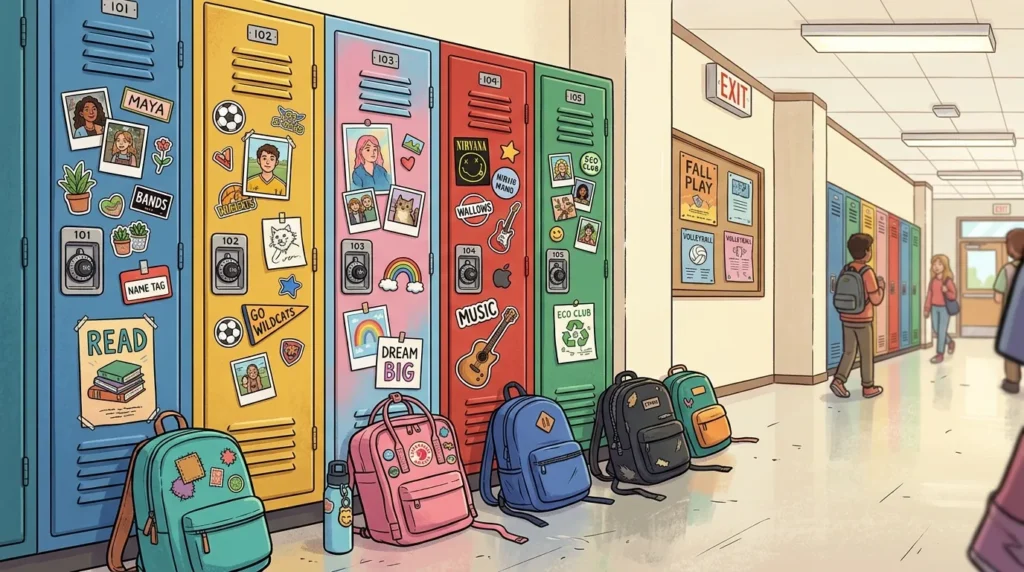
A locker row drawing gives you a perfect chance to play with pattern and personality. Lockers naturally create repetition, but each door can still feel unique through small details like combination locks, stickers, magnets, name cards, sports flyers, or club posters. Begin with a simple row of rectangles, then add vents, handles, and shadows to create depth. I’ve noticed that locker drawings look best when the repeated shapes stay consistent, while the decorations add individuality without making the whole scene feel messy.
For materials, use pencil for the structure, a ruler for straight edges, and markers or colored pencils for school colors. Add a backpack leaning against one locker, a loose notebook on the floor, or a paper announcement taped to a door. These details make the drawing feel lived-in. You can also shade inside locker gaps to create dimension. The result is a hallway scene that feels familiar, energetic, and full of student life while still being manageable for beginner and intermediate artists.
3. Bulletin Wall
Bullet Points
- Adds color, signs, posters, and student artwork to the scene.
- Great for cheerful classroom or elementary school drawings.
- Helps practice layering paper shapes and readable display areas.
- Works well with seasonal themes, announcements, and art projects.
A bulletin wall can make a hallway drawing feel bright, creative, and full of school spirit. Instead of focusing only on architecture, this idea turns the wall into a colorful display area with posters, borders, student art, and announcement sheets. Start with a large rectangle on one side of the corridor, then add a border, title letters, and smaller paper shapes. That’s why many art teachers recommend bulletin board scenes for students who enjoy detail but do not want to draw complicated people or furniture.
Use colored pencils, markers, or watercolor pencils to create layered paper textures. Add seasonal cutouts, reading charts, kindness notes, class projects, or simple stars around the board. Keep the largest title readable and use smaller shapes as decoration. A bulletin wall also gives the drawing a clear focal point, which helps the composition feel planned. The finished artwork can look cheerful, academic, and Pinterest-friendly, especially when paired with polished floors, soft shadows, and a few hallway details like door signs or lockers.
4. Classroom Doors
Bullet Points
- Creates a strong hallway rhythm with repeated door shapes.
- Works for realistic school scenes or colorful themed illustrations.
- Can include nameplates, windows, wreaths, signs, and student work.
- Helps practice spacing, perspective, and architectural details.
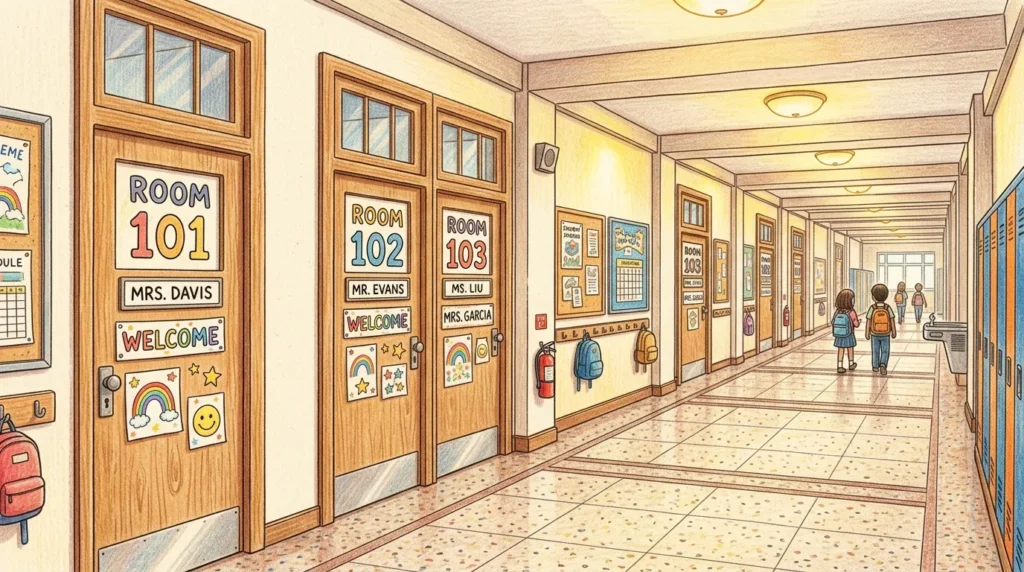
A classroom door scene gives a hallway drawing structure and personality at the same time. Doors repeat down the corridor, creating rhythm, while each one can show a different classroom identity through signs, windows, decorations, and nameplates. Start by drawing the hallway perspective, then place doors along one or both walls, making them smaller as they move away. In my experience, this layout works beautifully when the nearest door has the most detail and the far doors become simpler.
Add small rectangular windows, room numbers, teacher names, welcome signs, or themed door decorations. You can make one door decorated for fall, another for science, and another for reading without overcrowding the whole drawing. Materials like fine liners, gray markers, colored pencils, and white gel pens help create clean edges and highlights. This concept feels practical because it teaches scale, repetition, and detail control. The final artwork looks like a real school corridor but still leaves room for creative style.
5. Window Light
Bullet Points
- Creates mood through sunlight, shadows, and reflections.
- Works beautifully for quiet hallway scenes.
- Helps practice contrast, floor shine, and soft lighting.
- Best with colored pencils, markers, watercolor, or digital brushes.
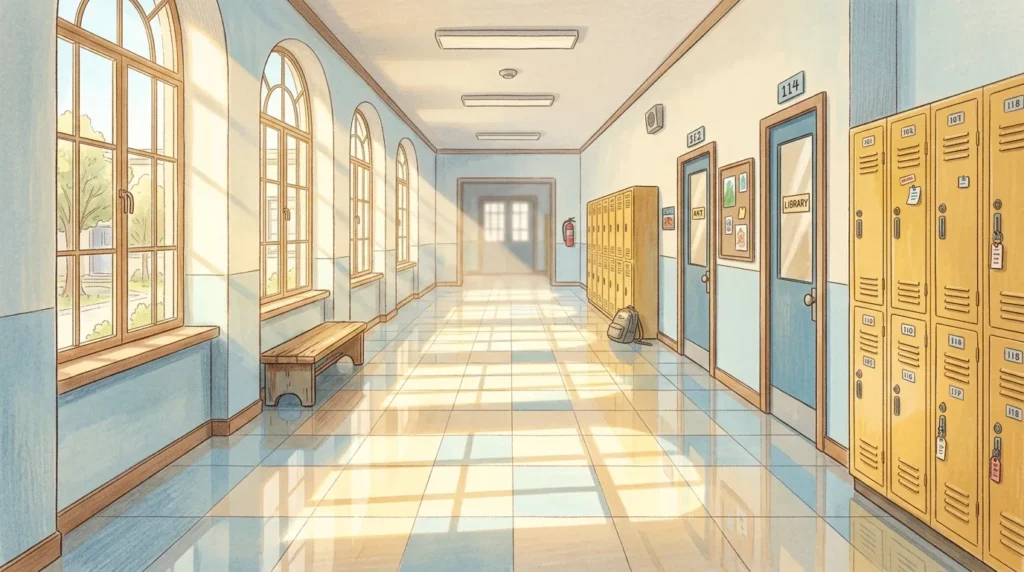
A window light drawing can turn an ordinary hallway into something calm and cinematic. Place large windows along one wall or at the end of the corridor, then let sunlight stretch across the floor in long shapes. The drawing becomes less about decoration and more about mood. I’ve seen this work well in sketchbooks because the artist can practice shadows, reflections, and atmosphere without needing too many objects. A few lockers or doors are enough when the lighting becomes the main feature.
Use soft yellow, pale blue, warm gray, and cream tones to build gentle contrast. Shade the areas away from the windows more deeply, then keep the light patches clean and bright. If the floor is polished tile, add faint reflections under lockers, doors, or window frames. This idea works in realistic, cozy, nostalgic, or even slightly dramatic styles. The result feels peaceful and visually mature, making it a strong choice for artists who want a quieter corridor scene with emotional depth.
6. Busy Morning

Bullet Points
- Adds movement, backpacks, students, and daily school energy.
- Great for storytelling and character-based drawings.
- Can include lockers opening, papers moving, and hallway conversations.
- Works in cartoon, comic, realistic, or semi-realistic styles.
A busy morning scene makes a hallway drawing feel full of life and motion. Instead of drawing an empty corridor, add students walking, opening lockers, carrying backpacks, or talking in small groups. Keep the background simple at first so the people do not become overwhelming. Many designers and illustrators recommend planning the largest shapes before adding details, because crowded scenes need clear organization. Place the nearest figures larger and the far figures smaller to keep the hallway depth believable.
You do not need to draw every face in detail. Focus on posture, backpacks, shoes, hair shapes, and movement lines to suggest energy. Add loose papers, water bottles, locker doors, and morning announcements for realism. Colored pencils, markers, or digital tools can help separate characters from the background through color. This idea is excellent for storytelling because it captures the feeling of a school day beginning. The finished drawing feels active, social, and instantly relatable for students and teachers.
7. Empty Afternoon
Bullet Points
- Creates a quiet, reflective hallway mood.
- Works well with soft shadows, closed doors, and still objects.
- Great for practicing atmosphere without drawing many people.
- Can feel peaceful, nostalgic, mysterious, or cinematic.
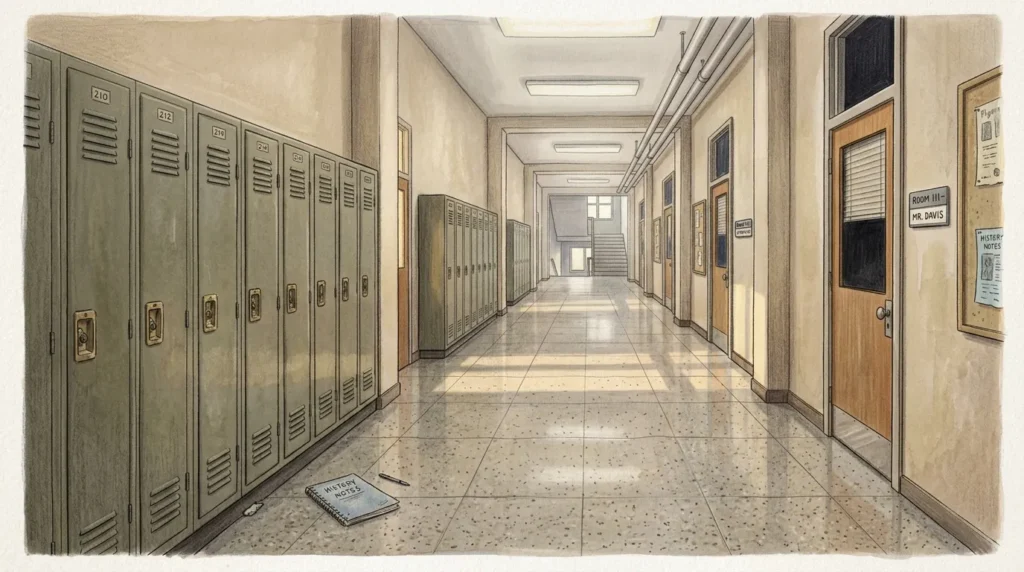
An empty afternoon hallway can feel surprisingly powerful when drawn with thoughtful lighting and detail. Imagine the school day has ended: lockers are closed, classroom doors are quiet, and a forgotten notebook sits near the wall. This idea works because the absence of people creates a mood. Start with a simple corridor structure, then add still objects like a backpack, paper sheet, broom, or trophy case. In my experience, a quiet scene often feels more emotional than a crowded one when the lighting is strong.
Use muted colors such as soft gray, beige, pale blue, warm yellow, and faded green. Add long shadows from windows or ceiling lights to show the time of day. Keep the floor clean but not perfect; small scuffs and reflections make it believable. This drawing can lean realistic, nostalgic, or slightly mysterious depending on the contrast. It is a helpful concept for artists who want to practice mood, negative space, and storytelling without relying on many characters or complicated action.
8. Art Display
Bullet Points
- Turns the hallway into a mini gallery scene.
- Great for colorful, creative, and student-centered drawings.
- Can include framed artwork, paper mats, labels, and project boards.
- Helps practice composition, spacing, and layered wall decor.
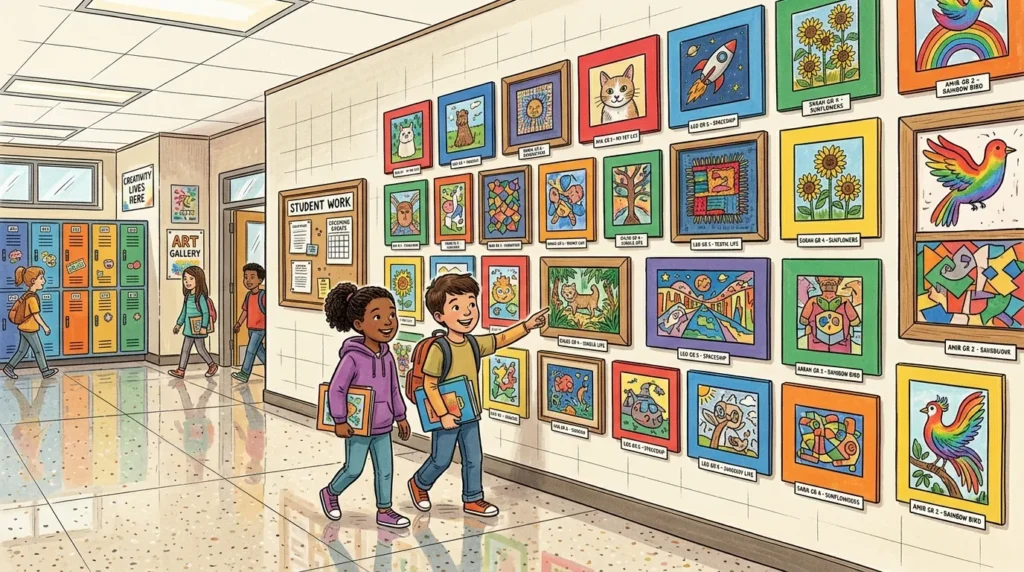
An art display hallway gives you a chance to draw many small artworks inside one larger scene. Begin with a simple corridor wall, then arrange framed student pieces, colorful paper mats, labels, and project titles in neat rows. This concept feels creative because the hallway becomes a gallery rather than a plain background. Keep the artwork inside the drawing simple: flowers, shapes, portraits, landscapes, or abstract patterns. The main goal is to show organized creativity, not to perfect every tiny picture.
Use bright colors carefully so the scene stays readable. A neutral wall with colorful artwork usually looks better than a background that competes with every piece. Add small title cards, thumbtack dots, or clips to make the display feel real. Materials like markers, fine liners, and colored pencils work well because they allow crisp borders and small details. This idea is great for Pinterest-style school art inspiration because it feels cheerful, creative, and easy to adapt for different grade levels or classroom themes.
9. Trophy Hall
Bullet Points
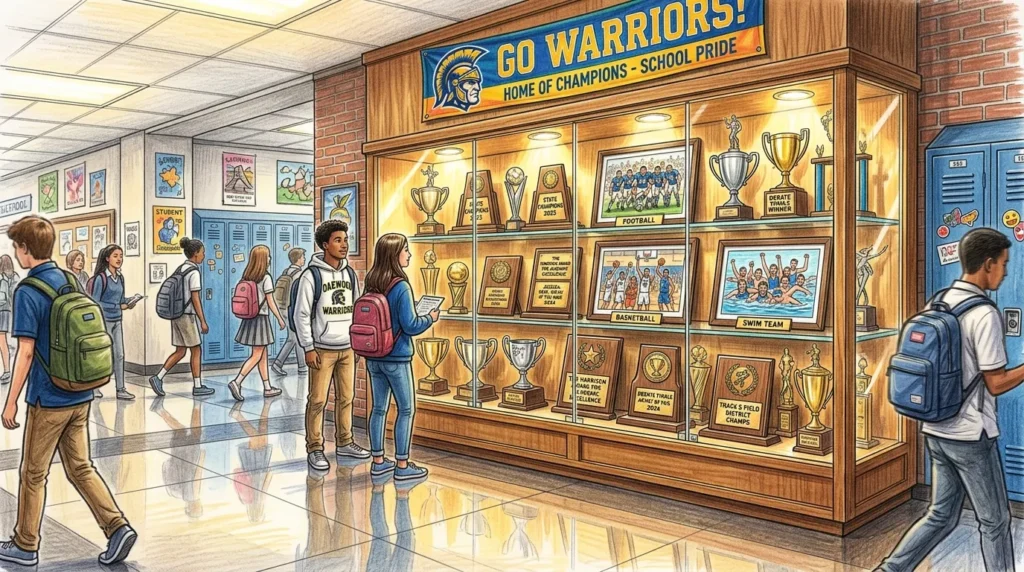
- Adds school pride through awards, banners, and sports details.
- Works well for middle school and high school illustrations.
- Can include glass cases, plaques, team photos, and mascot colors.
- Helps practice reflections, metallic textures, and display lighting.
A trophy hall drawing creates a strong sense of school pride and history. Use a glass display case along one wall, then fill it with trophies, plaques, medals, team photos, ribbons, and small sports objects. This idea is especially useful for practicing shiny textures and reflections. Start with the case shape first, then draw shelves and objects inside. That’s why many art instructors suggest breaking complex displays into simple boxes and cylinders before adding details like handles, bases, and engraved plates.
Color helps bring this concept to life. Use gold, silver, bronze, dark wood, and school colors for banners or team signs. Add reflections on the glass with white pencil, gel pen, or light digital strokes. The hallway can include polished floors, ceiling lights, and a mascot banner to strengthen the theme. This drawing feels polished and meaningful because it shows achievement, tradition, and community. It is a strong option for sports-themed school art, yearbook-style illustration, or detailed perspective practice.
10. Rainy Hall
Bullet Points
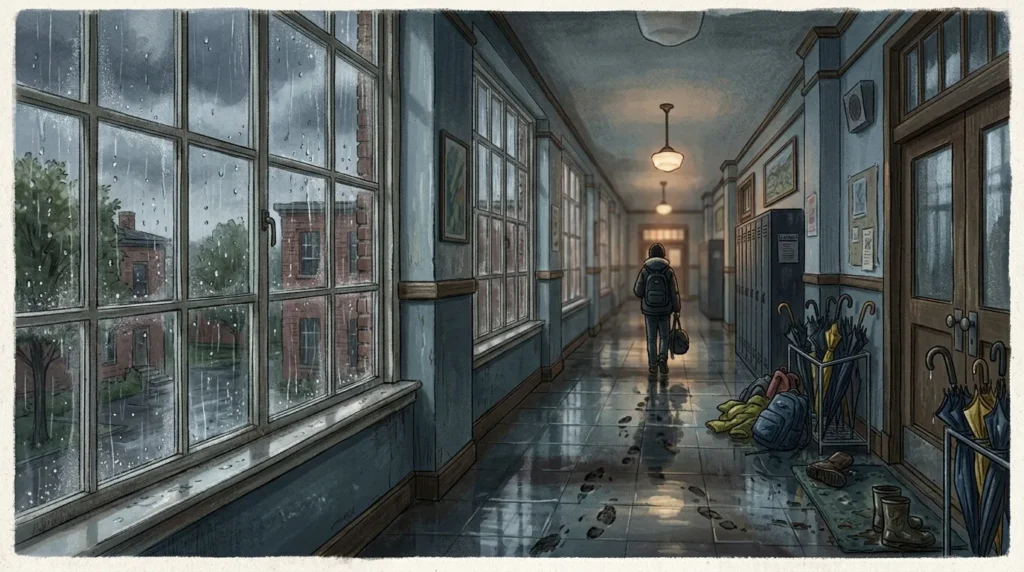
- Creates atmosphere with gray skies, window streaks, and reflections.
- Great for moody, cozy, or realistic drawing styles.
- Can include umbrellas, wet shoes, raincoats, and puddle reflections.
- Helps practice glass, water, shadows, and soft contrast.
A rainy hall scene adds atmosphere by using weather as the main design element. Place windows along one side of the corridor and show gray light, water streaks, and blurred outdoor shapes beyond the glass. Inside the hallway, add wet footprints, umbrellas near the door, raincoats on hooks, or a small puddle reflection near the entrance. This idea works because it combines a familiar school setting with a strong seasonal mood, making the artwork feel more specific and memorable.
Use cool grays, blue tones, muted greens, and soft white highlights to create the rainy feeling. Reflections on the tile floor can be drawn with gentle horizontal strokes rather than sharp outlines. Keep some areas slightly blurred or softened to suggest moisture and cloudy light. A rainy corridor can feel cozy, quiet, or dramatic depending on the contrast. This is a great final concept for artists who want to practice atmosphere, surface texture, and storytelling while keeping the subject grounded in everyday school life.
